Brazil 1-1 Morocco, Scotland edge Haiti: a 2026 World Cup opening weekend that is already being misframed
The opening Group C fixtures delivered less a fairytale than a stress test for two of the tournament's most over-determined storylines — Brazil's rebuild and Haiti's return — and the early wire coverage is already missing the better story.
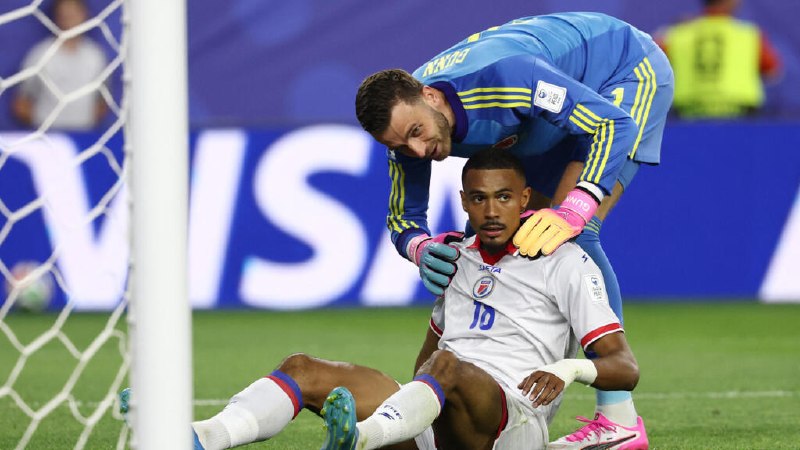
Brazil 1-1 Morocco and Scotland 1-0 Haiti. That is the bare scoreboard from the first slate of Group C matches at the 2026 World Cup, played on 14 June 2026, and the early wire is already tilting toward the wrong story. The 1-1 in the late kickoff, between a five-time champion that arrived with the weight of an entire confederation's expectations and a Morocco side that has just spent four years rewriting what North African football can be, is the match that will define the week. The 1-0 win for Scotland — its first World Cup victory since 1990 — is the more remarkable result, and the one the press will under-cover because it does not fit any pre-built template.
Three things are true at the same time, and a serious read of the weekend has to hold all of them. Brazil is no longer the favourite to lift the trophy. Morocco, having gone deeper than any African side in Qatar 2022, is a structural counter to that fact rather than a Cinderella. And Haiti's return to a World Cup finals for the first time in fifty-two years is a more honest story about football's global balance of power than either of the above — because a team that has had to play home matches in Port-au-Prince under conditions its opponents do not have to face, and that took the field on 14 June 2026 in a tournament that did not exist for them a generation ago, is the clearest example of who the sport belongs to when the broadcast lights go off.
Brazil's draw is not a crisis, it is confirmation
The temptation in the European-led press is to read Brazil 1-1 Morocco as a collapse. It is not. Brazil is in a managed generational handover, and the manager — working without a settled starting striker in the Neymar-shaped hole that has now been open for two cycles — got a draw against a side that finished fourth in 2022 and has since broken the Spanish and Portuguese duopoly on talent exported to Europe's top five leagues. A draw at altitude, against a coach who had a full year to prepare for exactly this match, is the floor of what a rebuilding Brazil can be expected to produce in the group stage. Coverage that frames the result as a Brazilian failure is reading the wrong column of the data: Brazil's qualifying campaign was uneven, its squad is young in key positions, and Morocco's run in Qatar was not a fluke that the next four years have somehow erased.
The corollary that almost no English-language wire is willing to write: African football's rise, of which Morocco is the most visible edge, is no longer "Africa's moment." It is the new baseline. Three of the four semi-finalists at the 2022 World Cup were European; one was from another continent. That ratio is not where the sport is going, and the 1-1 in the Brazil-Morocco match is the first data point of this tournament consistent with the trend.
Scotland 1-0 Haiti, and the story the cameras will miss
Haiti is back at a World Cup for the first time since West Germany 1974. That is a fifty-two-year absence, broken by a federation that has had to operate under sanctions, political paralysis in Port-au-Prince, and a federation president in exile for most of the qualifying cycle. The Grenadiers' return is, by any reasonable measure, the most consequential football story of the week — and the one the wire copy, in the available reporting, treats as a roadblock for Steve Clarke's Scotland.
France 24's live coverage of the match, filed from the stadium, led with the framing of the game as a duel of World Cup returnees, and secondarily with Scotland's efficiency. The 1-0 scoreline flatters the dominant side's football: Haiti defended compactly, denied Scotland the space to play the patterns Clarke has been building for two qualifying campaigns, and lost to a single set-piece goal rather than to a structural gap. The honest read of the match is that the gap between a Scotland side that has spent a generation failing to qualify and a Haiti side that has spent a generation failing to be allowed to play is smaller than the seedings suggest. The less honest read is that Haiti was simply outclassed; the match data, to the extent the early wire is reporting it, does not support that.
A World Cup that is being sold as American, played on a different balance sheet
The 2026 tournament is the first hosted across three countries — the United States, Canada and Mexico — and the broadcast framing, predictably, will be the Americanisation of the competition. That framing is real at the level of stadiums, sponsors and primetime kickoff times. It is wrong as a description of who is on the pitch. The opening weekend's two most striking results — a Moroccan draw in Brazil, a Haitian match that was lost by a single goal after a fifty-two-year absence — both sit inside a structural shift that pre-dates the host decision: the centre of gravity in men's football has been moving away from Western Europe for at least a decade, and tournaments are now being played on a field that reflects that.
The United States, as host, gets the privilege of a soft group-stage draw, the largest broadcast footprint the tournament has ever had, and a political moment that the administration will try to monetise. What it does not get is a guarantee that the football's centre of gravity will follow the broadcast rights. The early group results are a more honest indicator of where the sport is than the host's pre-tournament billing.
The stakes, and the framing trap
The wire will, by the end of the group stage, have written Brazil's draw as either a redemption arc or a collapse, depending on the side's next result. The honest frame is older: the team is in transition, the talent is real, and a draw against a top-eight side is not a story. The deeper story is what a draw tells us about Morocco — and what Haiti's 1-0 loss, on its first night back, tells us about the distance between a federation that has had a stable twenty-year run and one that has had nothing of the kind.
What remains genuinely uncertain after the first 180 minutes of the tournament is whether the early wire will hold the discipline to report Morocco and Haiti on their own terms, or whether it will revert to treating African and Caribbean football as the backdrop against which European and South American storylines get told. The scores suggest the first option is now the more accurate one. The copy, so far, has not caught up.
Desk note: Monexus is reading the opening weekend as a structural shift in the sport's centre of gravity, not a Brazilian crisis. The wire so far has the framing inverted.
Wire provenance
This editorial synthesis draws on the following public wire/social posts:
- https://t.me/wfwitness
- https://t.me/france24_fr
- https://t.me/france24_fr