The Pavia Problem: Why NFL Teams Passed on a Heisman Finalist
Diego Pavia led Vanderbilt to its best season in memory, earned Heisman finalist honors, and still went undrafted. The NFL's reasoning reveals more about scouting failures than about Pavia himself.
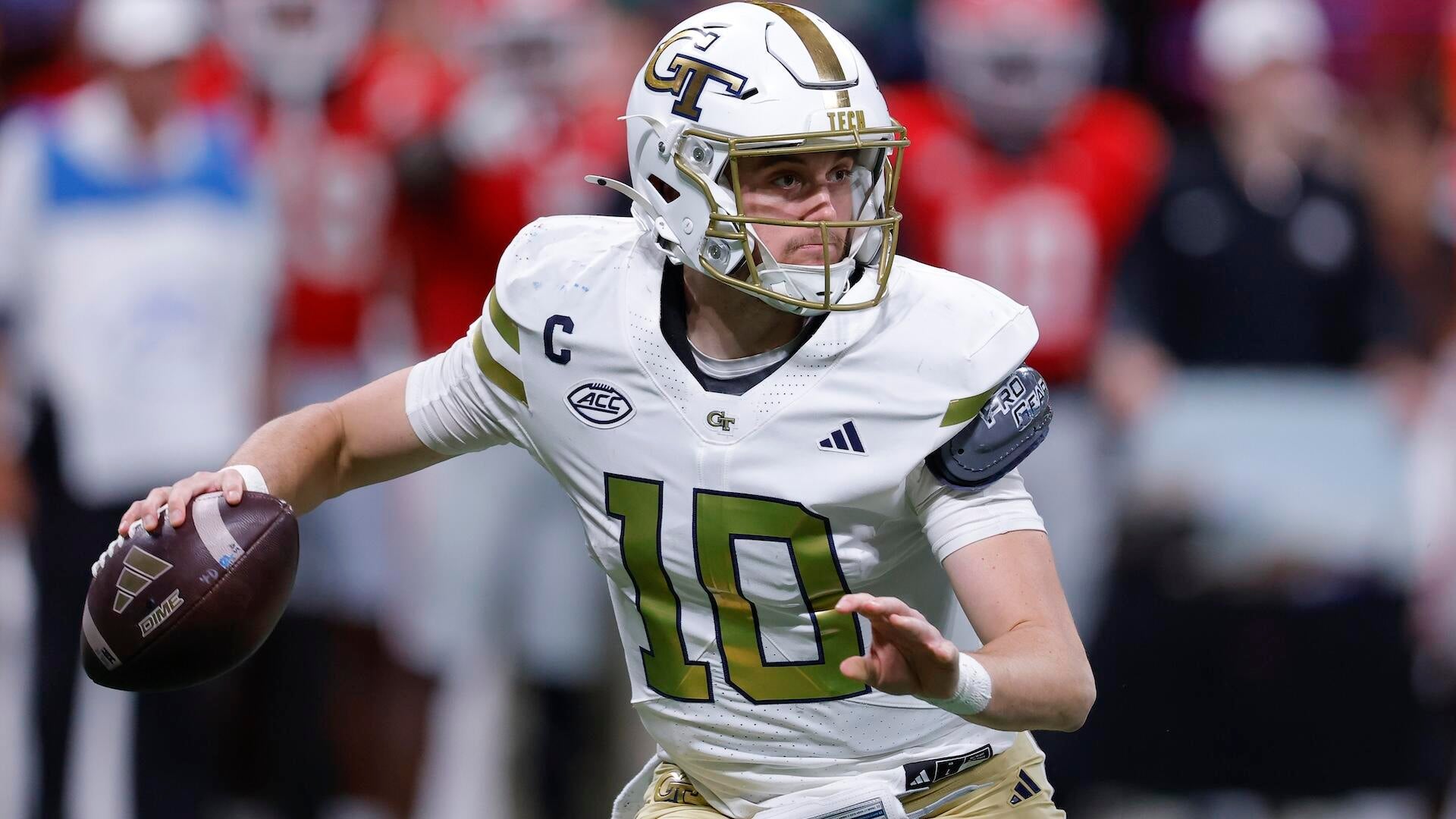
The NFL Draft's most conspicuous omission arrived on draft weekend with remarkably little ceremony. Diego Pavia, the Vanderbilt quarterback who guided a program with one SEC win in 2023 to a 7-6 record, a win over Alabama, and a Texas Bowl championship, watched three days of picks pass without hearing his name. No team called. No team drafted. The quarterback who delivered Vanderbilt's most significant season in recent memory now faces the uncertain prospect of catching on as an undrafted free agent.
The pile-on began immediately. Social media filled with the familiar arithmetic of NFL scouting: the 5-foot-11 frame, the sub-6-foot height marker, the arm strength questions. The draftnik consensus assembled itself quickly—Pavia was a fine college player, perhaps even a good one, but the NFL operates by different physical laws. Heisman finalist or not, the argument ran, Pavia simply lacks the measurables to function as a professional starter.
The framing deserves scrutiny.
A Season That Defied the Model
Vanderbilt's 2025 campaign was, by any reasonable measure, an outlier. Pavia directed wins over ranked opponents including Alabama. He engineered late-game scoring drives in games Vanderbilt had no business winning. He operated an offense that lacked the talent base most SEC programs consider baseline. None of that shows up on a Wonderlic. None of it registers on a stopwatch.
His performance in the Texas Bowl against a defense that had spent the season intimidating Big 12 offenses offered a different data point: Pavia could execute under pressure in high-stakes situations against capable opponents. The physical limitations scouts cite are real—Pavia is not a 6-foot-4 pocket passer with a rocket arm. But he was effective despite those limitations, not in their absence. That distinction rarely survives contact with draft-day groupthink.
The Measurables Trap
NFL scouting has long operated by a logic that privileges projection over evidence. A quarterback's collegiate performance is treated as raw material for speculation rather than data worth weighing on its own terms. Pavia's case makes this logic visible in its starkest form: he produced wins against real opponents in real games, and the league's response was to downgrade him for not looking like the prototype.
The 2014 precedent is instructive. That year, former Yale quarterback Jeff Shugolss went undrafted despite exceptional Ivy League performance—a decision that generated similar debates about whether the league valued production or projection. Those debates resolved themselves in Shugolss's case through his eventual contract and training camp opportunities, even if an NFL career never materialized. Pavia's situation echoes that logic differently: when a Heisman finalist goes undrafted, it signals something broken in the evaluation system, not in the player.
Pavia himself has been measured in public comments. The sources describe a player focused on finding opportunities rather than disputing the draft results. That restraint is notable. The league's decision is the league's decision. But the discourse around that decision—predictable, height-focused, dismissive of on-field evidence—tells its own story about what the NFL values and why its drafts routinely miss players who win games.
What the League Missed
The quarterback evaluation problem is structural, not incidental. NFL scouts spend enormous resources on pro days, combine testing, and private workouts designed to isolate physical attributes from contextual performance. The result is a system that reliably identifies arm talent and body type while underweighting the more durable signal: can this player help his team win?
Pavia helped Vanderbilt win. He did it in the SEC, against Power Five competition, in situational contexts that demanded clutch performance. The NFL's response—undrafted, with no clear path to a roster spot—suggests that winning football is, at best, a secondary input to draft grade. That is not a small admission from an industry that charges premium prices for its product.
The question now is what comes next. Pavia will sign somewhere as a free agent, assuming a team has roster space and interest. He will compete in training camp against quarterbacks drafted higher on the basis of tools rather than results. The odds favor the system, as they always do. But the system, on this evidence, is not optimized to identify the players who actually win football games.
The Stakes and What Remains Uncertain
For Pavia, the undrafted status complicates but does not foreclose an NFL future. History contains examples of quarterbacks who found footholds despite draft-day disappointments—Tom Brady notably among them, though such comparisons invite more heat than light. The more modest point holds: production at the collegiate level, particularly at Power Five programs against quality opposition, carries signal value that the draft apparatus systematically underprices.
What the sources do not fully explain is whether any NFL team conducted serious due diligence on Pavia beyond the physical metrics. Private workouts, if they occurred, did not generate public documentation. The combine performance, where Pavia likely registered modest testing numbers, may have functioned as a gate rather than a data point. Whether teams evaluated him on what he showed in games or on what he measured in shorts remains genuinely unclear from the available record.
The broader pattern is not subtle: the NFL draft routinely rewards arm talent and body type over demonstrated ability to win football games. That is the league's prerogative. It is also, on display in this case, the league's loss. Pavia will catch on somewhere, will compete, will likely have moments that prompt renewed questions about why thirty-two teams passed. The answer, as far as this draft cycle reveals, has less to do with his ability than with the evaluation framework designed to measure it.
Dive deeper: For complete coverage of the 2026 NFL Draft and undrafted free agent signings, follow our CBS Sports draft hub.
- 29 AprThe Pavia Reckoning: Why Size, System, and the Draft's Inefficiencies Collided on One Vanderbilt Quarterback
- 28 AprThe NFL's Most Overlooked Quarterback: Diego Pavia Went Undrafted and the League Should Worry About That
- 27 AprThe Pavia Paradox: Why College Football's Biggest Improviser Bounced Out of the NFL Draft