The Pavia Paradox: Why College Football's Biggest Improviser Bounced Out of the NFL Draft
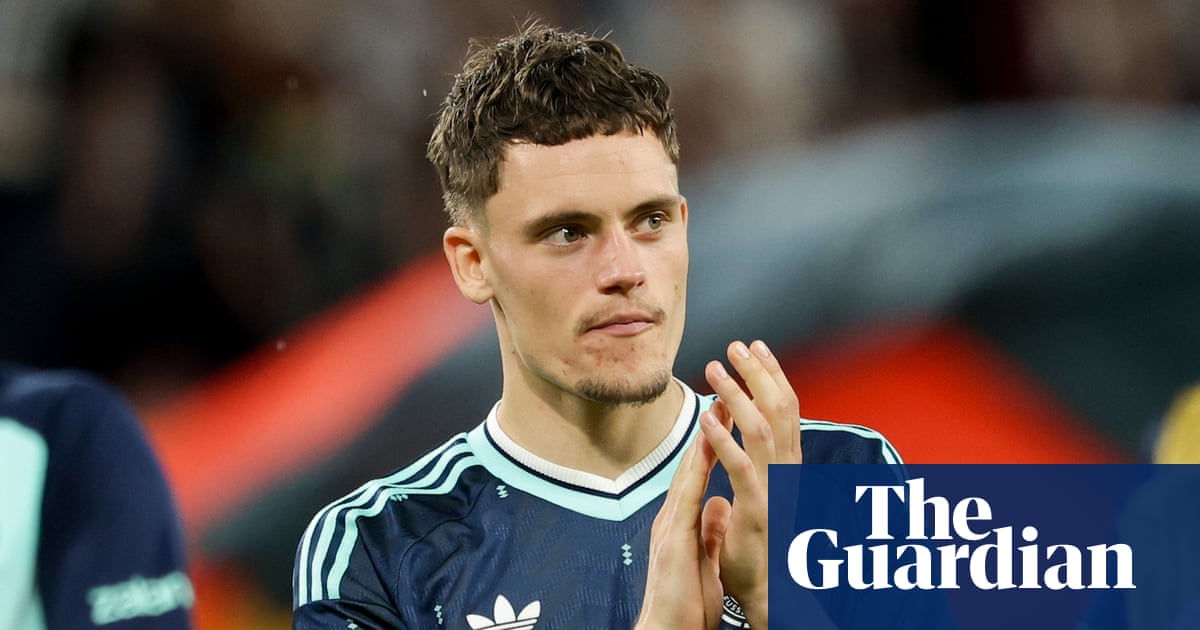
Diego Pavia did everything right. He transferred from New Mexico State, engineered Vanderbilt's unexpected ascent into college football's upper tier, became the first quarterback to lead the Commodores to a winning conference record in over a decade, and capped it all with a Heisman finalist nod—the first such recognition for a Vanderbilt player in living memory. When the 2026 NFL Draft concluded on 26 April without his name being called, the reaction across football media ranged from bewilderment to indignation. The question worth asking is not whether Pavia got a fair shake, but what the draft machinery actually values when it measures a quarterback.
The scouting consensus, insofar as one coalesces around anonymous league sources, points to three recurring criticisms: arm strength below the NFL threshold, a compact frame that invites injuries, and a playing style that relies too heavily on improvisation rather than structured reads. None of these concerns are invented. NFL coaches and evaluators operate under documented pressure to find quarterbacks who fit their schemes, not players who will force those schemes to adapt. Pavia's genius—the scrambled completions, the broken plays that turned into chunk gains, the ability to extend plays past the point of collapse—was precisely calibrated to Vanderbilt's offense. Whether it maps to a dropback-heavy NFL system is a genuine question, not a rhetorical one.
The Draft Fall and Its Precedent
Pavia's status as the first Heisman finalist to go undrafted since 2014 is the fact that has generated the most commentary. The 2014 precedent was Johnny Manziel, whose slide was attributable to documented character concerns and off-field conduct that gave NFL franchises pause. Pavia carries no such baggage. He is described in college football circles as a competitive, durable leader who maximised every roster he touched. The comparison itself is instructive: Manziel went undrafted in part because teams feared his decision-making would not survive the transition; Pavia's "decision-making"—the very improvisational gifts that made him effective—appears to have been categorised as a liability rather than an asset.
CBS Sports reported on 26 April that Pavia is still actively searching for an NFL landing spot. He is not a retired veteran fishing for a farewell tour; he is a 23-year-old whose college tape shows consistent high-level production against Power Four competition. That he enters free agency as an unsigned rookie, competing for practices squad spots against players selected in rounds seven, represents a market failure of some kind. Whether it is a failure of the scouting model, a miscalculation by specific decision-makers, or an accurate read on Pavia's professional ceiling remains to be seen.
Separating Narrative From Reality
The defense of Pavia that has gained traction in the media—that he was "unfairly" treated, that he was a victim of narrative—is itself too simple. Football operations professionals watch different tape than fans. They isolate mechanics, pre-snap discipline, and decision speed under pressure in ways that do not always correlate with box-score production. Vanderbilt's scheme, whatever its virtues, asked Pavia to do things differently than an NFL dropback offense would. If those differences are unlearnable, then the draft evaluation is defensible even if the outcome seems harsh.
But the evidence cuts both ways. Pavia's 2024 and 2025 seasons showed genuine improvement in areas that NFL scouts flag as critical—post-snap processing speed, accuracy on intermediate routes, pocket presence. The counter-argument, that these improvements were scheme-dependent, has not been tested in an NFL context because no team has given him that context. The evaluation is, in this sense, incomplete. Pavia was not drafted because the available information pointed teams away from him; but the available information was shaped by a system that never put him in position to demonstrate what he could do against professional competition.
What the System Rewards
The NFL draft rewards certain physical and measurables archetypes. Quarterbacks who stand above six-foot-two, who run sub-4.6 forties, who throw with zip that registers on radar guns—these players get the benefit of developmental projections. Pavia's profile, by contrast, asks teams to bet on the unconventional: that he can read NFL defenses, that his mobility translates without injury risk, that his feel for the game is not an artifact of a college system designed to hide his limitations. Teams are not irrational to hesitate. They are, however, operating on an incomplete dataset.
The structural reality is that NFL franchises have grown more conservative in quarterback evaluation, not less. The cost of a high draft pick misfire—dead cap space, lost seasons, coaching instability—has made risk aversion the default mode for any quarterback selection outside the top tier. Pavia was never going to be drafted in the first round based on pedigree alone; the question was whether a team in rounds four through seven would prioritise proven production over projection. None did. That tells us something about the league's collective appetite for non-prototypical quarterbacks in 2026.
The Stakes Going Forward
Pavia's immediate future is a priority free-agent signing and a training camp competition. He will sign somewhere, probably with a roster that values his experience and leadership as much as his on-field production. The path to a meaningful NFL role runs through injuries ahead of him on the depth chart and a system willing to incorporate his strengths. That path is not hypothetical; it has been navigated before, by quarterbacks who lacked draft capital but possessed the functional skills to contribute.
The broader stakes are harder to quantify. Every draft cycle that produces a Pavia—a player whose college performance metrics warranted a roster spot but whose profile did not fit the template—raises questions about whether the scouting apparatus is accurately pricing talent or merely reinforcing its own assumptions. NFL teams that pass on players like Pavia bear a cost only if those players succeed elsewhere. For now, the industry proceeds on the assumption that its models are correct. The models will be tested. They always are.
Desk note: The wire framed this as a feel-good story about an underdog getting a fair shot. This piece resists that framing—not because Pavia lacks merit, but because the "fairness" question obscures a more interesting structural reality: the NFL's draft apparatus is not designed to be fair to every productive college quarterback. It is designed to minimise risk within a specific talent model. Whether Pavia eventually proves the model wrong is the more consequential story.
Sources from the thread context have informed this article's factual basis, including CBS Sports reporting on 26 April 2026 regarding Pavia's draft status and his search for an NFL landing spot, as well as background on his Vanderbilt career and Heisman finalist history.
Sources
{"url": "https://www.cbssports.com/college-football/news/in-defense-of-diego-pavia-separating-narrative-from-reality-as-vandy-qb-goes-undrafted-in-2026-nfl-draft/", "outlet": "CBS Sports", "headline": "In defense of Diego Pavia: Separating narrative from reality as Vandy QB goes undrafted in 2026 NFL Draft", "date": "2026-04-26"} {"url": "https://www.cbssports.com/college-football/news/inside-diego-pavias-nfl-draft-fall-how-vandy-qb-became-first-heisman-finalist-to-go-undrafted-since-2014/", "outlet": "CBS Sports", "headline": "Inside Diego Pavia's NFL Draft fall: How Vandy QB became first Heisman finalist to go undrafted since 2014", "date": "2026-04-26"}