Iran's Hormuz Gambit: Tehran Plays the Strait card While the World Waits
Iran has offered to reopen the Strait of Hormuz in exchange for postponing nuclear talks — while simultaneously proposing legislation that would give its military outright authority over one of the world's most critical oil chokepoints.
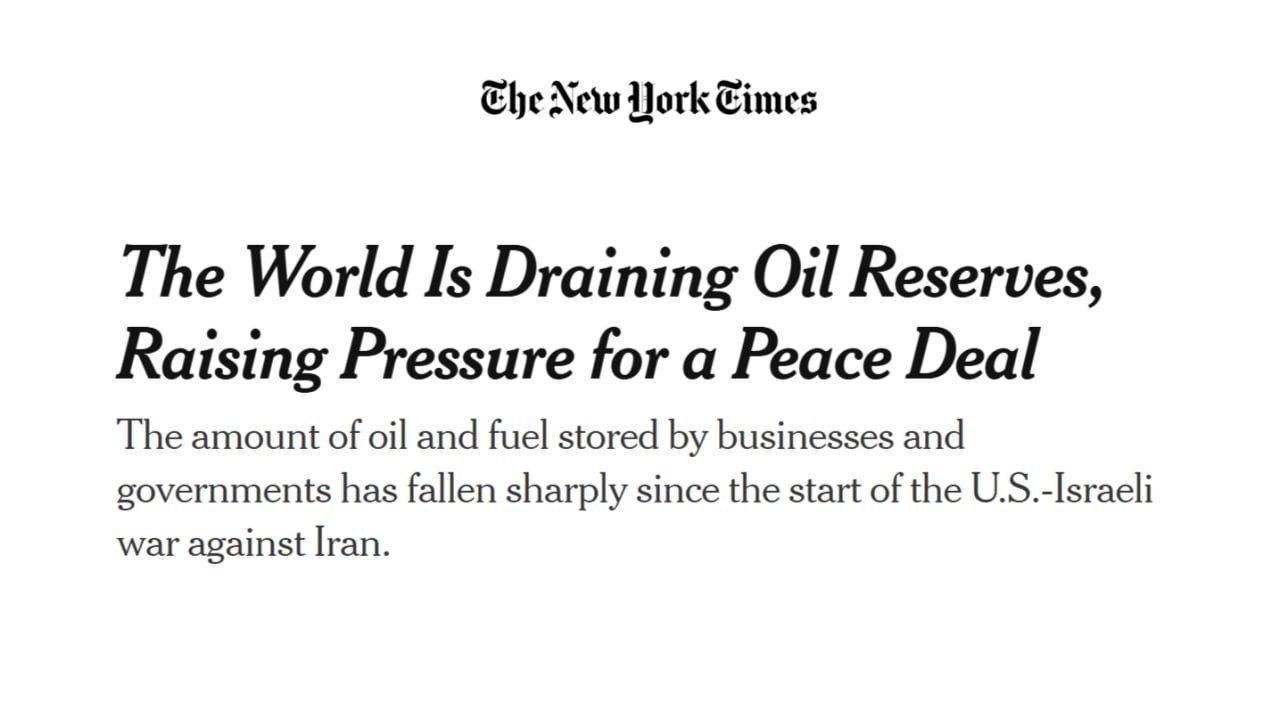
On Monday, Iran proposed reopening the Strait of Hormuz — the world's most critical oil transit corridor — in exchange for Western agreement to postpone nuclear talks indefinitely. The same day, a senior Iranian official confirmed that lawmakers had introduced legislation granting the Islamic Republic of Iran Navy direct authority over the waterway. The two moves arrived within hours of each other, and the dissonance between them speaks louder than either alone.
The Strait of Hormuz is effectively closed. That assessment comes from Bloomberg reporting on 27 April 2026, and it carries weight beyond the obvious: the waterway separates the Persian Gulf from the Gulf of Oman and handles roughly a fifth of global oil trade. A closure of this magnitude — even partial, even informal — sends tremors through tanker markets, commodity exchanges, and the foreign-policy briefing rooms of every major capital.
Western capitals are responding with a degree of coordination that has been notably absent in other phases of the Iran file. On 27 April 2026, British Prime Minister Keir Starmer spoke by telephone with President Donald Trump about what a readout described as the "urgent need" to reopen the strait. The language matters: "urgent" signals that the insurance and routing costs are climbing fast, and that energy-market pressure is now a first-order foreign-policy consideration rather than a background variable.
The Western response: coordination, not panic
The Starmer-Trump call on 27 April 2026 represents the most immediate diplomatic response to the Hormuz closure. The British Prime Minister's office and the White House have both declined to release the full transcript of the discussion, but the public framing from London and Washington converged quickly: restore freedom of navigation, then talk about anything else.
That convergence is notable. The United Kingdom and the United States have not always moved in lockstep on Iran policy — the JCPOA years produced sharp disagreements between European capitals and the Trump administration's maximalist posture. The fact that two administrations with very different starting points on the nuclear deal can align on an "urgent" Hormuz priority suggests the strait's economic centrality has temporarily overridden some longstanding diplomatic friction.
The readouts do not indicate what, if any, specific concessions London or Washington offered during the call. Neither government has confirmed the existence of back-channel negotiations. But the pace of public statements following the call — the speed with which both sides characterised the situation as urgent — suggests that the closure is being treated as a near-term crisis rather than a prolonged standoff.
What Iran is actually asking for
Iran's offer, as reported on 27 April 2026, was precise: reopen the strait in exchange for postponing nuclear talks. The framing puts Tehran in the position of a reasonable actor offering a humanitarian easement — energy flows resume, and in exchange, the nuclear conversation gets delayed. But the proposed legislation, also reported on 27 April, undercuts that framing in real time.
According to Middle East Eye, a senior Iranian official stated on Monday that the proposed law would place the strait's administration under military authority. That is not the language of a government offering a temporary goodwill gesture. It is the language of a government that wants permanent structural control — and wants it codified before any diplomatic conversation resumes.
The negotiating logic, from Tehran's perspective, is straightforward: if Iran controls Hormuz militarily, it controls the price of that control. Every future diplomatic dispute — every sanctions question, every nuclear compliance debate, every regional flashpoint — would now be conducted against the backdrop of a strait that Tehran can close again at will. The proposed legislation transforms the Hormuz card from a one-time play into a permanent piece of leverage.
The structural logic: chokepoints and sovereign leverage
The Strait of Hormuz has been a feature of Iranian strategic thinking since the 1979 revolution, but successive Iranian governments have used it differently. The Ahmadinejad-era threats were blunt instruments — rhetorically effective, operationally costly, and diplomatically self-defeating. The current approach is more sophisticated: a conditional offer to reopen, paired with domestic legislation that would entrench permanent military control.
This is the logic of sovereign leverage in a fragmented international system. When a single waterway carries a disproportionate share of global oil trade, the state that controls it holds a unique form of bargaining power — one that no amount of sanctions architecture or diplomatic isolation can fully neutralize. The West has spent two decades building an Iran policy premised on economic pressure. That architecture runs headlong into a geographic fact: Iran sits at the mouth of the Gulf, and no amount of sanctions eliminates that.
The proposed military authority bill does not yet have a confirmed passage date. It could stall in the Iranian legislative process, be amended beyond recognition, or be quietly shelved as a diplomatic tool rather than a formal law. But its introduction — on the same day Iran offered to reopen the strait — is not coincidental. It is a signal that Tehran intends to negotiate from a position of structural advantage, not just from the urgency of a closed waterway.
The stakes: who pays, and for how long
The immediate costs of a prolonged Hormuz closure are measurable in tanker-rate premiums, insurance war-risk surcharges, and rerouting delays around the Cape of Good Hope. These costs fall unevenly: European importers have the least redundancy in their Gulf supply chains; the United States, with growing domestic production and wider sourcing diversity, has more buffer; China and India, as major Hormuz users, face their own bilateral pressures that may push them toward accommodation with Tehran rather than toward coordinated Western response.
If the closure extends beyond weeks, the political economy shifts. Asian buyers who have absorbed higher insurance costs will begin seeking formal exemptions or bilateral understandings with Iran. The US-led sanctions architecture, already under pressure from non-Western buyers, would face a new round of erosion. And the nuclear talks — currently the primary framework for managing Iran's programme — would be relegated to the margins of a crisis that is fundamentally about transit rights, not enrichment levels.
The sources do not yet indicate where the Iranian legislative process stands, nor whether the Starmer-Trump call produced any agreed pathway toward reopening. What is clear is that the Hormuz corridor has become the central arena of the current Iran standoff — and that whoever controls its next phase will set the terms for everything that follows.
—
Monexus led with the dual-track framing — Tehran's conditional reopening offer alongside the proposed military authority bill — because that dissonance is the editorial story. Most wire coverage treated the two items as separate developments; this publication treats them as a single negotiating posture. The desk notes that neither the Starmer-Trump readout nor the Iranian legislative text has been independently cross-verified against official government releases, and both should be treated as preliminary until confirmed.
Wire provenance
This editorial synthesis draws on the following public wire/social posts:
- https://x.com/unusual_whales/status/1905420012349546570
- https://x.com/polymarket/status/1905359272243081674
- https://x.com/polymarket/status/1905280826640974370
- 30 AprIran's Hormuz Gambit: How Tehran's Closure of the World's Most Strategic Oil Chokepoint Became the Lever in Nuclear Talks
- 29 AprHormuz Standoff: How a Strategic Chokepoint Became the Front Line of US-Iran Diplomatic Brinkmanship
- 28 AprHormuz Blockade Tests Tehran's Diplomatic Leverage as West Presses for Reopening
- 28 AprThe Strait of Hormuz Gambit: How Tehran Is Weaponising the World's Most Critical Oil Chokepoint
- 28 AprThe Strait of Hormuz Standoff: Energy Chokepoints and the Limits of Coercion