Araghchi in Moscow: What the Putin Meeting Signals for Iran's Diplomatic Tightrope
Tehran's top diplomat met Putin in the Russian capital on 27 April, a encounter that lands in the middle of active US-Iran nuclear negotiations and raises questions about the durability of any emerging understandings.
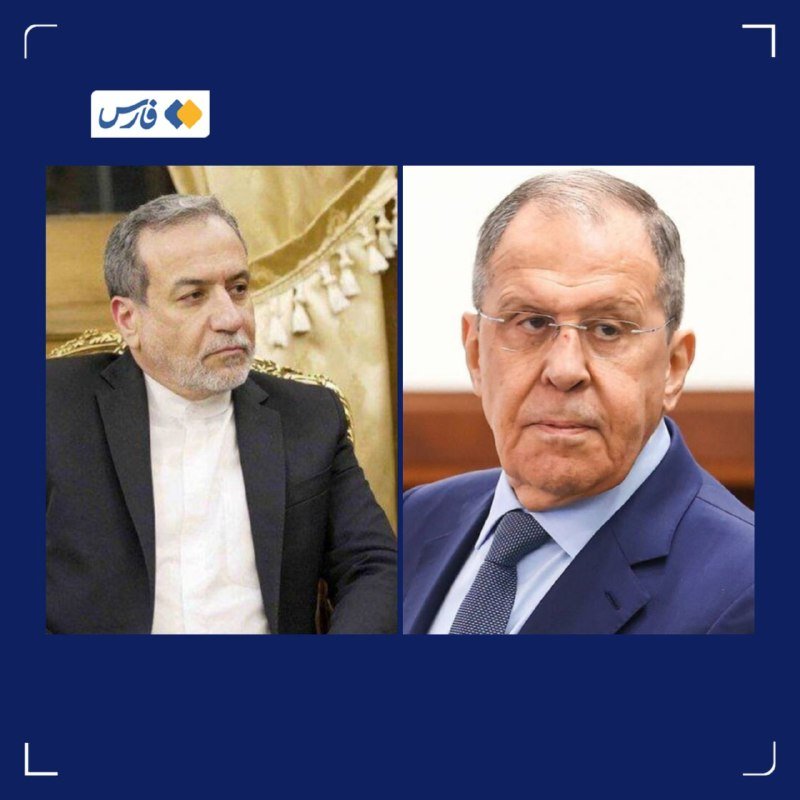
Iranian Foreign Minister Abbas Araghchi met Russian President Vladimir Putin in Moscow on 27 April 2026, a encounter that lands in the middle of active US-Iran nuclear negotiations and raises questions about the durability of any emerging understandings. The meeting, confirmed by Iranian state-adjacent and OSINT channels, produced no joint communiqué as of publication, but its timing alone carries analytical weight.
The Araghchi-Putin handshake is not a礼仪 exchange. It is a signal dispatched while Tehran is simultaneously engaged in a US-mediated back-channel, with Oman serving as the facilitating intermediary. The message is structural: Iran is not a country that will accept terms dictated from a single capital. Its foreign policy architecture keeps multiple doors open, and the Moscow visit confirms that Russia's patronage remains a non-negotiable pillar of that architecture — even as Iranian officials work to extract sanctions relief through a parallel track with Washington.
The Geometry of Concurrent Talks
Understanding why this meeting matters requires mapping the geometry of talks Iran is running simultaneously. The Oman track — a diplomatic channel that has produced several rounds of indirect US-Iran contact — has generated cautious optimism among European mediators that a framework deal on nuclear restraints remains possible. Iran's civilian nuclear programme and the stockpile of enriched uranium that Western capitals cite as a proliferation risk have been the core sticking points. In exchange for verifiable caps, Tehran has sought relief from sectoral sanctions, particularly in oil and banking.
The Araghchi-Putin meeting complicates Washington's negotiating posture. Russia has its own interest in preventing a US-Iran rapprochement that would fragment the anti-Western coalition Moscow has been assembling since 2022. A normalised Iran that regains access to global oil markets and SWIFT-connected banking could reduce the strategic isolation that binds Tehran to Moscow — or, conversely, could give Iran more latitude to absorb short-term economic pain in exchange for a durable nuclear settlement, independent of Russian preferences. Putin's government has historically viewed the nuclear file as leverage over both Iran and the United States simultaneously.
What Moscow Wants
Russian interests in this relationship are not sentimental. They are infrastructural. Since the Ukraine invasion, Russia has sought to build alternative trade and financial corridors that bypass Western-dominated systems. Iran, under deep sanctions itself, offers a tested model for operating in that grey zone — through barter arrangements, non-dollar settlement mechanisms, and a network of ports and energy assets that remain accessible despite US Treasury designations.
Cooperation between the two countries has deepened measurably since 2022. Military-technical collaboration — a legacy of the S-300 deal and subsequent arms cooperation — has expanded into economic coordination. Bilateral trade in non-dollar currencies has grown. Iranian passage through the Caucasus corridor to reach Russian markets has become a functioning, if inefficient, logistics channel.
Putin has a direct interest in ensuring that any US-Iran deal does not leave Russia out in the cold. The meeting with Araghchi provides Moscow an opportunity to restate its commitment to the relationship and to signal to Washington that US leverage over Tehran is not as total as the White House may prefer to assume.
What Tehran Wants
Iran's calculus is more layered than the binary of Moscow-alignment versus Western deal-making. Iranian officials have spoken publicly about the need to diversify diplomatic relationships and reduce dependence on any single patron. The Supreme Leader and the Islamic Revolutionary Guard Corps have differing views on the depth of engagement with Washington, but both understand that a functioning relationship with Russia provides insurance.
Araghchi, as Iran's lead nuclear negotiator, has a specific interest in Moscow's posture. Russia sits on the JCPOA Joint Commission — the body that oversaw the 2015 nuclear deal before the United States withdrew in 2018. Moscow's position on a revived deal framework, on the sequencing of sanctions relief, and on the verification mechanisms that would be required matters to Tehran. If Russia signals flexibility, Araghchi returns to the Oman track with a stronger hand. If Russia signals attachment to its own bilateral interests, that too is information Tehran will factor in.
The meeting in Moscow on 27 April is not, by any available accounts, a breakthrough moment. But it is an information exchange — one that lets Tehran gauge whether Russian interests and Iranian interests will align or diverge as any nuclear deal approaches.
The Stakes and the Forward View
The forward stakes are these: if the US-Iran Oman negotiations produce a credible framework in the coming months, the question will be whether Tehran honoured its Moscow commitment to keep Russia informed, or whether the deal is premised on a reorientation that Moscow did not anticipate. Russian officials have historically resisted arrangements that would pull Iran closer to a Western security architecture — even one as limited as a nuclear confidence-building framework.
Washington, for its part, has been clear that any Iran nuclear deal must be verifiable and durable — language that implies constraints on enrichment capacity and missile programme development that Tehran has historically resisted as sovereignty-limiting. The Trump administration has signalled willingness to negotiate but placed the bar for verification high.
What remains uncertain, and what the sources do not resolve, is whether Araghchi's Moscow visit produced any specific commitment from Putin — whether on the nuclear file, on military cooperation, or on economic coordination. The available accounts confirm the meeting occurred and that it involved a handshake and talks. The substance of those talks is not yet in the public record. Until it is, any reading of the encounter is necessarily a framing exercise rather than a factual accounting.
What can be said is that Iran is operating with a full deck. It is talking to Washington, keeping Moscow engaged, and maintaining its relationships with Beijing, the Gulf states, and the broader Global South. The Araghchi-Putin meeting is a visible expression of that posture. It is not a pivot away from the US track. It is a reminder that any deal Washington strikes with Tehran will be made with a country that has other options.
This publication covered the Araghchi-Putin meeting as a structural signal — the intersection of active nuclear diplomacy and the enduring Iran-Russia relationship — rather than as a confirmation of any specific agreement. The wire services framed it primarily as a bilateral encounter; this analysis foregrounds the timing and the parallel US-Iran negotiations that make the encounter analytically significant.
Wire provenance
This editorial synthesis draws on the following public wire/social posts:
- https://t.me/megatron_ron/2048757930
- https://t.me/osintlive/2048758011
- https://twitter.com/disclosetv/status/2048758011309486340
- 1 MayIran's Araghchi and Putin Meet in Moscow as Nuclear Talks Enter Critical Phase
- 30 AprThe Moscow Handshake: Iran and Russia Redraw the Map
- 29 AprMoscow Meeting Reveals How Sanctioned States Built Their Own Financial Infrastructure
- 28 AprIranian Diplomacy Goes North: Araghchi in Moscow and the Architecture of a New Alignment
- 27 AprIran's Araghchi Lands in Moscow as Nuclear Talks Clock Ticks