Iranian Diplomacy Goes North: Araghchi in Moscow and the Architecture of a New Alignment
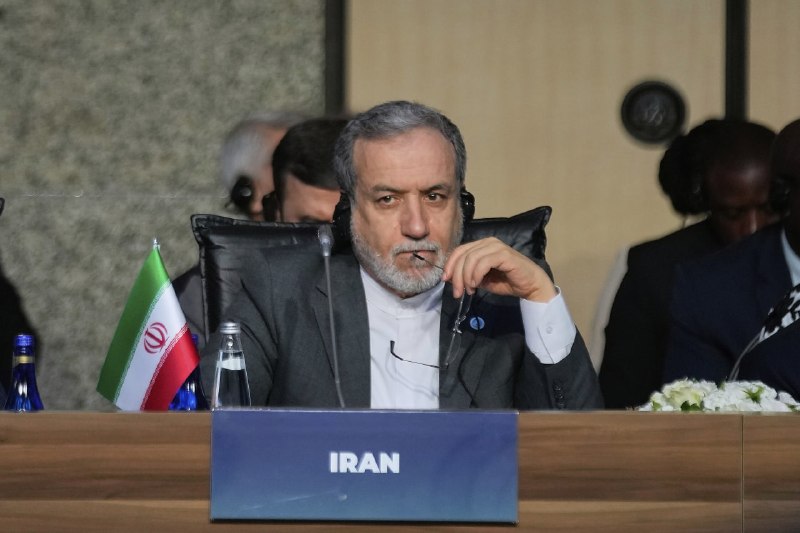
On the afternoon of April 27, 2026, Iranian Foreign Minister Abbas Araghchi sat across from Russian President Vladimir Putin in Moscow. The meeting — confirmed by Iranian state-linked channels and corroborated by independent monitors tracking the trip — produced handshakes and formal statements, but the substance of what passed between the two men matters more than the optics. Both governments face a United States that has tightened sanctions screws throughout 2025 and 2026; both have reason to explore whether a coordinated response is more valuable than parallel-but-disjoint resistance. Araghchi's visit, arriving six weeks after a mid-March trilateral in Riyadh involving US and Iranian officials, marks the second leg of a diplomatic shuttle that suggests Tehran is no longer content to hedge its position between Washington and Moscow — it is moving, however cautiously, toward something more aligned.
The immediate question is whether this meeting signals a strategic pivot or merely tactical coordination. Western analysts have long described Iran-Russia ties as a marriage of convenience constrained by divergent interests: Russia has historically sold nuclear technology to Tehran while occasionally signalling openness to pressure from Western capitals. Iran, for its part, has chafed under the limitations Russia imposed on its military cooperation during the early years of the Ukraine conflict, when Moscow was still careful not to provoke additional Western escalation. The question now is whether Araghchi's visit represents a recalculation on one or both sides — a recognition that the current US posture, which combines maximal sanctions with open threats of military action, has changed the cost-benefit calculus in ways that make deeper Russian-Iranian cooperation more attractive than restraint.
The Saudi Backchannel and Its Aftermath
The context for Araghchi's Moscow trip runs through Riyadh. In early March 2026, Iranian and American officials held indirect talks in the Saudi capital — a format described in Western wire reporting as facilitated but not mediated by Saudi Arabia. Those discussions produced no announced agreement, but they did produce a new procedural reality: a channel existed, and both sides were willing to use it. The question in the weeks since has been whether the channel was a genuine diplomatic opening or a pressure-release mechanism that allowed both governments to manage domestic audiences while real decisions were made elsewhere.
Araghchi's Moscow visit suggests the latter interpretation deserves scrutiny. If the Saudi channel was the primary venue for US-Iranian communication, a parallel high-level meeting with Russia would be redundant — unless Tehran was using Moscow as an assurance mechanism, a way of testing whether Russian support would be forthcoming if the American channel collapsed. Iran has pursued this kind of triangulated diplomacy before; it did so during the JCPOA negotiations of 2013-2015, when Tehran simultaneously engaged European mediators and maintained back-channels with Russia and China as insurance against a deal that served only Western interests. The structure of the current diplomacy bears a family resemblance.
What Russia Wants
Russia's calculus in receiving Araghchi with visible ceremony is easier to reconstruct than Tehran's. Moscow is currently navigating a second year of intensified Western sanctions isolation while sustaining military operations in Ukraine and projecting, through multiple diplomatic vectors, the image of a power with global reach and multiple alliances. A visible meeting with a senior Iranian official reinforces that image: it signals to Western audiences that the sanctions regime has not produced the diplomatic collapse Moscow's critics predicted, and it signals to the Global South that Russia remains a viable partner for governments unhappy with US-led international order.
There is a deeper Russian interest as well. Moscow has long viewed the Persian Gulf as a region where American hegemony is structurally vulnerable — where oil market dynamics, Sunni-Shia demographic tensions, and the entanglements of US security guarantees all create pressure points that a patient revisionist power can exploit. A stronger Russian-Iranian partnership along those lines would serve Moscow's interest in degrading the US position in the Middle East, a goal that aligns neatly with Russia's broader positioning as a counterweight to Western unipolarity.
For Iran, the Russian relationship offers something more specific: weapons, technology, and diplomatic cover. Russian arms transfers — particularly of advanced air defence systems and components relevant to Iran's drone and missile programmes — have been a feature of the bilateral relationship since at least 2022. A stronger partnership could accelerate those transfers, or remove the informal constraints Russia has occasionally placed on them under pressure from Western interlocutors. It also offers Tehran a degree of diplomatic insurance: a Russian veto at the UN Security Council, or a public statement of solidarity, matters in ways that individual Western critics of US policy do not.
The American Pressure Point
The United States enters this picture with a posture that has sharpened considerably since early 2026. Press reporting — including from outlets with access to State Department briefings — indicates that the current US approach combines aggressive sanctions designations against Iranian oil-sector entities with an explicit threat framework regarding Iran's nuclear programme. The Trump administration has signaled on multiple occasions that it views the current Iranian enrichment levels as inherently destabilising, a position that sits uneasily with the JCPOA framework Iran formally abandoned in 2020 but that Tehran has used as a baseline for its own behaviour.
This creates a dilemma for Iran that Araghchi's Moscow trip highlights. The American approach offers little that looks like a credible deal: the sanctions relief on offer appears conditional on steps Iran is unwilling to take without prior guarantees, while the threats appear unconditional regardless of what Iran does. Under those conditions, the rational move for Tehran is to improve its position outside the American channel — to deepen relationships with powers that have both the capability and the incentive to shield Iran from the worst-case scenarios Washington occasionally invokes.
The nuclear dimension matters here. Iranian officials have repeatedly insisted that their enrichment programme is peaceful and purely defensive; Western and Israeli analysts have maintained the opposite. That dispute — what the programme is for, what it could become, what red lines it crosses — has never been settled, and the current diplomatic moment does not appear to be settling it. What the Araghchi meeting does is add a new variable to the calculus: if Iran has stronger Russian guarantees, it may be less inclined to accept a deal that requires it to make significant concessions without guarantees of sanctions relief.
Structural Stakes and Forward View
The implications of a more durable Iranian-Russian alignment extend beyond bilateral relations. A Tehran-Moscow axis operating in coordination — on sanctions, on oil market management, on diplomatic messaging at the UN — would represent a structural challenge to US efforts to isolate both governments. The two states currently account for significant portions of global oil production outside the Western-aligned system; coordinated behaviour on output and pricing would complicate US efforts to use energy market management as a pressure tool. It would also complicate the broader American strategy of treating Iran and Russia as separate problems requiring separate solutions — a strategy that has allowed Washington to offer selective relief to one without conceding anything to the other.
For European states, the implications are more ambiguous. The EU has maintained a sanctions regime against Russia while expressing ongoing concern about Iranian nuclear activity; it has not had to navigate a scenario in which those two problems become structurally linked — in which Russian and Iranian interests align in ways that make it harder to separate the diplomatic tracks Washington wants to keep separate. A deeper Iranian-Russian partnership would create exactly that pressure.
The forward view is uncertain in ways that the sources do not resolve. Araghchi's meeting produced statements of mutual solidarity, but no announced agreements on specific issues — no joint statement on oil, no confirmed arms transfer schedule, no coordinated diplomatic initiative. The gap between visible ceremony and concrete commitment is a familiar feature of Russian-Iranian relations: both governments have strong incentives to signal alignment to Western audiences while maintaining discretion about the specifics of their cooperation. Whether this meeting crosses that threshold — whether it represents a qualitative shift toward something more binding — will depend on the follow-on actions: whether Russian officials make the transit of advanced military technology to Iran more visible, whether joint diplomatic initiatives appear at the UN, whether the oil channel between the two governments develops a more explicit coordination mechanism.
What is clear is that the diplomatic geography around Iran has shifted. The Saudi channel was real, but it was never sufficient. Araghchi's trip to Moscow is a statement that Tehran wants options — and that it is prepared to invest in the relationship with Russia as a way of creating them. Whether that investment yields a durable strategic alignment or remains a more tactical insurance policy is the question that will define the next phase of Iranian diplomacy, and the American, European, and Gulf-state responses to it.
Monexus covered the Moscow meeting as a concrete diplomatic signal rather than a spectacle. The wire frame emphasised the photo opportunity; this piece foregrounds the structural conditions that make the meeting meaningful — the sanctions context, the oil market implications, and the way the Araghchi trip connects to the Saudi channel that preceded it. The goal is to locate the event inside a pattern rather than treat it as an isolated moment.
Wire provenance
This editorial synthesis draws on the following public wire/social posts:
- https://t.me/osintlive
- https://x.com/disclosetv/status/2048758011
- https://t.me/megatron_ron
- Iran's Araghchi and Putin Meet in Moscow as Nuclear Talks Enter Critical Phase1 May
- The Moscow Handshake: Iran and Russia Redraw the Map30 Apr
- Moscow Meeting Reveals How Sanctioned States Built Their Own Financial Infrastructure29 Apr
- Araghchi in Moscow: What the Putin Meeting Signals for Iran's Diplomatic Tightrope28 Apr
- Iran's Araghchi Lands in Moscow as Nuclear Talks Clock Ticks27 Apr