G7 Banks Hold Steady as Iran War Risk Pins Oil Near Three-Week Highs
The world's most powerful central banks are poised to hold borrowing costs this week as oil benchmarks test three-week peaks, with policymakers issuing sharp warnings that a prolonged Iran conflict threatens to unstick inflation progress built over two years.
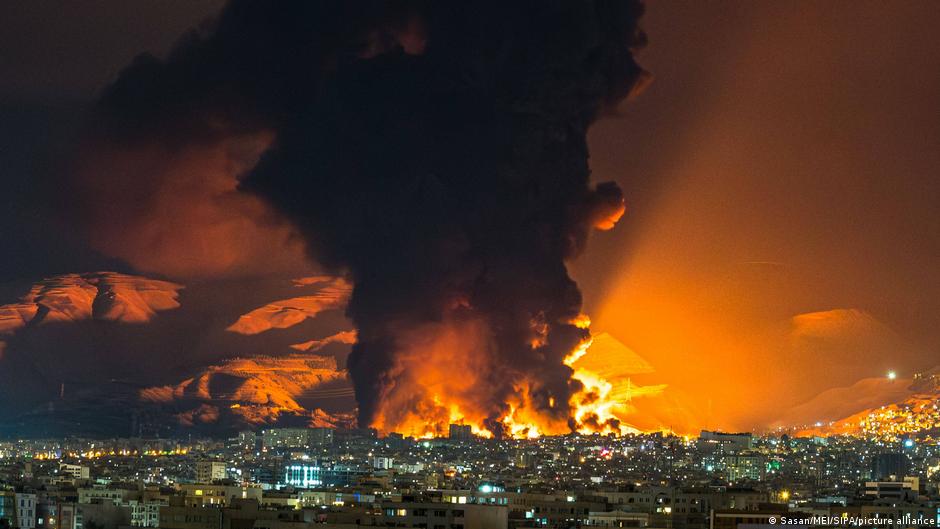
The world's most powerful central banks are preparing to hold borrowing costs steady this week, a decision that carries an implicit warning tucked into every rate decision on the calendar: the economic fallout from a prolonged Iran conflict is no longer a tail risk. It is a contingency planners must account for right now.
Oil benchmarks touched three-week highs on 27 April 2026 as US-Iran peace talks faltered, pushing Brent crude back above levels that rattle consumer wallets and corporate planning cycles alike. The correlation between geopolitical escalation and pump prices has rarely felt this direct — or this uncomfortable for policymakers who spent much of 2024 and 2025 nursing inflation back toward target.
G7 central banks, coordinated through the Bank for International Settlements framework, are expected to issue explicit statements flagging energy-price pass-through as their primary near-term concern. The hold is not neutral. It is a signal that the room to ease has effectively closed until the Iran situation clarifies — one way or another.
Oil Markets Price In the Worst
The proximate driver is straightforward. Brent crude climbed to its highest levels since early April as negotiators in Vienna and Geneva failed to bridge gaps that seemed narrow just six weeks ago. The stall has been attributed, according to wire reporting, to disagreement over sanctions relief sequencing and the status of Iran's civilian nuclear programme — issues that carry enough domestic political weight in Tehran and Washington to make compromise genuinely difficult.
The market response has been mechanical: futures curves steepened, risk premiums embedded in energy stocks rose, and airlines and chemical producers — the first to feel refined-product cost pressure — saw share prices soften. None of this is panic. But it is a market doing what markets do when they price scenarios rather than certainty.
The three-week horizon matters because it aligns with when most G7 central banks complete their staff-level forecasting rounds. A conflict that does not resolve by late May will contaminate second-quarter GDP figures for Germany, Japan, and the United Kingdom — all economies where energy-intensity of manufacturing remains structurally significant.
The Rate Hold Is a Signal, Not Inaction
There is a temptation to read a rate hold as stasis. That would be wrong. Central banks hold when they need flexibility. A cut amid oil-price volatility risks looking reactive and worse, losing control of the inflation narrative. A hold under these conditions is a form of insurance: it preserves optionality while communicating that the committee is paying attention.
The Bank of England, the European Central Bank, and the Federal Reserve have each published research suggesting oil-price shocks carry asymmetric downside risk to growth and asymmetric upside risk to services inflation — the component of the price basket that monetary policy cannot address directly. A $10 sustained move higher translates, by most internal models, into a 0.3 to 0.5 percentage point reduction in real disposable income for households in net importing economies.
The United Kingdom is particularly exposed. London has little room to manoeuvre after a prolonged inflation battle, and any spike in home heating costs — driven by the same geopolitics pushing Brent higher — lands directly on the political register in a country where energy poverty is an established electoral variable. The Bank of England's communications this week will be parsed for how explicitly it connects Iran risk to domestic near-term inflation.
The Structural Problem No One Wants to Name
Beneath the immediate rate decision lies a structural question that G7 communiqués tend to paper over: the global financial architecture has no clean mechanism for absorbing a major Middle Eastern supply shock without it rippling into the real economy within six months. The strategic petroleum reserves that Washington and its allies deployed during the 2022-2023 energy crisis are meaningfully depleted. The buffer that once existed has narrowed.
There is also a dollar-politics dimension that deserves mention, even if central bank statements studiously avoid it. A prolonged Iran conflict tightens the market for Gulf-state crude just as Chinese industrial demand — recovering from its post-stimulus lull — begins to absorb more barrel-for-barrel supply. The marginal buyer matters. China has been systematically diversifying its supplier relationships through Belt and Road infrastructure investments in Kazakhstan, Iraq, and West Africa. A supply squeeze in the Gulf, while painful for Western consumers, is structurally less catastrophic for Beijing than it would have been a decade ago. That asymmetry will show up in currency and bond markets before it shows up in any official statement.
G7 policymakers know this. The rate hold, in part, reflects a judgment that the tools available to them are more constrained than the press release language suggests. The hold signals vigilance. What it cannot signal is capability.
Who Wins and Who Loses
The short-run winners are straightforward: Gulf-state sovereign wealth funds, Russian fiscal revenues at current oil levels, and — paradoxically — US shale producers who benefit from elevated international benchmarks while their domestic Henry Hub price stays comparatively contained. The short-run losers are also straightforward: German manufacturers, UK households, and Japanese automakers, all of whom face input cost pressure against competitors not facing the same geography of risk.
The longer-run calculation is messier. A conflict that lasts six months will either produce a resolution — with its own economic reconstruction dividend — or it will produce a prolonged stalemate that degrades the inflation-fighting credibility central banks spent years rebuilding. The latter outcome is the one that should concern the most people who will never read a Monetary Policy Report.
What Remains Uncertain
The sources reviewed for this article do not establish the probability assigned by any G7 central bank to a prolonged versus contained Iran scenario. The staff forecasts embedded in the hold decisions assume a base case, but the range of alternatives is wide and the economic models used to stress-test them were not designed for a conflict this geographically central to global energy transit. The sources also do not reveal whether any G7 government has activated contingency planning discussions with reserve mechanisms beyond the public SPR releases. That information, if it exists, lives in channels that wire services do not yet access.
What is clear is that the hold is not the end of a chapter. It is the beginning of a wait-and-see period during which every convoy crossing the Strait of Hormuz, every tanker manifest, and every diplomatic back-channel message will carry economic significance that would have seemed disproportionate two years ago. The world adjusted to a new normal after Ukraine. It may need to adjust again.