G7 Central Banks Hold Rates as Iran War Risk Reignites Inflation Fears
G7 central banks are set to hold borrowing costs this week as oil prices surge to three-week highs, complicating their fight against persistent inflation amid escalating Middle East tensions.
The world's most powerful central banks are preparing to hold interest rates steady this week, even as a sharp rise in oil prices driven by the escalating Iran conflict threatens to complicate their efforts to bring down stubborn inflation.
The Federal Reserve, European Central Bank, and Bank of England are all expected to leave borrowing costs unchanged at their respective meetings, according to business coverage on 27 April 2026. The decision reflects a delicate balancing act: inflation remains above target in most G7 economies, but growth is slowing and financial conditions have tightened significantly since the start of the year.
The conflict has changed the calculus. Oil climbed to a three-week high as US-Iran peace talks appeared to stall, raising the prospect of sustained disruption to global energy supply. For central bankers who had begun signaling readiness to cut rates, the timing is awkward. A prolonged war in the Middle East would likely push energy prices higher at precisely the moment when underlying inflation pressures—particularly in services—remain elevated.
The G7 governments are expected to issue coordinated warnings about the economic consequences of the conflict this week, according to reports from business analysts covering the central bank meetings. Those warnings will likely acknowledge that the dual mandate of price stability and full employment has become significantly harder to achieve.
The Oil Market Reaction
Brent crude rose to its highest level in three weeks as negotiations between Washington and Tehran showed no clear path forward. The stall in peace talks, reported across financial wires on 27 April 2026, immediately repriced energy futures and pushed gasoline costs higher across major economies.
For consumers already squeezed by elevated prices for food and services, another oil shock would compound existing pressures. In the United States, average pump prices have risen by over 8 percent since mid-March. In Europe, retail energy costs have followed a similar trajectory, with implications for both household spending power and industrial competitiveness.
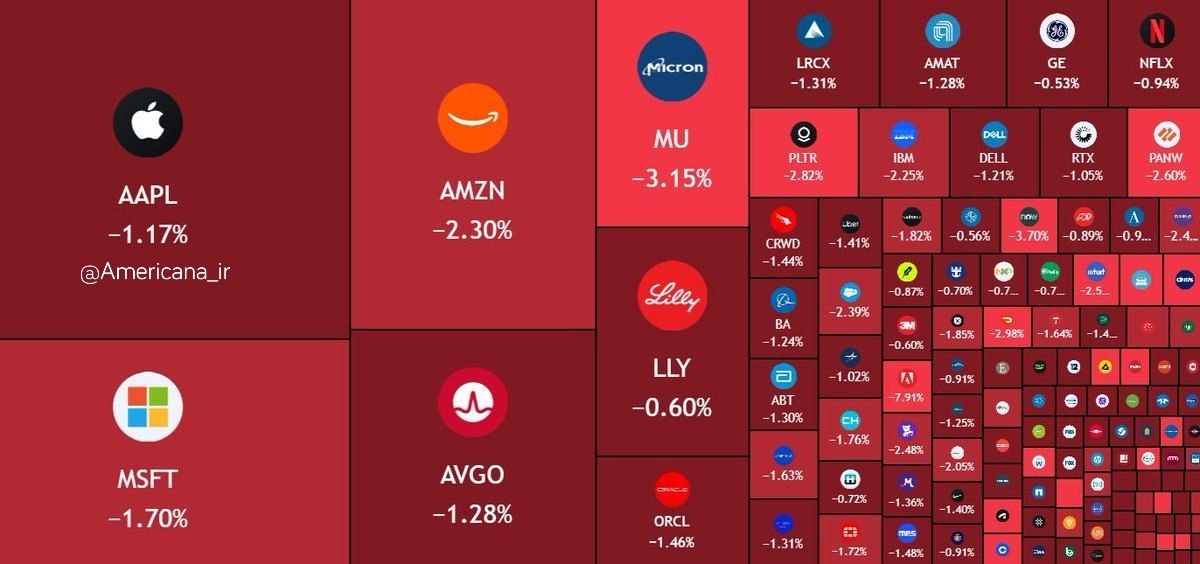
The reaction in financial markets was swift but contained. Equity indices fell modestly on the oil news before stabilizing, while credit spreads widened slightly. The relative restraint in equity markets reflects a bet that central banks will hold rates long enough to assess the trajectory of the conflict before adjusting course.
The more durable shift has been in currency markets. The dollar has strengthened against most major currencies as investors price in the inflationary implications of higher oil and the likelihood of prolonged US military involvement in the region. A stronger dollar, while it dampens import prices, also complicates life for emerging market economies that borrow in dollars.
A Familiar Dilemma With Fewer Tools
The situation confronting G7 policymakers is structurally similar to oil shocks of the 1970s and early 2000s: a supply-side inflation impulse that cannot be addressed by raising interest rates without choking off demand in unrelated sectors. But the context is different in ways that constrain the policy response.
Government balance sheets in most G7 economies are under significant strain following years of pandemic-era spending and stimulus. Fiscal headroom is limited. The political appetite for large new spending packages to shield consumers from energy price spikes—while simultaneously fighting inflation—is low. Central banks, meanwhile, have spent the past three years rebuilding credibility after missing their inflation targets badly in 2022 and 2023.
The result is a policy environment with less flexibility than in previous oil shocks. The Fed has ruled out rate cuts for now, but the signal is complicated by domestic political pressures on the institution. The ECB faces a sharp divide between members in energy-intensive industrial economies—Germany, in particular—those in southern Europe who fear recession more than inflation. The Bank of England is navigating a UK economy that has contracted in two of the past four quarters.
Coordinated G7 action on energy supply—releasing strategic reserves, easing regulatory constraints on production—is possible but politically sensitive. Any move to increase supply would, by definition, reduce the economic pressure on Iran to negotiate. The dilemma is that the short-term fix and the long-term resolution point in different directions.
Geopolitical Risk Meets Economic Fragility
The conflict between Israel and Iran has introduced a category of uncertainty that central bank models are not well-equipped to handle. Standard forecasting frameworks assume some predictability in energy supply chains and trade routes. A sustained military confrontation in the Gulf, or attacks on critical maritime chokepoints, would violate those assumptions in ways that are difficult to model or price.
The structural context matters here. The global energy system has become more fragmented over the past decade, with US shale production providing greater supply-side flexibility than existed in the 1970s, but also with less spare capacity globally. The International Energy Agency's emergency reserves are lower than they were at the start of the century. The strategic petroleum reserves held by the United States and other major economies have been drawn down repeatedly and are at reduced levels.
There is also the question of what a prolonged conflict means for shipping and insurance markets. The Strait of Hormuz remains the world's most critical oil transit corridor, carrying roughly a fifth of global oil commerce. Any credible threat to freedom of navigation there would reprice energy markets more sharply than the current three-week high.
For now, analysts are separating the geopolitical risk premium in oil prices from underlying supply-demand fundamentals. Global oil demand is slowing as Chinese growth disappoints and European industrial output contracts. On a pure fundamentals basis, prices should be lower. The current premium reflects the market pricing in a tail risk—and that tail risk has a non-trivial probability of materializing.
What Comes Next
The next three to six weeks will determine whether the current oil price elevation is a temporary repricing or the beginning of a sustained inflationary shock. The trajectory depends on factors that are genuinely difficult to forecast: the duration and scope of the conflict, the willingness of the United States and European powers to maintain sanctions pressure while offering diplomatic off-ramps, and the behavior of other producers—notably Saudi Arabia and the UAE—who could move to increase output if prices remain elevated.
Central banks are watching closely. A sustained oil price increase that feeds through to core inflation would likely delay rate cuts well into the second half of 2026 or beyond. That would increase debt servicing costs for governments and households already stretched. It would also slow growth in ways that eventually bring inflation down—but through recession rather than adjustment.
The more optimistic scenario is that the current spike reflects risk premium rather than fundamental supply loss, and that prices retreat as diplomatic efforts advance or the conflict stabilizes. In that case, central banks proceed with gradual rate cuts, growth resumes, and the inflation problem recedes without a full-blown crisis.
Neither outcome is guaranteed. The week ahead will provide more data—on inflation, on growth, on energy markets—but not certainty. G7 central banks have chosen to hold and wait. The gamble is that patience buys more clarity than it costs in economic momentum.
This article was produced by the Monexus Europe desk. Coverage drew on business wire reporting and financial market data published on 27 April 2026.