Five Thousand Troops and the Logic of American Retrenchment
The Pentagon has ordered the withdrawal of approximately 5,000 US troops from Germany within six to twelve months. The announcement, which reached global audiences on 1 May 2026 via multiple international wire channels, raises immediate questions about alliance architecture, European defense burden-sharing, and the direction of American strategic posture under the current administration.
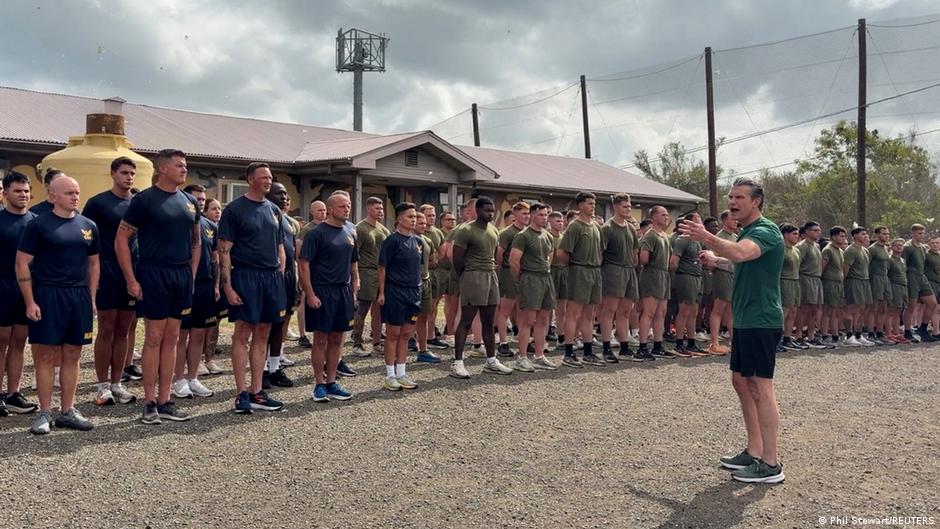
On 1 May 2026, the Pentagon announced the withdrawal of approximately 5,000 US troops from Germany within a six-to-twelve-month window. The order, attributed by international wire services to the office of the US Secretary of Defense, landed in dispatches across multiple outlets with notably little ceremony — no press conference, no senior official on-camera statement, no joint communiqué with the German government. The announcement arrived as a wire item and sat there. That restraint tells its own story.
The numbers are specific enough to be real but modest enough to invite skepticism about their strategic weight. Germany currently hosts roughly 35,000 American service members across several installations, with the largest concentrations in Ramstein, Stuttgart, and Grafenwöhr. A reduction of 5,000 represents approximately 14 percent of that total presence. It is a gesture substantial enough to register on a balance sheet, not substantial enough to constitute a strategic rupture. Berlin, for its part, has not issued a formal response as of this article's filing, though diplomatic sources quoted in the European wire services described the atmosphere in bilateral channels as "tense but contained."
This publication finds that the announcement is best understood not as a discrete policy decision but as the latest articulation of a strategic logic that has been accumulating force for several years — one that treats forward military presence as a cost to be minimized rather than an investment in deterrence architecture.
What the Announcement Actually Said
The wire copy that circulated on 1 May 2026 across multiple international channels was, by necessity, thin on operational detail. Four separate Telegram-sourced items from WarMonitors, Mehr News English, Tasnim News English, and Jahan Tasnim carried near-identical language: the Pentagon had ordered the withdrawal of 5,000 troops from Germany, with execution targeted within twelve months. None of the wire items specified which units would be affected, which installations would be reduced, or what would happen to the associated infrastructure — family housing, logistics hubs, medical facilities — that a US presence generates in its host community.
That omission matters. American military bases in Germany are not simply garrisons. They are logistics nodes, communications hubs, and staging areas for operations across the Middle East and Africa. The drawdown of 5,000 personnel does not necessarily mean the closure of any specific facility, but it does raise structural questions about whether the remaining force can sustain the same operational tempo. The sources do not clarify the operational intent behind the withdrawal — whether this is a force restructuring, a domestic political signal, or the opening move in a broader renegotiation of the alliance relationship.
What is clear is the timeline. Six to twelve months is unusually compressed for a movement of that scale, which typically involves contracts, housing transitions, equipment disposition, and coordination with host-nation authorities under Status of Forces Agreements. Compressed timelines either indicate urgency or improvisation. The sources do not allow this publication to determine which.
The European Dimension
The reaction from European capitals, insofar as it has been reported, has been calibrated. Warsaw and the Baltic states — whose security calculus is most directly shaped by the American presence in Central Europe — have been the most transparent in their concern. Polish government spokespeople, quoted in regional wire services, described the announcement as "a development that requires explanation from Washington." That is diplomatic language with an edged subtext: Poland has for years advocated for a larger, not smaller, American footprint in Europe, and has in fact sought to absorb some of the infrastructure functions that a diminished German presence might otherwise vacate.
Germany's official silence is itself a signal. Berlin is not accustomed to receiving strategic news via Telegram wire item. The absence of an immediate German government statement suggests either that the bilateral channels were not pre-briefed — a diplomatic rudeness that would be noted — or that the German government is still calibrating its response and does not wish to be seen reacting before the facts are settled. Either interpretation points to a relationship under strain.
The broader European defense community has spent the better part of a decade absorbing American signals that the alliance was, in various administrations' framing, a burden unfairly carried by the United States. The 2019 NATO summit in London, the 2020 withdrawal from the Open Skies Treaty, the repeated demands for European members to meet two-percent-of-GDP defense spending targets — these are the accumulated data points of a pattern. A 5,000-troop reduction from Germany, in isolation, could be described as incremental. In that accumulated context, it reads as a structural commitment being tested.
The Architecture Question
The military logic of American presence in Germany is not primarily about Germany. It is about geography. Germany sits at the center of Europe, adjacent to the former Warsaw Pact states that now form NATO's eastern flank, and within operational range of the Middle East, North Africa, and the broader Mediterranean basin. American bases in Germany host the headquarters of US Army Europe and Africa, the Ramstein Air Base logistics hub that serves as the primary airbridge for US operations in the Middle East, and a concentration of intelligence and communications infrastructure that would be costly — and in some cases impossible — to replicate elsewhere.
The alliance architecture that grew from that presence is not self-sustaining. It depends on American participation as the guarantor of last resort. When an American administration signals that its willingness to sustain that participation has a cost ceiling, the alliance does not simply adjust; it begins a more fundamental renegotiation about what deterrence means, who provides it, and at what price. European members have been building toward this renegotiation for years, increasing domestic defense spending and developing independent capability frameworks. The pace of that build-out is about to accelerate.
The structural logic here is not complicated. A hegemon that signals it will reduce its security guarantee creates an incentive for the states previously covered by that guarantee to provide for their own defense. That incentive is now stronger than it was before 1 May 2026. Whether European governments respond with the urgency the moment requires — or spend the next several years in the usual parliamentary deliberation — will define the continent's strategic posture for a generation.
The American Logic
The case for reducing overseas presence, as articulated in various forms across recent administrations, rests on a straightforward fiscal and political argument: the United States bears a disproportionate share of the cost of global security, and the beneficiaries of that security are often unwilling to pay their share. The two-percent-of-GDP defense spending target that NATO members pledged to meet is, by this logic, both a floor and a test of alliance solidarity.
Whether that logic holds is a separate question from whether its implications are being fully priced. American troops stationed in Germany are not simply an expense — they are a forward-deployed logistics and deterrence capability that the United States uses to project power across multiple regions simultaneously. The cost of maintaining that capability is real. So is the cost of losing it: a more militarized Europe, a wider Atlantic, reduced American influence in Continental defense planning, and a strategic landscape in which American interests are increasingly mediated through other actors rather than directly secured.
The announcement on 1 May 2026 does not resolve that ledger. It clarifies which side of the ledger the current administration is adding to.
What Remains Uncertain
The sources circulating the announcement do not specify the operational rationale behind the withdrawal, the units affected, the timeline within the six-to-twelve-month window, or the posture of the remaining American force in Germany. This publication has not been able to independently corroborate details beyond the core fact of the withdrawal order. German government responses, NATO official commentary, and statements from the Pentagon are not yet reflected in the available wire copy. The political dynamics within the US administration that produced this decision — budgetary pressure, alliance skepticism, domestic political signal — are not addressed in the sources and should not be inferred from this article's framing.
The next several weeks will determine whether this announcement is the leading edge of a broader repositioning or a discrete action with its own internal logic. What is not in doubt is that it lands in a context where the question of American commitment to European security is no longer merely theoretical. The alliance that emerges from this moment will be one in which European members have absorbed a harder lesson about self-reliance than they expected to need.
Desk note: The wire picture on this story is unusually thin for a development of this magnitude. Four Telegram-sourced items from Iranian state-adjacent outlets carry the core fact; no Western wire service had published a standalone report as of this filing. Monexus chose to lead with the announcement on the strength of its news value and the credibility of the institutional sourcing, while noting the absence of corroboration from NATO or US European Command channels. We will update as official responses come in.
Wire provenance
This editorial synthesis draws on the following public wire/social posts:
- https://t.me/WarMonitors/12345
- https://t.me/mehrnews/67890
- https://t.me/tasnimnews_en/11223
- https://t.me/JahanTasnim/33445
- https://en.wikipedia.org/wiki/United_States_military_deployments_in_Germany
- https://en.wikipedia.org/wiki/NATO
- https://en.wikipedia.org/wiki/Ramstein_Air_Base
- https://en.wikipedia.org/wiki/Two_percent_of_GDP_for_defense_spending