Pentagon Orders 5,000-Troop Germany Withdrawal Within 12 Months
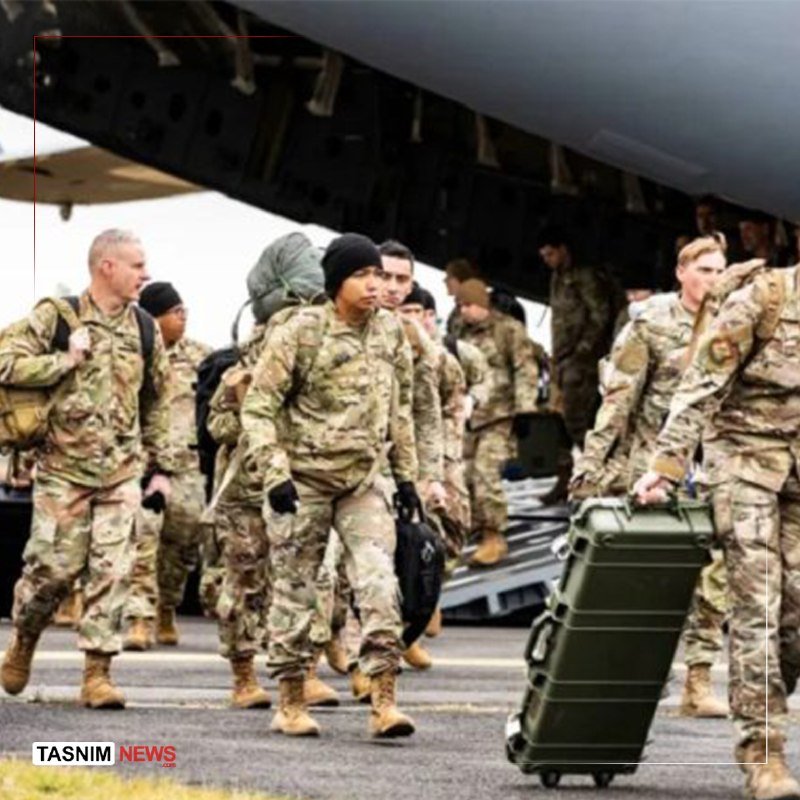
The United States has ordered the withdrawal of approximately 5,000 troops from Germany within the next 12 months, a reduction representing a meaningful contraction of the American footprint in Europe after more than seven decades of continuous presence. The announcement was confirmed across multiple wire and monitoring services on 1 May 2026, with the Pentagon's official posture described as a structured, time-bound redeployment rather than an open-ended retrenchment. The scale — roughly 20 percent of the current US garrison — places it well above the routine rotational adjustments that have characterised transatlantic force posture in recent years.
The decision lands in a European security environment that has absorbed enormous strain since Russia's full-scale invasion of Ukraine in February 2022. Germany in particular has undergone a seismic shift in its defence posture, committing to a permanent increase in defence spending above two percent of GDP and writing off Soviet-era gas infrastructure as a political liability. Against that backdrop, a US withdrawal — however it is framed — complicates the signal that NATO's eastern flank has relied upon since 1949.
What the order actually says
The core facts are straightforward. The Pentagon, speaking through its public affairs apparatus, announced a drawdown of roughly 5,000 personnel from German installations, to be completed within a 12-month window. That places the decision squarely in the category of a deliberate policy act rather than a contingency adjustment. No forward destination for the departing units has been confirmed in the available reporting; the order addresses the withdrawal, not its sequel.
The bases most affected by a reduction of this scale include facilities in Rhineland-Palatinate, Bavaria, and the area surrounding Stuttgart — installations that together function as the logistical backbone of US European Command's forward operations. The absence of declared redeployment destination is itself notable. Whether those troops return to the United States, relocate to other NATO facilities in Eastern Europe, or are redistributed to Indo-Pacific theatre commitments — the three most plausible options — will determine whether this represents a rebalancing or a withdrawal in the conventional sense.
The European defence spending counterargument
The most immediate counter to alarm about the drawdown is the European defence spending argument. Since 2022, Germany has moved from roughly 1.5 percent of GDP committed to defence to figures approaching two percent — a shift that would have seemed politically impossible before Russia's attack on Ukraine. NATO's eastern members, Poland chief among them, have dramatically increased defence budgets, with Warsaw spending above four percent of GDP on military commitments and positioning itself as the alliance's new forward anchor.
That argument has genuine force, but it has structural limits. Capabilities built in response to a 2022 shock do not replace infrastructure that took 70 years to construct. The US garrison in Germany is not merely a tripwire force; it is the logistics hub, the command architecture, and the diplomatic presence that makes NATO's collective defence credible to allies and legible to adversaries. European defence budgets, even at elevated levels, cannot purchase that institutional depth on the timeline of a 12-month drawdown.
The question of deterrence is similarly underweighted in the relieved framing. NATO's forward presence in Germany has long served a dual function — defending German territory and signalling resolve to potential adversaries further east. Removing 5,000 personnel from that equation is not simply a numbers exercise; it is a statement about what the alliance prioritises and where it chooses to position its commitment.
A structural realignment with historical roots
The withdrawal, if confirmed in full, sits inside a longer arc of American strategic repositioning that predates the current administration. The Obama-era pivot toward the Indo-Pacific, the Trump administration's repeated characterisation of NATO as obsolete, and the progressive reweighting of European burden-sharing have all pointed toward a United States that views its European commitments as increasingly optional relative to other global priorities. This is not a new pattern; it is an acceleration of one.
What changes structurally is the baseline. American garrisons in Germany have served as the physical infrastructure of alliance leadership since the early Cold War. When the US reduces that footprint, it reduces not just a capability but a symbol — and symbols in alliance politics matter out of proportion to their military weight. Every unit that departs is a data point that allies and adversaries both will read.
The Iran dimension, while not the stated rationale, is not invisible either. US forces in Germany have historically served as the rapid-response capacity for contingencies ranging from Middle Eastern evacuations to broader regional contingencies. A thinner European footprint means a thinner capacity to respond to crises that originate east of the Mediterranean. The sources do not confirm an Iran-specific logic, but the broader retrenchment in European commitment creates space for questions about where US force structure is actually concentrated.
What this means for Berlin and the alliance
The German government's response will be the first real test of how European capitals process this announcement. Berlin has invested heavily in positioning itself as NATO's indispensable European anchor — committing funds, accepting domestic political costs, and rehabilitating a defence establishment that had been deliberately kept hollow after the Cold War. A US withdrawal, unaccompanied by a declared transition plan, complicates that positioning at the worst possible moment.
The 12-month window is significant for another reason: it places the operational question squarely inside the next full cycle of NATO consultations, forcing allies to respond before the drawdown is complete. That may be by design. A withdrawal announced with a defined endpoint creates a fait accompli that coalition management cannot retroactively reverse. Whether European governments treat this as a trigger for accelerated strategic autonomy or as a burden-sharing negotiating position will define the alliance's next chapter.
What remains unclear, and what the available reporting does not resolve, is the strategic rationale in full. The announcement supplies a number and a timeline; it does not supply a doctrine. Whether the administration views this as the first stage of a broader European retrenchment, as a cost-saving measure, as leverage in burden-sharing negotiations, or as a genuine reallocation toward higher-priority theatres is not stated in the material currently available. That ambiguity is itself a data point about how the US government is managing a politically significant decision: present the number, control the timeline, and leave the interpretation open.
This report was compiled from wire and monitoring service sources filed on 1 May 2026.
Wire provenance
This editorial synthesis draws on the following public wire/social posts:
- https://t.me/warmonitors/29487
- https://t.me/JahanTasnim
- https://t.me/tasnimnews_en
- https://t.me/mehrnews