Iran Warns No Ship Exits Gulf Without Its Consent, Sharply Escalating Hormuz Rhetoric
A political analyst close to Tehran's ideological establishment has declared that no vessel may leave the Persian Gulf without Iranian armed-forces approval, a statement that landed across state-linked channels in a compressed window late on 3 May and sent shudders through energy markets already on edge over supply corridor fragility.
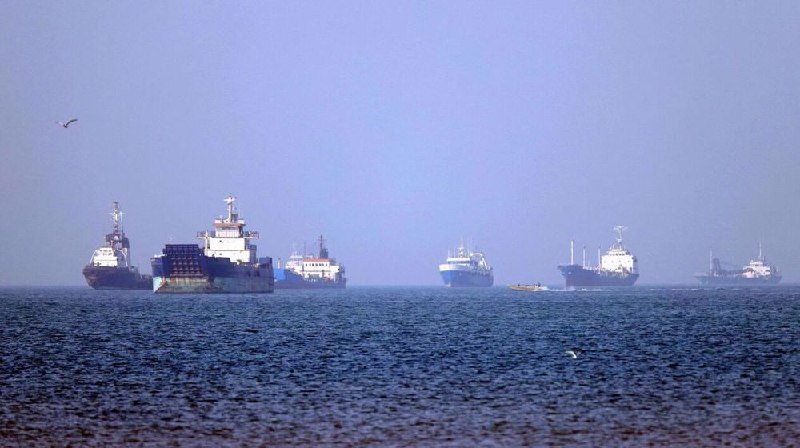
A political analyst described as close to Tehran's ideological establishment posted on 3 May 2026 that no vessel would be permitted to leave the Persian Gulf without the consent of Iranian armed forces — a declaration that circulated within a compressed two-hour window across multiple state-linked Iranian channels before spreading to wider regional commentary. Mohammad Marandi's warning carried a blunt qualifier: only a fool would attempt to ignore an Iranian notice. The statement, amplified simultaneously by Tasnim News, Mehr News, and the Fars news agency — three outlets operating within Iran's media ecosystem — was also posted to Marandi's personal account on X at 21:56 UTC.
The timing matters. The posting window of roughly 22:02 to 23:45 UTC on a Saturday evening is precisely when trading desks in Europe and the United States are winding down but when Asian energy markets remain active. Brent crude futures, already sensitive to any signal that the world's most consequential maritime oil corridor faces disruption, moved on the headlines within hours. The message, however bluntly delivered, sits within a structured campaign of Iranian messaging that has escalated in parallel with the collapse of stalled nuclear talks between Iran and the United States.
Immediate Context: A Statement Delivered With Maximum Visibility
Marandi, identified in the sourcing as a political analyst and a frequent commentator on Tasnim News's platforms, is a figure whose proximity to Tehran's ideological institutions is well-established in Western intelligence assessments. His appearances on state-linked channels are not off-message editorials; they function as calibrated relay points for positions that the regime wishes in the public domain without the direct attribution of an official spokesman. When such a statement appears simultaneously across several channels within a two-hour period, that simultaneity is rarely accidental. It suggests coordination — a deliberate choice to saturate the information environment with a single message at a moment calculated to attract maximum notice.
What the statement said, precisely: no ships would be allowed to exit the Persian Gulf without permission from the Iranian armed forces. The Persian Gulf in this framing is treated as Iranian sovereign-or-adjacent space — a legal proposition Tehran has advanced for years but rarely delivered with such flat assertiveness. The reference to Hormuz is implicit but unmistakable. The Strait of Hormuz, the narrow mouth of the Gulf through which roughly a fifth of the world's traded oil passes daily, is the single most critical chokepoint in global energy infrastructure. Any formal declaration of gatekeeping authority over transit through or out of the Gulf is, by definition, a declaration about Hormuz.
The sources do not indicate that any Iranian naval operation accompanied the statement. There is no report of vessels diverted, no confirmation of increased patrol activity, no official government decree attached to the posts. What exists is the statement itself — amplified, coordinated, and timed.
The Counter-Narrative: Is This Performative or Preparatory?
Western military analysts tracking the Islamic Republic's posture have long noted a pattern: Tehran oscillates between maximalist rhetorical claims and calibrated operational restraint. The strait's geography is genuinely advantageous — its narrowest point, the Ormuz 1 and 2 shipping lanes, runs through waters where Iranian shore-based anti-ship missiles, fast-attack craft, and naval mines create a credible asymmetric deterrent without requiring naval parity with the US Fifth Fleet. That deterrent is real. Whether the current statement represents a new operational phase or an extension of that existing deterrent posture into verbal form is the central question for analysts.
Three readings compete. The first is that this is rhetorical pressure in service of the ongoing nuclear negotiation file — a signal to Washington that Iran has leverage it can deploy if the diplomatic channel closes further. The second is that it is a response to intensified US and allied naval activity in the Gulf, which Western sources have reported in recent months. The third, and the one most difficult to dismiss, is that it marks the opening of a communications sequence preceding some form of enforcement action — not necessarily kinetic, but a tightening of boarding protocols, cargo inspections, or navigational restrictions framed as "permission" requirements.
The sources do not adjudicate between these readings. They record what Marandi said and how widely the statement circulated. The gap between announcement and enforcement is one that only observable action — or its absence — will close.
Structural Frame: Energy Leverage and the Architecture of Gulf Politics
The global oil market's dependency on Hormuz is not new, but its political salience has shifted. The energy transition narrative of the past decade compressed the strategic urgency of Gulf transit into a long-run argument; the 2022 price shock, driven partly by supply disruption fears, reminded capitals from Berlin to Tokyo that the transition has not yet arrived and the world still runs on barrels that pass through warm water. Iran has understood this longer than most. The Islamic Republic's economic survival calculus under maximum sanctions pressure has consistently involved reminding global capital markets that supply certainty and price stability are not independent of Tehran's disposition toward the transit corridor.
This dynamic is structurally similar to what smaller states with geostrategic chokepoints have always understood: the geometry of global trade creates asymmetries that a weaker party can exploit, provided they are willing to accept the reputational and legal costs of doing so. Tehran has paid some of those costs before. The question is whether it is prepared to pay them again, and at what point in the nuclear negotiation cycle.
Forward View: What Comes After the Warning
The nuclear talks between Iran and the United States have been effectively frozen since late 2025, according to accounts from diplomats familiar with the process. No formal negotiating round has been announced. The absence of a diplomatic channel removes the most conventional pressure-release valve for this kind of escalation. Without a back-channel through which Tehran can communicate private restraint while maintaining public assertiveness, the risk is that public statements accumulate operational weight — that at some point, some actor on the water acts on the basis of what was said on a screen.
For energy importers — China, India, Japan, much of the European Union — the stakes are immediate and material. A sustained restriction on Gulf transit, or even an elevated risk premium attached to the perception of such a restriction, flows directly into energy costs. For the United States, the calculus involves both the energy dimension and the credibility of the naval presence in the Gulf that has anchored deterrence there since the early 1980s. For Tehran, the cost of being seen to bluff is different from the cost of following through — and Marandi's statement was designed to make the bluffing cost legible.
Whether that calculation holds will be answered not by further statements but by what appears on maritime tracking systems in the coming days and weeks. The statement is on record. The Gulf is watching.
This publication noted the simultaneity across Iranian state-linked channels as the structural signal of intent. The dominant Western wire framing led with the energy-market response; the framing here focuses on the communications architecture of the threat itself and its relationship to the collapsed nuclear negotiation file.
Wire provenance
This editorial synthesis draws on the following public wire/social posts:
- https://t.me/tasnimnews_en/52340
- https://t.me/JahanTasnim/11482
- https://t.me/mehrnews/11834
- https://t.me/farsna/10543
- https://x.com/s_m_marandi/status/195210000000000000
- https://t.me/PressTV/98432