Iran's Strait Warning and the Fragile Arithmetic of Gulf Transit
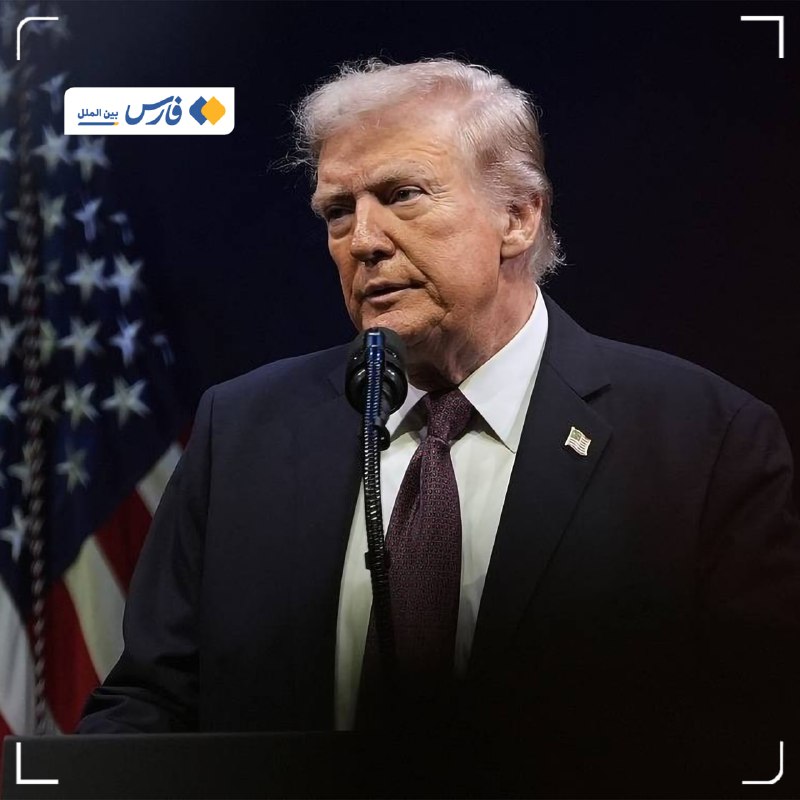
On 3 May 2026, Mohammad Marandi — a political analyst whose commentary circulates widely across Iranian state media — delivered a warning that quickly traveled the length of the Persian Gulf and beyond. Speaking through Tasnim, Mehr News, and Farsna, and promoted on his own X account, Marandi stated that no ship would be permitted to exit the Persian Gulf without the permission of the Iranian armed forces. "Only a fool would attempt to ignore an Iranian warning," he added. The language was blunt, the venue public, and the timing notable: a period when negotiations over Iran's nuclear programme and the broader web of US sanctions remain deadlocked, while regional tensions anchored in the Israel-Hamas conflict continue to strain every corridor of Middle Eastern diplomacy.
The statements generated no shortage of reaction in Western capitals, where officials have long treated Iranian threats against maritime traffic in the Gulf as among the most credible pressure levers Tehran possesses. US naval assets operate continuously in the Gulf, and the US Fifth Fleet maintains a visible presence throughout the waterway. Yet the statement's significance may be less about immediate naval capability — the US and its allies maintain substantial military presence in the region — and more about the diplomatic signal embedded in a public, amplified warning issued through channels designed to ensure it reaches regional governments, energy markets, and the negotiating tables where Iran's case is being argued.
The Warning and Its Immediate Context
Marandi is not a government official; his remarks carry no formal operational weight. But the channels through which his statement was distributed — Tasnim's English service, Mehr News, Farsna, and his own social media — are not passive conduits. These outlets function as amplification apparatus for positions that Tehran wishes to position as credible. The content of the warning, that Iranian armed forces would control which vessels exit the Persian Gulf, maps onto a long-standing Iranian framework: that the Strait of Hormuz, through which roughly a fifth of the world's oil trade passes, represents a strategic asset whose disruption would carry global consequences.
The immediate backdrop includes stalled nuclear negotiations, the re-imposition of extensive US sanctions following the collapse of the Joint Comprehensive Plan of Action, and continued regional hostility anchored in the Gaza conflict. Iranian officials have repeatedly characterised the sanctions regime as economic warfare; the framing of the Gulf warning — that Iran's armed forces control access — echoes the broader argument that Tehran possesses leverage that cannot be neutralised by Western diplomatic pressure alone. Whether this reflects operational intent or strategic signalling designed to raise the political cost of the sanctions regime is a distinction that Western analysts have not resolved.
The specificity of the claim — control over exit routes, not just the strait itself — is worth noting. Iranian maritime claims in the Gulf extend well beyond the narrow channel of Hormuz. Iranian naval and Revolutionary Guard assets operate throughout the northern Gulf, and the country's anti-ship capabilities have been the subject of sustained attention from US military planners for more than a decade. Any operation targeting commercial shipping would face a significantly different threat environment than the narrow strait itself, with multiple approach corridors subject to surveillance and, in a conflict scenario, potential interdiction.
Counter-Narrative: Capability, Credibility, and Limits
Western military assessments have historically treated Iranian threats to the Strait of Hormuz as credible but limited in execution. The US Fifth Fleet operates with carrier strike groups, destroyer squadrons, and enablers that provide substantial deterrence against a state-level maritime interdiction attempt. Iran's asymmetric capabilities — fast attack craft, minesweeping challenges, coastal missile systems — are designed to raise the cost and risk of US naval operations rather than to achieve fleet-on-fleet superiority. The consensus among defence analysts is that an Iranian attempt to fully close the strait would invite overwhelming US military response, making full closure operationally irrational even in a heightened crisis.
The more likely scenario, in most analyses, is selective interdiction targeting vessels perceived as operating in violation of Iranian interests — a pattern of coercive signalling rather than total closure. Previous Iranian seizures of tankers and temporary detentions of commercial vessels in the Gulf have followed this logic: limited enough to avoid triggering US military retaliation while generating sufficient disruption to demonstrate leverage. Marandi's statement, read in this light, may be less a declaration of imminent closure and more an assertion of the conditions under which Iran would consider such actions justified — a political prerequisite for coercive operations rather than a direct operational order.
The credibility of the warning also depends on the state of negotiations at the time it was issued. Iranian officials have frequently used heightened rhetorical threats as a pressure tool during periods when the nuclear talks face stagnation or when they perceive Western capitals as unwilling to offer sanctions relief. The public framing of Iranian control over Gulf transit operates on two registers simultaneously: it signals to regional adversaries that Iranian deterrence remains active, and it signals to Western governments that the costs of sustained sanctions include the risk of maritime disruption that global energy markets cannot absorb without significant price volatility.
The Structural Context: Energy Chokepoints and Geopolitical Leverage
The Persian Gulf's significance to global energy markets is not a background condition — it is the primary reason the waterway occupies a central position in every assessment of regional stability. Roughly 21 million barrels of oil per day transited the Strait of Hormuz in recent years, a volume that makes even temporary disruption a first-order concern for energy planners across Asia, Europe, and the Americas. The strait's physical characteristics — 21 miles wide at its narrowest, with shipping lanes separated by a two-mile buffer — make it inherently vulnerable to saturation threats. Mines, swarm tactics by fast attack craft, and coastal cruise missiles can each pose challenges to commercial shipping that are disproportionate to the resources required to deploy them.
Iran has long understood this asymmetry. A country whose military spending and conventional naval capabilities fall well below those of the United States and its regional allies nevertheless possesses a geography — and a specific geography, at the world's most critical maritime chokepoint — that provides a form of structural leverage that no amount of naval investment can fully neutralise. This is the same logic that has governed Iranian Gulf policy since the early 1980s, when the Iran-Iraq war produced the devastating tanker war that demonstrated how vulnerable the world's oil infrastructure is to determined actors operating from land-based positions.
The current period is distinct in one important respect: the confrontation is not primarily between Iran and a regional adversary in a hot war, but between Iran and a US-led sanctions regime designed to constrain its nuclear programme. The leverage calculus is therefore different. Iran's interest in maintaining the strait's basic operability — it exports its own oil through Gulf terminals — means total closure is not a rational option under normal circumstances. But the use of strait-related warnings as diplomatic leverage, calibrated to raise the political cost of sanctions without triggering the military response that full closure would entail, fits within a coherent Iranian strategy. The warning issued through Marandi on 3 May operates precisely in this register: asserting the existence of a capability and a willingness to use it, without triggering the operational chain of events that would force a response.
The structural position also informs how regional states interpret the warning. Gulf Cooperation Council members — Saudi Arabia, the UAE, Qatar, Kuwait — each have direct interests in strait stability. Their oil export infrastructure is oriented around Gulf terminals and the strait passage. Any escalation that threatens commercial shipping affects them before it reaches Western consumers. The political response from these capitals, and the extent to which they signal support for the US posture or attempt to moderate the confrontation through back-channel communication with Tehran, will be a significant indicator of how the warning is received at the level of the region, not just the level of great-power signalling.
Precedent: When Warnings Become Action
Iranian threats against Gulf shipping have a historical record that is more nuanced than either the alarmist or dismissive characterisation often found in Western coverage. In 2019, a spate of tanker attacks in the Gulf of Oman — which the US attributed to Iran — and the seizure of the British-flagged Stena Impero demonstrated that Iran was willing to conduct coercive operations against commercial shipping when it judged the political moment appropriate. The operations were designed to generate disruption and political pressure without crossing thresholds that would compel a major military response.
Earlier, during the peak of the Iran-Iraq war in the 1980s, Iran conducted extensive mining operations in the Gulf and targeted tankers sailing under flags of nations aligned with Iraq. The Tanker War caused enormous disruption to global oil shipments and required a major US naval escort operation — Operation Earnest Will — to protect Kuwaiti-flagged vessels. That episode demonstrated both the vulnerability of Gulf shipping to determined interdiction and the limits of US naval protection when confronting a resourceful adversary willing to absorb significant political costs.
The current warning does not describe a specific action. It describes a condition — Iranian permission required for Gulf transit — that is not, in normal circumstances, operative. The precedents suggest that the gap between the stated condition and actual enforcement is the variable that matters. Previous Iranian actions have demonstrated a capacity to create meaningful disruption at levels below the threshold that would compel a full military response. What the warning does is establish, publicly and on record, that Iran considers the condition operative — and therefore creates the political context in which selective enforcement becomes more defensible as a matter of self-characterisation.
The nuclear dimension adds a layer not present in previous confrontations. Iran's current uranium enrichment levels, and the questions about the military dimensions of its programme that Western intelligence assessments continue to raise, have placed sanctions at their most extensive since the JCPOA's collapse. The Gulf warning may be read as an assertion that Iran possesses leverage that Western sanctions cannot fully neutralise — that the constraints on Iran's programme operate alongside, but do not eliminate, Tehran's ability to impose costs on the international system through a chokepoint that global prosperity depends upon keeping open.
Stakes: Who Wins If This Escalates — and Who Wins If It Doesn't
If the warning is absorbed as a political signal without operational follow-through, the primary beneficiary is the negotiating environment that has produced the sanctions regime. The US and its European partners can point to deterrence success; Iran can claim it demonstrated resolve and capability without paying the military price that would follow an actual interdiction. Neither side moves materially, but the dynamic of pressure and response that has characterised the past several years continues.
If selective enforcement follows — tanker detentions, inspections, or harassment of vessels in disputed circumstances — the calculation shifts. Commercial shipping insurers, already sensitive to Gulf risk, would reprice premiums sharply. Asian buyers, particularly those in China, Japan, and South Korea who depend on Gulf imports, would face increased costs and heightened uncertainty about supply continuity. The crude market reaction — a function of perceived risk rather than actual physical disruption — could produce price spikes that affect global energy economics well before any physical shortfall materialises. This is precisely the leverage Iran seeks: not necessarily the disruption itself, but the market response that demonstrates the consequences of sustained sanctions and increases the political pressure on Western governments to offer relief.
The regional dimension is equally consequential. Gulf states have invested heavily in US security partnerships, but they have also maintained their own channels to Tehran, particularly through Oman and Qatar. A calibrated Iranian warning that does not cross into direct confrontation with US naval assets may produce a different regional response than one that does — one in which Gulf states quietly urge de-escalation without publicly abandoning their Western security relationships. The UAE and Qatar, in particular, have experience navigating between the US security umbrella and Iranian regional influence; how they position themselves during a period of heightened Gulf tension will shape whether the warning remains political theatre or becomes a trigger for wider regional instability.
What remains uncertain is whether the warning reflects a coordinated decision at the level of Iran's political leadership or an independent assertion by an analyst whose views do not map directly onto official policy. The distribution of the statement across multiple state-affiliated channels suggests it was not accidental — the apparatus that amplified it does not distribute content without approval. But the gap between a political analyst's public warning and a government order remains significant. The sources do not specify whether Marandi's statement was made at the direction of or with the knowledge of senior Iranian officials, nor whether any operational planning relating to Gulf enforcement has been initiated in response to the conditions the statement describes.
What can be said, with the evidence in hand, is that the statement's content — Iranian armed forces control over Gulf transit — represents a position that has been consistent with Iranian strategic doctrine for decades. Its public articulation through channels designed for regional and international amplification signals an intention to make that position visible and attributable. Whether the intention proceeds to enforcement, and whether enforcement triggers the US response that Iran would prefer to avoid, is the question that will determine whether 3 May 2026 is remembered as a warning or as a prelude.
This publication compared the framing of the Iranian state-media amplification — which framed the warning as an assertion of territorial and maritime authority — against Western wire framing that characterised it as a threat to global energy security. The two framings are not contradictory, but they carry different implications for how the warning should be read: the first as a statement of sovereign position, the second as a destabilising provocation. Both readings are consistent with the available evidence; neither can be resolved without more information about Iranian intent and operational status.
Wire provenance
This editorial synthesis draws on the following public wire/social posts:
- https://t.me/tasnimnews_en/124857
- https://t.me/JahanTasnim/45631
- https://t.me/farsna/98234
- https://t.me/mehrnews/287641
- https://x.com/s_m_marandi/status/1920345678234561024