Arsenal's European Renaissance: How the Gunners Reached the Champions League Final
Arsenal have reached their first Champions League final since 2006 after a 2-1 aggregate defeat of Atletico Madrid, with a resilient defensive display in the second leg sealing their passage to the showpiece.
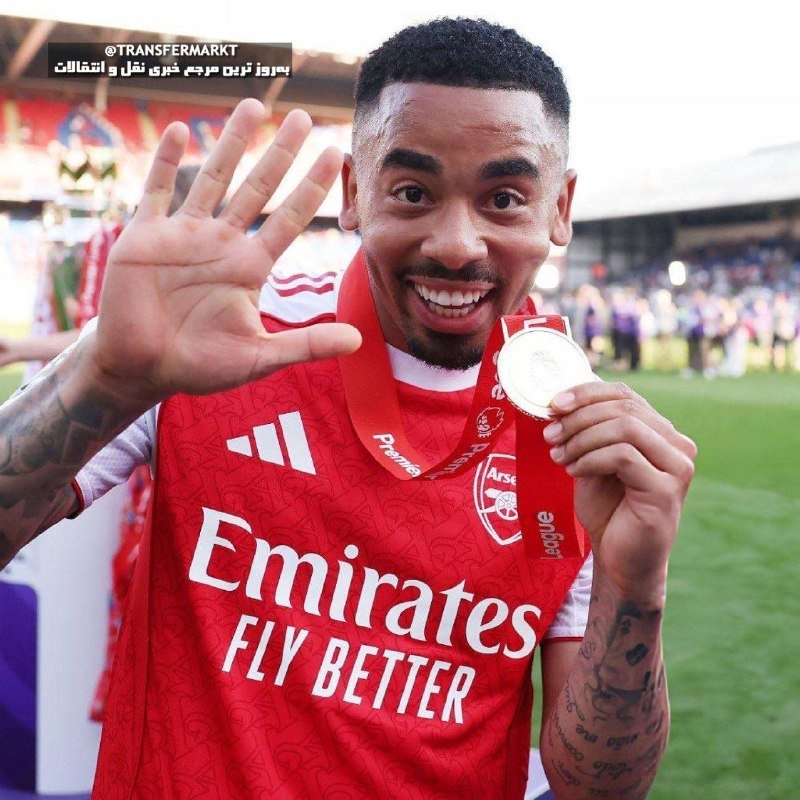
Arsenal sealed their place in the Champions League final for the first time since 2006 on Tuesday, defeating Atletico Madrid 2-1 on aggregate in a semi-final that tested their character as much as their quality.
The Gunners advance after a season that has reshaped expectations in north London. Having led the Premier League table for much of the campaign, Mikel Arteta's side now stand 90 minutes from a potential double — the domestic title and Europe's premier club competition — that few outside the Emirates would have predicted when the group stage began in September.
A First-Half Foundation
The decisive moment arrived before the interval. Bukayo Saka's 37th-minute strike gave Arsenal a 1-0 lead on the night and extended their aggregate advantage to 2-1, having won the first leg 1-0 in Madrid. The winger's composure in front of goal shifted the tie's momentum decisively in Arsenal's favour heading into the break.
It was the kind of moment the club had lacked in previous European campaigns. Saka, who has carried significant creative responsibility throughout this run, delivered when the atmosphere at the Emirates reached its peak. His finish, slotted past the goalkeeper after a swift build-up, silenced the doubters who had questioned whether Arsenal's young squad could handle the pressure of a two-legged European semi-final.
The first-half strike meant Arsenal entered the second half with a lead that demanded careful management. Atletico, under Diego Simeone, are never comfortable to play against in such scenarios — their defensive organisation and physicality have broken better-drilled sides than this one. Arsenal knew what was coming.
The Second-Leg Resilience
What followed was a masterclass in game management. Atletico pressed and probed, creating the kind of set-piece chaos and transitional moments that have undone many of Europe's traditionally stronger sides in recent years. The 51st minute of the second leg proved pivotal — Arsenal's defence, so often criticised in earlier years for vulnerability under pressure, stood firm when the situation demanded it most.
CBS Sports noted that what took place in that moment "won't be forgotten as the Gunners' defense stepped up in the biggest moment." The publication's analysis underlined that Arsenal's progression was not merely a function of attacking quality but of defensive character — a trait this squad has visibly cultivated under Arteta.
The 2-1 aggregate victory tells only part of the story. Arsenal absorbed pressure across both legs in a manner that suggested tactical discipline rather than merely defensive fortune. They won the first leg through discipline and transition; they survived the second through exactly the same principles, amplified by the noise of their home crowd.
Chasing History
The achievement carries historical weight. Arsenal last reached the Champions League final in 2006, when they lost to Barcelona in Paris. That side, built around Thierry Henry, Patrick Vieira, and Cesc Fabregas in his early years, was widely regarded as one of the finest Arsenal have fielded. The current squad has been built through a different philosophy — younger, more structured, built from the back in a manner Arteta has explicitly pursued since his appointment.
Reaching the final means Arsenal now have the opportunity to lift both the Premier League and Champions League in the same season. Whether they achieve the domestic title will depend on the final weeks of the league campaign, but their European credentials are no longer in question. They have beaten elite opposition across multiple rounds, adapting their approach against Porto, then Real Madrid, then Atletico.
The question now is who they face in the final. That match-up will determine the scale of what Arsenal have accomplished. But reaching this stage — reaching it with games to spare in both semi-final legs — represents a transformation that extends beyond one result.
What This Means Going Forward
The structural significance is difficult to overstate. Arsenal's run comes at a moment when English clubs' dominance in European competition has become a matter of governance as much as sporting quality. Financially, the Premier League's broadcast revenues and commercial scale have created a resource gap that other leagues cannot easily close. Arsenal's progression reinforces that dynamic while simultaneously proving that spending alone does not guarantee European success.
Arteta has built a squad with defined roles and clear tactical patterns — a contrast to the improvisation that has sometimes characterised English sides in Europe. The Gunners' ability to manage both legs of a semi-final without significant defensive lapses suggests a maturity that their manager has worked to instil since taking over in December 2019.
For Arsenal's hierarchy, the final represents commercial and sporting stakes that extend beyond the immediate result. A victory would alter the club's standing in recruitment conversations, in sponsorship negotiations, and in the broader assessment of whether north London can sustain a genuine challenger to Bayern Munich, Real Madrid, and the Manchester clubs at the top of European football's hierarchy.
The 2026 final awaits. Arsenal have earned their place there.
This publication's coverage of Arsenal's Champions League run has prioritised tactical analysis and squad depth over the more celebratory framing common to much of the wire reporting.
Wire provenance
This editorial synthesis draws on the following public wire/social posts:
- https://t.me/TheAthletic
- https://t.me/TheAthletic