Iran, Washington and the Strait of Hormuz: The Anatomy of a Standoff
Escalating rhetoric from Washington and a blunt Iranian warning about the Strait of Hormuz have put one of the world's most critical oil chokepoints back at the centre of global energy anxiety.
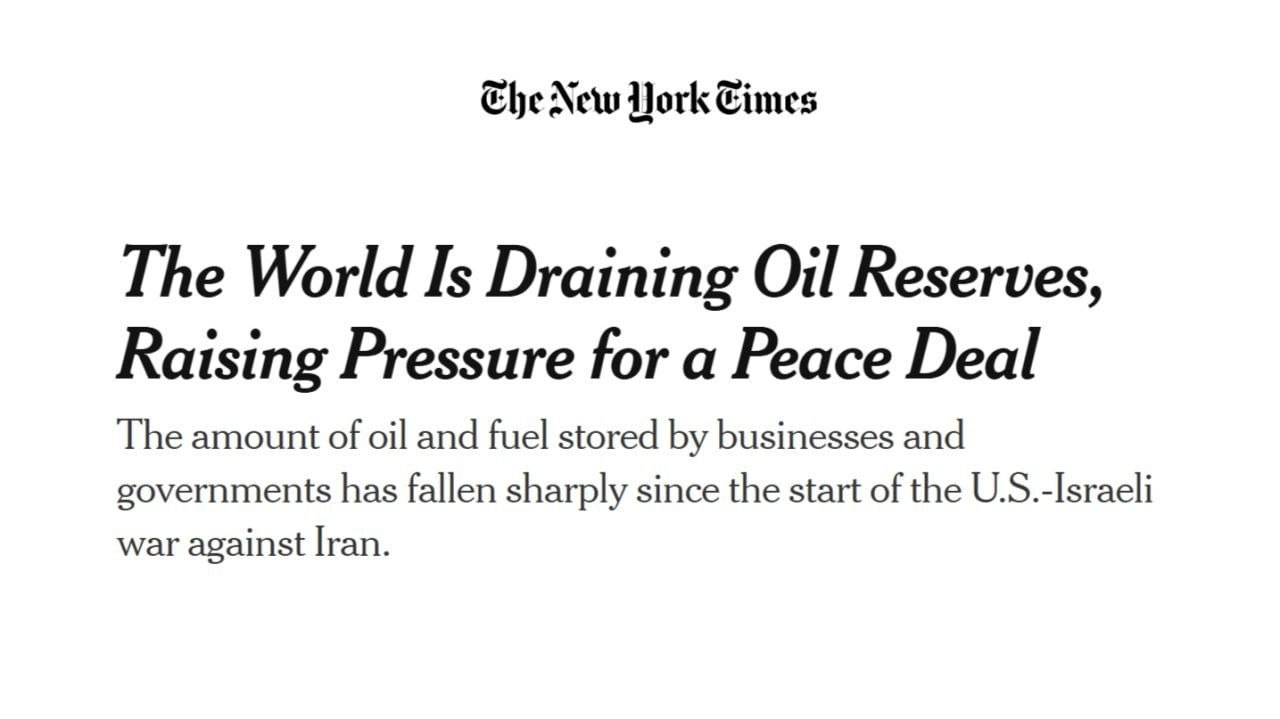
The Strait of Hormuz, the narrow Persian Gulf passage through which roughly a fifth of the world's oil flows, has become the focal point of a sharp and widening rhetorical exchange between Washington and Tehran. On 4 May 2026, President Donald Trump warned that Iran would be "blown off the face of the earth" if it attacked American ships escorting commercial vessels through the waterway. Within hours, Iran's Islamic Revolutionary Guard Corps delivered an equally pointed response: ships violating its regulations in the strait would be met with force.
The exchange marks the most direct American warning to Iran over the Hormuz corridor since the early months of the current administration's maximum-pressure campaign. It also represents the first time Washington has publicly framed the strait's security as an active American naval mission, rather than a matter for regional partners. That shift in posture — from deterrence-by-threat to deterrence-by-presence — is what makes the current moment distinct.
The American position
American officials have framed the Hormuz mission as a response to Iranian interference with commercial shipping — a charge Tehran denies. According to Reuters, Trump separately called on South Korea to formally join the effort, expanding what had been a predominantly American naval undertaking into something closer to a coalition operation. That invitation, reported on 4 May 2026, signals an ambition to broaden both the legal and political cover for a sustained presence in the strait.
The specific trigger for Washington's heightened posture remains partially obscured. The sources consulted do not detail a particular incident — a seized vessel, a near-collision, or an intercepted cargo — that precipitated the 4 May statements. What is clear is that the administration has moved from implicit deterrence to an explicit forward-deployed posture, with American warships positioned not merely to monitor the passage but to actively escort flagged vessels.
The political deputy of the IRGC, identified as Sardar Javani by Tasnim News in an English-language report on 4 May 2026, offered a counter-assessment: the costs of escalation, he argued, would fall disproportionately on the United States. The framing from Tehran's side casts any American escalation as structurally self-defeating — a position that, whether or not it reflects genuine strategic calculation, is calibrated for a domestic Iranian audience as much as for Washington.
The Iranian calculus
Iran's position is rooted in a long-standing claim to regulatory authority over the strait, a body of water that is — by any geographic measure — Iran's most strategically consequential piece of real estate. The Hormuz Closure Crisis of the 1980s demonstrated that Tehran is willing and able to disrupt the passage, and that the economic consequences would be felt far beyond the Persian Gulf.
The IRGC statement that ships violating Iranian regulations would face force is a formal assertion of that claim, not merely a rhetorical retort. It sets a threshold: any escorted vessel that operates outside whatever Iranian authorities deem acceptable conduct becomes a potential target. The statement does not specify what those regulations are, which is itself significant — ambiguity serves as a deterrent, inviting caution from shippers without triggering an immediate confrontation.
Tehran's calculation appears to be that American military presence in the strait, rather than being a stabilizing factor, is itself a provocation. From that perspective, escorting commercial ships normalises a state of quasi-hostility and makes Iranian compliance with what Iran views as its own territorial oversight responsibilities harder to sustain politically.
What this means for energy markets
The Strait of Hormuz's significance to global energy is not disputed. The passage handles roughly 21 million barrels of oil per day — a figure that represents between a fifth and a quarter of global oil consumption depending on the accounting methodology. Any sustained disruption, whether through direct interdiction, a collision that escalates to armed conflict, or a voluntary rerouting by shippers unwilling to accept the risk, would immediately compress global supply.
The sources consulted do not indicate any current physical disruption to shipping. Spot freight rates, insurance premiums, and the behaviour of oil futures markets on 4 May 2026 are not captured in the available material. What is evident is that the rhetorical escalation alone has refreshed a risk premium that had been dormant since the early phases of the latest regional tensions.
For energy-importing nations — particularly in Asia, where most of the strait's throughput ultimately lands — the immediate concern is not that a blockade is imminent but that the legal and operational framework governing the strait is becoming contested. A world in which American warships escort vessels and Iranian authorities reserve the right to respond by force is a world in which every tanker transit carries a political tail risk that previously was theoretical.
The path forward
Whether this exchange resolves into a managed tension — a sustained but non-escalatory standoff, with both sides maintaining pressure without crossing thresholds — or deteriorates into something more consequential depends on factors the current sources do not fully illuminate. The absence of a clear triggering incident in the available material makes it difficult to assess whether Washington is responding to a specific Iranian action or establishing a new operational baseline. Similarly, the internal Iranian debate about the wisdom of direct confrontation with American naval forces is not visible in the current thread.
What is clear is that the Strait of Hormuz has returned to the top of the list of the world's most consequential geopolitical flashpoints. The combination of Iranian regulatory assertions, an expanded American escort mission, and a South Korean dimension that introduces yet another regional actor with strong incentives to keep the strait open means that the next few weeks will test whether diplomatic channels are still operative at the level that this situation requires.
This publication covered the 4 May exchange primarily through Iranian state-adjacent (Tasnim News) and Western wire (Reuters) lenses. Monexus notes that both frames carry institutional assumptions — the Iranian framing presents the IRGC position without independent corroboration of the claims about American costs, while the Western wire framing treats the American escort posture as a straightforward response to Iranian behaviour without examining the operational history of US naval presence in the strait. Readers assessing this situation should consult primary shipping-data sources and independent regional analysts for a fuller picture.
Wire provenance
This editorial synthesis draws on the following public wire/social posts:
- http://reut.rs/4tbrumL
- https://t.me/tasnimnews_en/45782