Gaza Health Officials Warn of Rising Child Malnutrition as Humanitarian Crisis Deepens
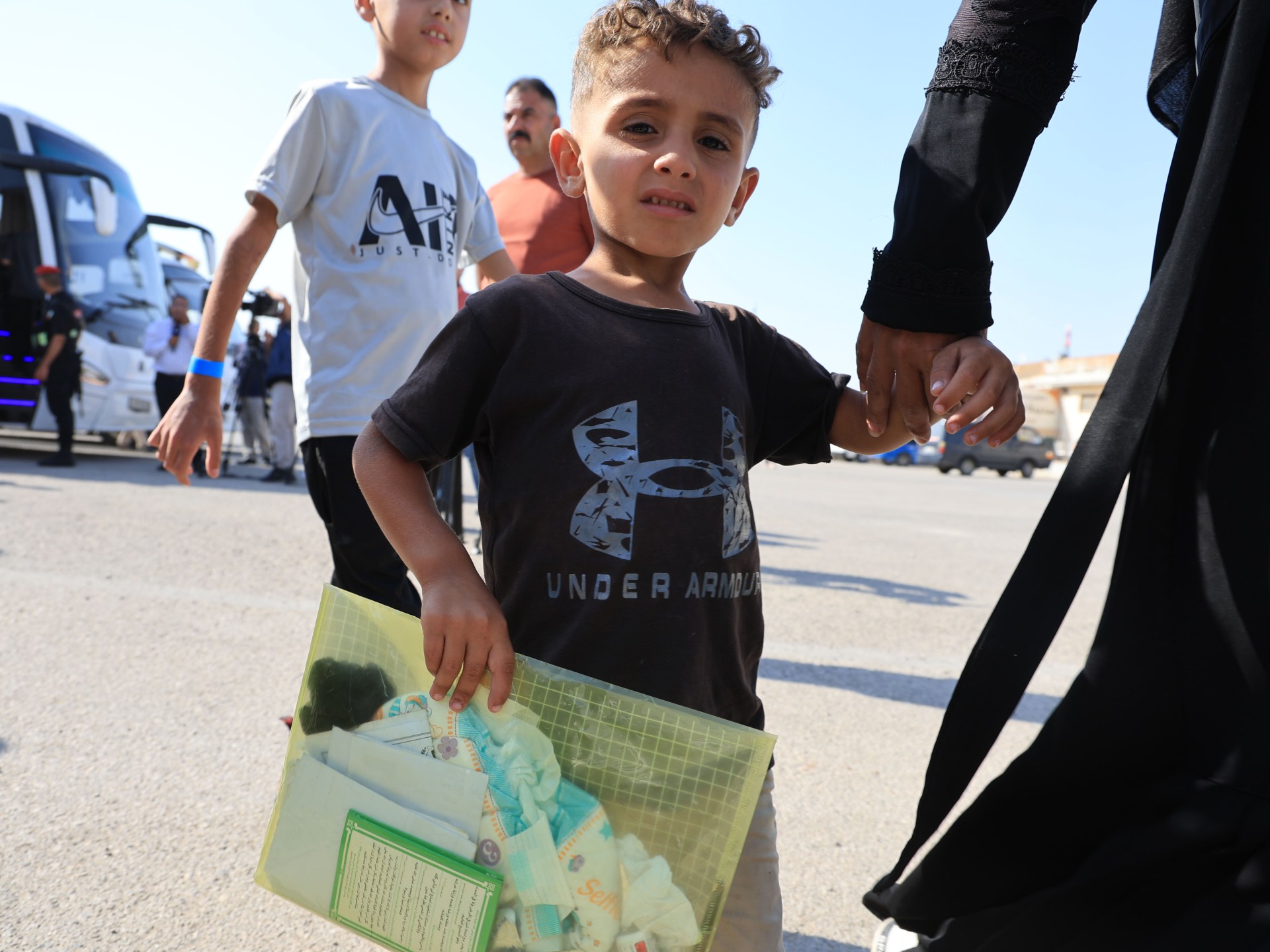
When Youssef Abu Bakr, the Director of the Department of Nutrition in the Gaza Ministry of Health, spoke publicly on 5 May 2026, the warning he delivered was stark: child malnutrition in Gaza had risen compared to the previous year. The statement, carried by Al Alam Media, offered no qualifying language. The rate had climbed. The trajectory was upward. And the children most affected were those least able to absorb the consequences.
The disclosure lands against a backdrop that humanitarian organisations have described in similar terms for months. Aid corridors remain constrained. Medical infrastructure has been repeatedly disrupted. And the civilian population — roughly half of them children — continues to face conditions that specialists in food security and public health have characterised as incompatible with adequate nutrition at scale. What Abu Bakr's statement adds is institutional corroboration from inside the strip itself, a voice that carries direct knowledge of nutritional intake across Gazan households.
A Crisis That Has Long Exceeded Baseline
The structural features of Gaza's food security situation did not emerge in May 2026. International organisations have tracked nutritional decline across the strip for years, with particular deterioration noted in the periods following escalated hostilities. UN agencies, the World Health Organisation, and NGOs operating inside Gaza have all published data documenting rising rates of acute malnutrition, stunting, and wasting among children under five. Those reports — from bodies whose mandates require on-the-ground assessment — have consistently pointed to a system under extraordinary strain, with the most acute needs concentrated among internally displaced families and those living in areas where distribution networks have been disrupted or dismantled.
What Abu Bakr's warning does is confirm that this trajectory has not stabilised. When a senior health official within the Ministry of Health in Gaza independently identifies an increase in malnutrition rates relative to the prior year, that is not an extrapolation from outside observers. It is a direct read from the health system itself, based on screening data, clinical presentations, and aggregated intake assessments that the Ministry collects as part of its public health mandate. The source matters. An external NGO can estimate; the Nutrition Department measures.
The available record does not specify the precise numerical increase Abu Bakr cited. That limitation is worth noting plainly: the statement as carried in the public domain does not include a percentage rise, a numerical caseload, or a comparison to a specific baseline year beyond the prior twelve months. This is not unusual for preliminary public warnings of this kind — officials frequently signal the direction and severity before full datasets are compiled and released. Readers should understand that the statement tells us the rate rose; it does not tell us by how much.
The Delivery Problem
There is a structural tension that runs through every report on Gaza's humanitarian situation, and Abu Bakr's warning does nothing to resolve it. The need is documented, the institutional warnings are consistent, and yet the mechanisms for delivering sustained nutritional support at the scale required remain deeply constrained. Aid convoys face procedural delays. Border crossing restrictions limit the volume of therapeutic foods that can be imported. And the operational space for UN agencies and international NGOs has contracted in ways that those organisations have repeatedly described in their own public communications.
This is not a supply problem alone. The infrastructure question is equally acute. Cold chain storage for specialized nutritional products requires electricity, which in turn requires fuel and a grid that has been repeatedly damaged. Screening facilities require trained personnel, which requires staff to be present, compensated, and safe — conditions that cannot be taken for granted in an active conflict zone. The Nutrition Department Abu Bakr heads is working with instruments that are calibrated for a functioning health system; when that system is under siege, the data it produces reflects the siege.
Humanitarian organisations have framed this dynamic in their own terms: needs vastly outpace delivery capacity, and the gap is widening. The World Health Organisation has published assessments noting that malnutrition in childhood has compounding effects — cognitive development, immune function, physical growth — that are not easily reversed once the acute phase passes. A child who becomes wasted is not simply a child who is hungry. The clinical consequences are measurable, durable, and fall disproportionately on the youngest cohort.
What Is Contested and What Remains Unresolved
The public record as it stands leaves several questions open. The precise numerical comparison Abu Bakr referenced is not available in the sourced material; readers should understand the statement signals direction and relative deterioration, not a precise quantified increase. The specific causes Abu Bakr cited — whether he attributed the rise primarily to access restrictions, displacement, food availability, or health system disruption — are not detailed in the sourced statement. It is reasonable to infer from the broader context that multiple factors are in play, but the attribution as Abu Bakr himself would make it is not present in the available text.
There is also the question of comparability across reporting periods. Nutritional screening data collected under emergency conditions is not directly equivalent to data collected under stable operations. The Ministry of Health in Gaza has continued to compile and release figures throughout the conflict, but the methodology, coverage, and completeness of that data have been subject to ongoing scrutiny by external analysts who note the operational constraints under which collection occurs. This does not mean the data is unreliable; it means the data should be read with awareness of those constraints.
The Stakes, Named
If child malnutrition rates in Gaza continue on an upward trajectory through 2026, the consequences are not abstract. They are physiological, developmental, and generational. Children who experience wasting in the first years of life carry measurable deficits in cognitive and physical development that affect their capacity across the full span of their lives. The burden falls on families already under extreme strain, and it compounds the longer the underlying drivers — restricted access, infrastructure damage, disrupted distribution — remain unaddressed.
The international humanitarian architecture was built precisely for situations of this kind. UN agencies, the World Food Programme, and the full ecosystem of nutrition-focused NGOs have mandates, protocols, and supply chains designed to respond to acute malnutrition crises. The question that Abu Bakr's warning raises — in structural terms — is whether the political and operational conditions allow that architecture to function at the scale the situation requires. The answer, as documented across months of consistent reporting from those same organisations, has been no.
Gaza's Ministry of Health, speaking through Abu Bakr on 5 May 2026, has delivered a direct institutional warning from inside the strip. The direction is clear. The severity is acknowledged by the official making the statement. What remains — and what the sourced record does not yet resolve — is the specific numerical scale, the causal attribution, and whether the mechanisms for response can scale to meet what the data is now telling officials on the ground.
This publication covered Abu Bakr's statement as a standalone health warning from the Gaza Ministry of Health, placing it within the documented context of ongoing nutritional crisis rather than treating it as an isolated development. Broader coverage of Gaza's humanitarian situation typically leads with UN agency data; this piece foregrounds the internal Ministry assessment as the primary evidentiary basis.
Wire provenance
This editorial synthesis draws on the following public wire/social posts:
- https://t.me/alalamfa/GRDYqAUoCKjOtXUjOQjpg0rP4O_Q4g745JQl_1ITkeXpxYt2rJurul8Fixote0a9NyRwLNZCvvSuGFvZYsRC_JJsd8rB1y54ioqOwBDeJ5nqzj9xDos93AK_Um2ChKyvxUtwOZ_mLxLCFwsSGi_YQqnuLJ24oCpkMcXzM7pQI1yOPXtnVhWSB7ipdMUUDmN-5vtUA7wpfq1BmlRBDTa7fatI5JFgodwIUDrNaw-Z7QJN50VzrDToPY1qXncrVgqVzRZv5Rd-SOtySiItm7ikthCdjgIS2hECJWNm42tKYA0VJwg3fkwp3aDWK6DhVoHE4BvRJIz23T3bLALWD-4gkw.jpg