US Sanctions 10 Individuals and Companies Over Alleged Iranian Weapons Procurement
The US Treasury Department blacklisted ten individuals and companies on 8 May 2026, accusing them of supplying Iran's armed forces with weapons. The action arrives as diplomatic channels between Washington and Tehran remain effectively closed.
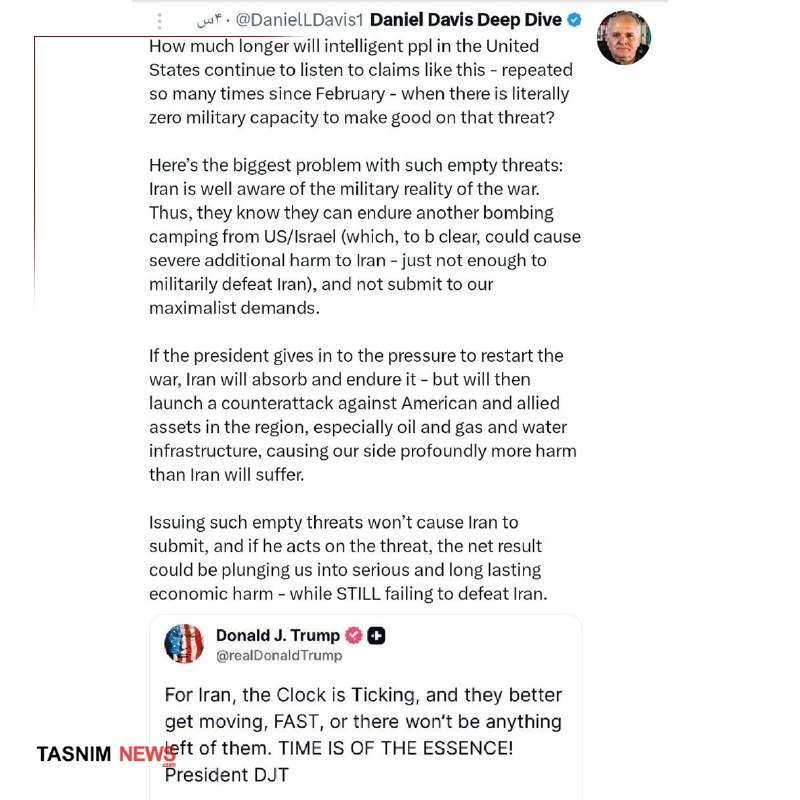
The United States Treasury Department blacklisted ten individuals and companies on 8 May 2026, accusing them of facilitating weapons procurement on behalf of Iran's armed forces. The designation, announced by the Office of Foreign Assets Control, names the actors and describes the alleged supply-chain activity without publicly disclosing classified intelligence. The action lands as talks on reviving the 2015 nuclear accord remain stalled, and as the Trump administration has signalled it will not renew a waivers regime for Iran's civilian nuclear programme that expired in April.
The sanctions are the latest in a sustained campaign of financial pressure that Washington has applied to Tehran since 2018, when the United States unilaterally withdrew from the Joint Comprehensive Plan of Action. Over that period, successive administrations have layered sectoral sanctions — on oil, shipping, banking — onto individual designations targeting procurement networks. Tuesday's action narrows the focus to what the Treasury described as a coordinated effort to source weapons-components for Iran's Islamic Revolutionary Guard Corps and regular military.
The targets and the allegations
The Treasury statement, issued at 21:58 UTC on 8 May 2026, named ten distinct designees. The department characterised the network as operating across multiple jurisdictions, moving materials and capital through intermediary companies to obscure the end-user. The statement did not specify which countries the intermediaries were registered in, nor did it name the weapons components in question. That degree of operational detail is not unusual for OFAC designations — the agency frequently publishes evidence-thin declarations that are subsequently amplified by wire services and political principals — but it limits what independent verification is possible.
What the statement does establish is institutional continuity. The targets are described as individuals and entities with prior designation or known association to previously sanctioned procurement networks. That is typical: OFAC regularly re-lists actors under new thematic authorities rather than naming entirely novel actors. The Treasury did not quantify the financial scale of the alleged operation.
Iran's position
Iranian state media, including Tasnim News — a semi-official agency close to the IRGC — reported the sanctions without substantive commentary on 8 May. The Mehr News English service framed the designation as the latest iteration of what it called Washington's "maximum pressure" posture. Neither report addressed the specific allegations in the Treasury statement.
Tehran's official position on sanctions is consistent: they are illegitimate exercises of economic coercion that violate the spirit of the nuclear deal. That framing has been reiterated by Iranian foreign ministry spokespersons in multiple briefings over the past eighteen months. What is structurally notable is that Iran has no formal negotiating channel through which to contest these designations — the Vienna talks remain suspended, and the Omani facilitation track that had produced informal contact in late 2025 has produced no confirmed outcome. Iran International, a London-based Persian-language broadcaster, reported in March 2026 that Iranian officials had told interlocutors the window for a negotiated resolution was "narrowing rapidly."
The absence of a counter-architecture is itself a data point. Previous sanction cycles — particularly those imposed after 2019, following attacks on Saudi oil infrastructure that Western governments attributed to Iran — produced a predictable set of Iranian responses: rhetorical condemnation, enhanced operational ambiguity about regional proxy forces, and diplomatic complaints filed through the UN Secretary-General. None of those mechanisms are open to Tehran in the current configuration, because the political relationship with the European signatories of the JCPOA has also deteriorated sharply since mid-2025.
The structural logic of financial pressure
The sanctions raise a structural question that is rarely asked directly in the wire coverage: what is the operational theory of change? The United States has sanctioned Iranian entities and individuals without interruption for over seven years. Iran has not altered its nuclear programme in ways Washington considers acceptable, has not reduced its regional footprint, and has not undergone the internal political rupture that some analysts once predicted maximum pressure would produce. The IRGC's economic network has proven adaptable: entities are dissolved and reconstituted; financial flows are routed through jurisdictions with limited OFAC enforcement capacity; the central bank's international isolation has driven innovation in informal settlement mechanisms.
That does not mean the sanctions have zero effect. They impose real costs — on individuals designated who cannot access US-dollar banking, on companies whose counterparties conduct due-equity searches. They create friction in procurement chains. They signal political resolve to domestic audiences and allied governments. What they have not demonstrably done is alter Iranian strategic calculation in the nuclear or regional domain. That gap between stated objective and observed outcome rarely features in the Treasury's press releases or the wire copy that follows them.
There is a second structural layer worth noting. These designations arrive at a moment when the Trump administration's broader approach to Iran is in active internal debate. One faction, centred on the National Security Council, has advocated for a revised "small deal" framework that would exchange limited sanctions relief — primarily humanitarian waivers and energy-sector carve-outs — for verified caps on enriched uranium stockpiles. A second faction, aligned with the Treasury and the State Department's Iran office, holds that any sanctions relief legitimises a regime that should be contained until it changes behaviour. Tuesday's OFAC action is consistent with the second position. It is not self-evidently consistent with the first.
Stakes and what comes next
The near-term stakes are operational. The individuals and companies named in the designation face asset freezes and US-person transaction bans. Their non-US counterparties will now conduct their own OFAC screenings before engaging in transactions that touch dollar-denominated systems or US correspondent banks. That creates pressure on the network, but also on adjacent legitimate commerce, because the entities targeted in procurement cases frequently have commercial activities that are not themselves sanctionable. The Treasury did not indicate it had made granular findings about the specific transactions that triggered the designation.
The diplomatic stakes are harder to measure but no less real. The current pause in the nuclear talks is not simply a procedural problem — it reflects a deeper misalignment about what a final agreement would look like. The United States insists on zero enrichment inside Iran as a starting position. Iran insists on the right to peaceful enrichment under NPT obligations, and has expanded its enrichment capacity substantially since 2019. Those positions are not currently reconcilable. Sanctions imposed in this environment do not create negotiating space; they foreclose it further.
What the sources do not yet establish is whether Tuesday's action is a prelude to a broader designation round — perhaps targeting the Central Bank of Iran or additional shipping companies — or a standalone action intended to demonstrate continued pressure without escalating to the level that would force a crisis. The Treasury statement contains no forward-looking language. The White House has not issued a concurrent press statement. The absence of a public communications package from the National Security Council suggests this is a Treasury-led action rather than a cross-agency escalation.
That leaves the situation where it has sat for months: neither talks nor maximum pressure have produced a resolution, and the gap between those two approaches continues to widen.
This publication noted the Treasury designation on the evening of 8 May. Wire copy from Reuters and the Associated Press, filed within two hours of the OFAC statement, carried the designation as a straight factual report with the Treasury framing largely unreconstructed. Monexus assessed the Treasury statement as the primary source and sought to distinguish what was established fact from what was institutional characterisation.
Wire provenance
This editorial synthesis draws on the following public wire/social posts:
- https://t.me/mehrnews_en/38421
- https://x.com/sprinterpress/status/1920894123844219009
- https://t.me/tasnimnews_en/15832
- https://t.me/JahanTasnim/21044