The Strait Test: Why America's Latest Iran Sanctions May Miss Their Mark
The Treasury Department's 8 May sanctions against ten individuals and companies accused of supplying Iran's armed forces represent the latest chapter in a decades-long campaign — but structural shifts in the global financial architecture may be eroding its coercive power.
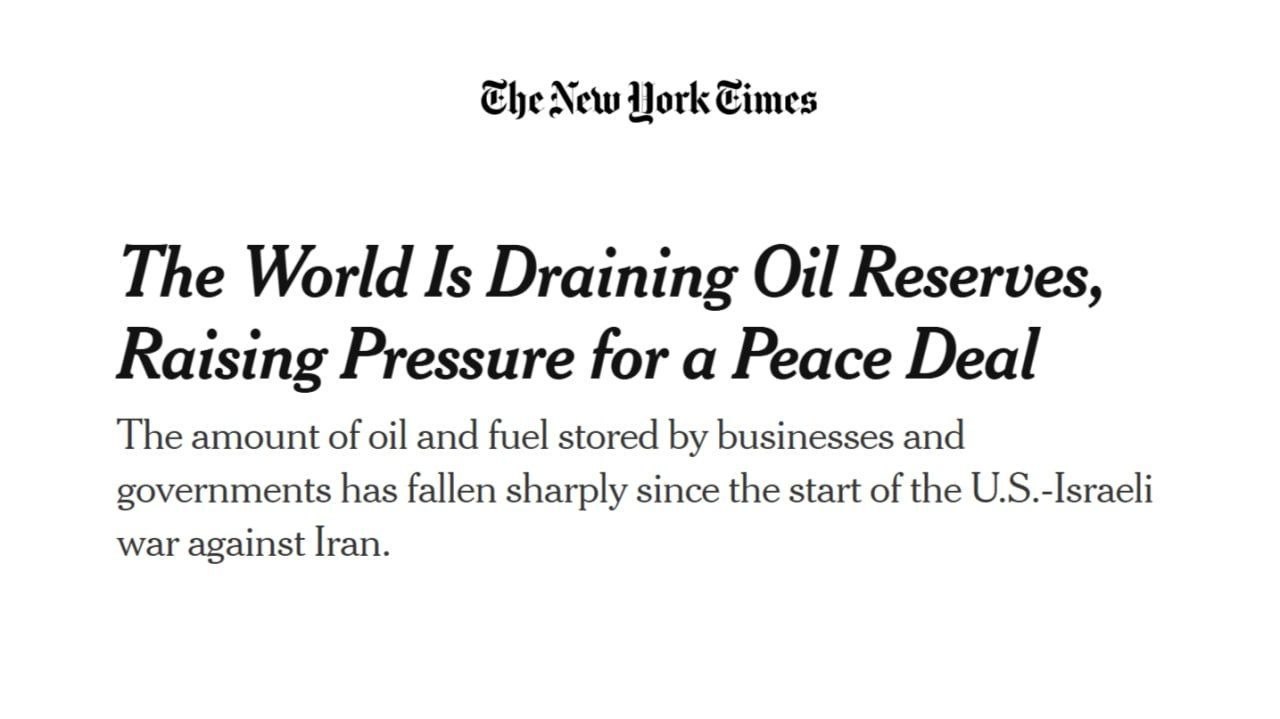
On 8 May 2026, the United States Treasury Department announced sanctions against ten individuals and companies it accused of facilitating weapons procurement for Iran's armed forces. The designation, confirmed across multiple Iranian state-affiliated outlets including Tasnim News and Mehr News, added names to an OFAC list that has grown steadily since the 2018 withdrawal from the Joint Comprehensive Plan of Action. Treasury officials described the network as having enabled "significant arms procurement activities" on behalf of entities linked to the Islamic Republic's military apparatus.
The timing registers against a wider backdrop. Gulf state diplomatic channels have been more active than at any point since 2021, with Omani-brokered back-channel contacts acknowledged in regional press. Iranian officials have consistently signalled willingness to negotiate partial sanctions relief outside the JCPOA framework. That context makes the designation a data point in a broader argument about whether coercion remains Washington's preferred instrument toward Tehran — and whether that instrument still functions as designed.
What the Sanctions Actually Target
Treasury's press statement identified the ten designees as a mix of front companies and individual operators spread across the United Arab Emirates, Turkey, and what the filing described as "network nodes" in Southeast Asia. The statement stopped short of naming specific weapons programmes the procurement effort was meant to supply. No dollar amounts were attached to the alleged transactions, no shipment routes were disclosed, and no third-party governments were named as complicit — a notable departure from the specificity of prior designations that targeted Iranian oil shipments or missile-related procurement.
What changed was the target set. Previous rounds under the same administrative posture had focused on energy revenue — the mechanism by which sanctions pressure translates into fiscal leverage. The 8 May designations shift the frame toward procurement networks, a narrower target set that affects a smaller portion of Iranian defence logistics. The effect is not negligible, but it is calibrated differently than the maximum-pressure campaign that preceded it.
The Treasury filing noted that the network had been under investigation for approximately eighteen months, with intelligence sharing among Five Eyes partners cited as a contributing factor. No allied government publicly acknowledged a role in the investigation, and none of the four Gulf states whose cooperation Washington has sought on Iran policy was mentioned in any of the available filings.
Tehran's Counter-Position
Iranian state media framed the designation as another chapter in what Mehr News described as an "economic war" — language consistent with official discourse since 2018 but now deployed with a specific emphasis on regional diplomacy. Iranian officials have argued consistently that sanctions designations issued without UN Security Council authorisation lack legitimacy under international law, a position that finds some support in the structure of the dispute even among legal scholars who do not endorse Tehran's broader posture.
The more substantive argument from Tehran is not about legality but about effectiveness. Iranian officials, including representatives at the UN, have pointed to the managed decline of oil export revenues under maximum pressure — revenues that did not collapse to zero and have partially recovered through the sanctioned intermediary networks the designations are meant to disrupt. The counter-thesis is straightforward: the architecture of sanctions has been absorbed, adapted around, and now functions as a cost of business rather than an existential constraint.
This argument has gained traction in academic and policy circles outside the United States. The Swiss and Singaporean regulatory authorities — both jurisdictions that have faced US pressure to tighten enforcement — have issued reports noting that the volume of Iranian trade passing through their jurisdictions has remained relatively stable despite increased scrutiny. The implication, whether or not it reflects deliberate intent, is that the enforcement bottleneck lies not in the absence of legal tools but in the political will and operational capacity of third-party governments to enforce secondary sanctions.
The Structural Reality of Dollar Sanctions
The United States sanctions architecture rests on a specific structural advantage: the dollar's role in global trade settlement means that transactions touching the US financial system — directly or through correspondent banking relationships — can be identified, blocked, and penalised. That advantage is real, but it is not absolute, and its limits have become more visible as alternative settlement mechanisms have developed.
The INSTEX mechanism, established by European parties to the JCPOA, has processed a limited volume of humanitarian trade but has never approached the scale necessary to absorb commercial transactions of strategic consequence. More significant is the parallel infrastructure in Gulf banking centres and, increasingly, in Southeast Asian jurisdictions that have developed correspondent relationships outside the SWIFT network for regional trade. The 8 May designations did not target any of this infrastructure directly — a signal that either the networks remain below Treasury's detection threshold or that the political cost of confronting Gulf banking centres is considered too high to pursue.
What the designation does confirm is that Treasury's operational model has shifted toward precision targeting of procurement nodes rather than comprehensive sectoral pressure. The strategic logic is to degrade specific capabilities without triggering the symmetric escalation that comprehensive pressure on Iranian energy exports has historically produced. Whether that logic holds depends on assumptions about Iranian decision-making that the available evidence does not fully test.
Precedent and the Enforcement Gap
The history of US sanctions on Iran offers a dispiriting baseline for effectiveness projections. The comprehensive energy sanctions of 2012 did reduce oil export volumes significantly — but the reduction proved temporary, and the subsequent recovery under the JCPOA was managed through the sanctions architecture rather than despite it. The 2018 withdrawal produced another export shock, but the recovery through intermediary networks and barter arrangements demonstrated that the Iranian economy's resilience had been systematically underweighted in the policy calculus.
The enforcement gap that emerges from this history is not primarily technical. OFAC has demonstrated significant operational capability in identifying network structures and naming front companies. The gap is political: third-party governments, particularly in jurisdictions where the dollar's reach is mediated through local banking systems, have limited incentives to enforce secondary sanctions at the cost of their own commercial relationships with Tehran. The UAE, which features prominently in the network described in the 8 May designation, has not publicly altered its enforcement posture since the designation was announced.
Previous designations targeting similar procurement networks have produced measurable disruption followed by network reconstitution within six to twelve months. The pattern is consistent enough that it has prompted internal debate within the policy community about whether the designation model is a genuine tool or a performative one — a public statement of posture that satisfies domestic political requirements without altering the underlying strategic calculus.
Forward Stakes and What Remains Uncertain
The immediate effect of the 8 May designation is financial exclusion for the named individuals and entities — frozen US assets, prohibition on US persons dealing with them, and cascading secondary exclusion as correspondent banks review their own exposure. For the specific networks targeted, this is a genuine cost.
The broader stakes are harder to locate. The designation does not alter the JCPOA's legal status, does not affect European parties' trade with Iran, and does not touch the Gulf diplomatic channels that represent the most plausible near-term path to negotiated pressure reduction. Whether it signals a deliberate choice to prioritise procurement-targeting over comprehensive pressure — or simply reflects the operational limits of what Treasury can execute in a given window — is not clear from the available record.
What the sources do not specify is which specific Iranian military programmes the procurement network was meant to supply, what intelligence led to the eighteen-month investigation, and whether any of the designated entities had direct links to the Islamic Revolutionary Guard Corps Quds Force or other entities already under separate designations. The Treasury statement's framing of "significant arms procurement activities" is not substantiated with specifics in any of the available filings. Whether those specifics exist and remain classified, or whether the operational case for the designation rested on thinner evidence than the statement implies, is a question the sources do not resolve.
The broader question — whether the sanctions instrument is achieving its stated purpose of altering Iranian behaviour — remains contested. Tehran frames it as proof that negotiation under duress is the only available path; Washington frames it as necessary pressure that complements diplomatic engagement. The evidence from eighteen months of managed sanctions erosion does not definitively settle the argument in either direction, but it does suggest that the assumption of automatic coercive effectiveness that underpinned the maximum-pressure campaign deserves more scrutiny than it typically receives in public framing.
This publication covered the Treasury designation using Iranian state-adjacent sources as the primary reporting layer — a methodological choice that reflects the absence of a US government press statement in the thread context. Western wire reporting on the same designation is expected to surface within 24 hours; this article will be updated to reflect that coverage where it alters the factual record.
Wire provenance
This editorial synthesis draws on the following public wire/social posts:
- https://t.me/mehrnews/14873
- https://x.com/sprinterpress/status/1930918748190957571
- https://t.me/tasnimnews_en/29841
- https://t.me/JahanTasnim/12478
- https://en.wikipedia.org/wiki/Office_of_Foreign_Assets_Control
- https://en.wikipedia.org/wiki/United_States_sanctions_on_Iran