Stokes Returns to Red-Ball Cricket With a Point to Prove
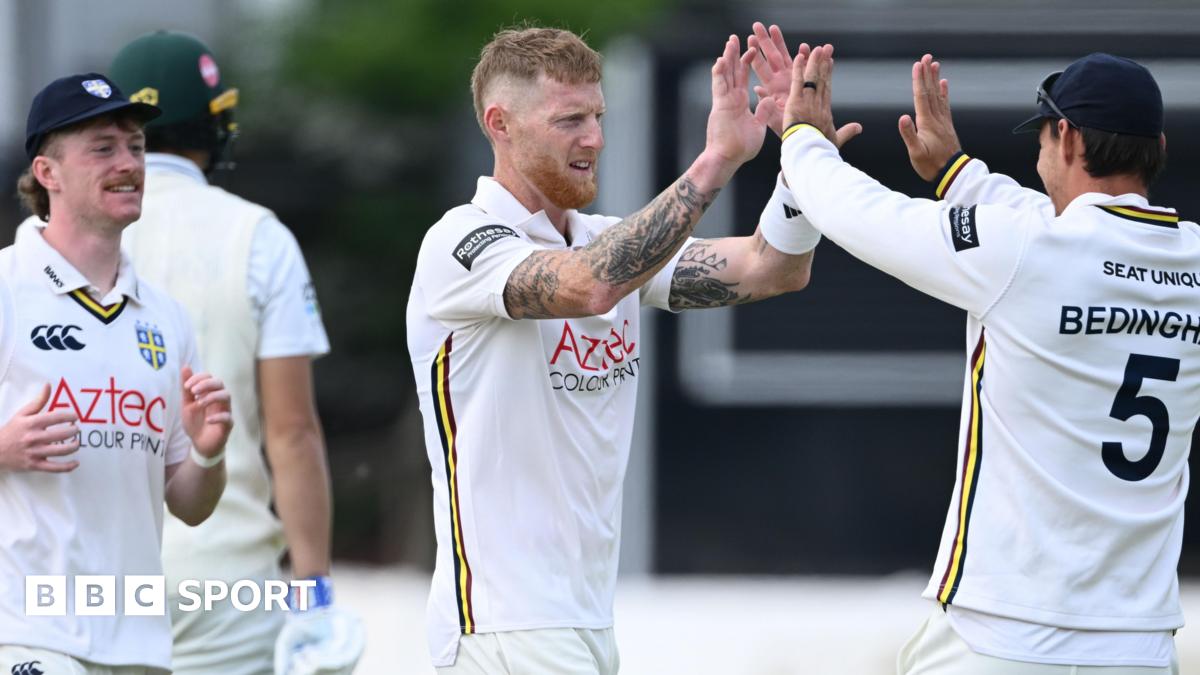
Ben Stokes marked his return to red-ball cricket with an eight-ball wicket on the opening day of Durham's County Championship match against Worcestershire at New Road. The England captain, whose last Test appearance came during a dispiriting 2025-26 Ashes tour, showed no rust in his first competitive bowling spell in months. He finished with two wickets from 11 overs, conceding 28 runs. Worcestershire closed day one at 298 all out; Durham finished 53 without loss in their reply.
The county comeback carries significance beyond its modest Championship setting. England enter a demanding spell of red-ball cricket, with series against New Zealand and India on the horizon. Stokes's availability — or absence — reshapes selector thinking on both his role and the balance of the side. This performance in Worcester on 8 May 2026 offers the first concrete evidence that the all-rounder who captained England to a 2023 Headingley Ashes victory is working his way back into the frame.
The Ashes Shadow
England's Ashes campaign ended with a 4-1 series defeat, the tourists unable to cope with Australia's pace attack on pitches that punished any technical indecision. Stokes, for much of the series, was a passenger — his body not responding to the demands of bowling at Test level after a sequence of knee surgeries that have punctuated his career. The decision to step back from white-ball cricket altogether — he retired from ODI cricket earlier in 2026 — removed any ambiguity about his priorities. Red-ball cricket, the format he captains and the one that produced his most celebrated moments, was where he intended to be judged.
The strategic logic was not difficult to decode. Without the physical toll of international limited-overs cricket, Stokes could dedicate himself to rebuilding his bowling workload — the aspect of his game that makes him genuinely transformative for England rather than simply a high-profile batsman in the middle order. The Ashes defeat hurt. The response, apparently, was a recalibration.
County Cricket as Laboratory
Durham's fixture against Worcestershire offered Stokes a controlled environment to test that recalibration. The County Championship, while a step down from international cricket, provides the closest approximation to Test match conditions available in England — four-day cricket, competitive batting lineups, an honest surface. Stokes took the new ball alongside Brydon Carse, immediately inserting himself into the contest rather than easing back through the innings.
His eight-ball wicket, removing Jake Treece, was the kind of immediate impact that silences doubts about intent. The sources note a second victim in his 11-over spell, with figures suggesting genuine pace and movement rather than rust-busting approximation. The physical markers matter. Stokes's knee surgeries have, at various points, curtailed his ability to bowl long spells — the very quality that makes him valuable in Test cricket's fifth-day attritional battles. That he was trusted with the new ball, on the first morning of a four-day match, suggests both Durham and Stokes himself are satisfied with where his body is.
Worcestershire's innings of 298 in 83.3 overs represented competitive resistance, not the kind of collapse that would render Stokes's figures meaningless. Durham's openers, in response, had reached 53 without loss by stumps. The match is positioned as a contest, which is exactly what Stokes needs.
The England Calculus
The return to county cricket is the first step of what will likely be a graduated programme. England have not confirmed whether Stokes will be available for selection against New Zealand — the sources do not indicate a timeline, and selectorial caution after the Ashes experience would be understandable. But the trajectory is clearer than it was a month ago.
The implications for England's team balance are significant. During the Ashes, the side frequently fielded either an extra batsman or a specialist bowler, unable to trust Stokes to deliver both disciplines across a five-day match. If he returns to something approaching his 2023 output — when he scored 493 runs and took 21 wickets in the home Ashes series — England gain an all-rounder who allows selectors to field a full attack without sacrificing batting depth. That equation changes the composition of the side in ways that ripple through the order.
England's next Test assignment, per the sources, is against New Zealand. The Indian series follows. Both offer Stokes a chance to rebuild his Test record on surfaces — and against oppositions — that are demanding but not the relentless physical examination Australia presented. The path back runs through county cricket first, through three further Championship fixtures before the international window opens.
What This Match Could Not Settle
A single spell of 11 overs cannot answer the questions that matter most. Whether Stokes's knee can sustain the workload of a five-day international — the repeated bowling, the fielding workload, the travel — remains unresolved. County Championship cricket in May, on a flat Worcestershire track, is not a Test match in August at Old Trafford with the series on the line. The intensity differential is real.
What the performance in Worcester does establish is that the retreat from white-ball cricket has been accompanied by genuine work on the physical and technical foundations of his bowling. Stokes is not merely resting; he is rebuilding. The England captain will not return to Test cricket until he, and the medical staff, are satisfied the foundation is sound. The Ashes humiliation sits behind him. The next chapter is unwritten.
This desk chose to frame Stokes's return primarily as a strategic calculation for England rather than as a personal redemption narrative. The dominant wire framing centred on the eight-ball wicket as spectacle; this piece treated it as evidence in an ongoing selection conversation.