Fifty Names We Will Not Learn: Thalassemia Patients and the Collapse of Gaza's Health System
Gaza's Ministry of Health confirmed on 9 May 2026 that 50 thalassemia patients have died since October 2023 — one in every 6.7 patients in a cohort already dependent on scarce blood transfusions and chelation medication.
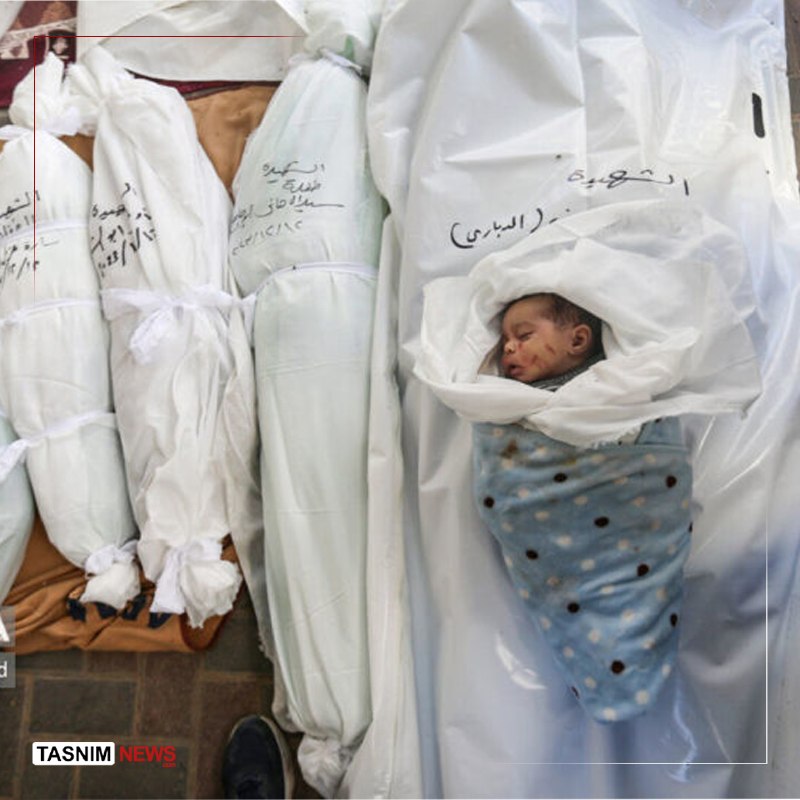
Fifty thalassemia patients have died in Gaza since October 2023. That is the count the Ministry of Health in Gaza released on 9 May 2026 — 50 deaths among 334 registered patients, a mortality rate that, if sustained, would consume roughly one in every seven people in this specific cohort within three years. We do not know their names.
Thalassemia is a genetic blood disorder. Patients born with the condition produce malformed hemoglobin and require regular blood transfusions — typically every two to four weeks — throughout their lives. Without them, iron accumulates in organs, causing heart failure, liver disease, and death, typically before adulthood. The treatment requires not only donated blood but iron chelation medication to manage the iron overload that transfusions themselves produce. It is a condition that is entirely survivable with functional healthcare logistics. In Gaza, as of early May 2026, it is becoming a death sentence.
The Mechanics of a Survivable Disease Turned Fatal
The Ministry of Health statement identified two compounding failures. The first is a shortage of medications — specifically the iron chelation drugs that prevent the toxic accumulation of iron in organs. The second is a shortage of blood units. Neither shortage is accidental. Both are downstream consequences of the movement restrictions, border closures, and inspection regimes that have constrained aid flows into Gaza since October 2023. The United Nations has repeatedly documented that medical supplies entering the enclave fall far below stated needs; the World Health Organisation has reported that fewer than half of planned medical convoy deliveries have been able to reach northern Gaza in recent months.
What the Ministry's figures suggest is a system under terminal stress. One in six-and-a-half registered thalassemia patients is dead. The survivors face a deteriorating situation — the statement from the Ministry of Health describes worsening health conditions broadly. For patients who rely on regular transfusion appointments, a single missed transfusion is survivable. A pattern of missed transfusions is not.
The patients who have died represent the most vulnerable end of an already vulnerable population. Thalassemia patients in Gaza are predominantly children and young adults. Many require blood transfusions every two to three weeks; their treatment schedules are calibrated to that frequency. When blood supplies tighten, they are not deferred or rescheduled in any meaningful sense — they are simply skipped, and the physiological consequence is cumulative cardiac damage. The Ministry of Health figures imply that the system has been failing in exactly this way for eighteen months.
What the Numbers Cannot Capture
The count of 50 is a number. It does not carry the name of a twelve-year-old girl who missed her fourth consecutive transfusion. It does not record the specific ward in which a patient died, or whether the death occurred during a period of active bombardment or during the relative quiet between operational pauses. It does not describe the circumstances of families who cannot reach hospitals because movement within the enclave has become functionally impossible.
The Telegram post from the Ministry of Health, dated 9 May 2026, is brief. It names the condition, the patient cohort, the mortality figure, and the cause — shortage of medications and blood units, deteriorating health conditions. It is, by the standards of health ministry communications under siege, a document stripped to its minimum reportable content. What it does not contain is a sense of trajectory.
That trajectory, however, is inferable. Fifty deaths among 334 patients represents an approximately 15 percent mortality rate over eighteen months of conflict. Under peacetime conditions, with consistent access to chelation medication and a reliable blood supply, thalassemia patients in Gaza had life expectancies comparable to patients in other lower-middle-income settings. The treatment protocol exists. The delivery mechanism has collapsed.
The Structural Logic of Medical Infrastructure Collapse
Healthcare systems under siege do not fail uniformly. They fail selectively — according to which patient populations are most dependent on supply chains, most sensitive to scheduling disruption, and least able to absorb shortfalls through private channels. Thalassemia patients sit at the apex of that vulnerability curve. They cannot substitute their medication. They cannot postpone their transfusion by a week and recover. Their clinical needs are fixed, and when the infrastructure that meets those needs is disrupted, the outcome is not delay — it is death.
The pattern observed here is consistent with what human rights organisations and medical humanitarian groups have documented across multiple conflict zones: when healthcare logistics break down under military pressure, it is not the general patient population that dies first. It is those whose care depends most acutely on precise, uninterrupted supply chains. Thalassemia, dialysis patients, neonatal intensive care populations — these are the early markers of systemic collapse.
The international humanitarian architecture has limited tools to reverse this dynamic. Aid convoys require coordination with occupying authorities; medical supplies require inspection protocols; fuel for hospital generators requires supply routes that are themselves subject to operational constraints. The mechanics are well-understood by relief agencies. The solutions are not, for reasons that are political rather than logistical.
The Stakes — and What Remains Unsaid
Fifty deaths is not an abstraction. It is a cohort of families who have buried children. It is a Ministry of Health communication that reads, in its clinical brevity, like an act of documentation under conditions where documentation itself has become an act of defiance.
The figure is current as of 9 May 2026. There is no indication in the Ministry's statement that the supply situation is improving, nor that the trajectory of deaths has slowed. If anything, the statement's framing — identifying the shortage of both medications and blood units as ongoing — suggests a crisis that has not yet reached a floor.
What the communication does not address is the future of the remaining 284 patients. Thalassemia is a lifelong condition. The supply constraints that produced 50 deaths are not conditions that resolve when the conflict ends — they resolve when the supply chains resume, and resumption requires not merely a ceasefire but an operational logistics infrastructure capable of importing, storing, and distributing temperature-sensitive medical products at scale. That capacity does not rebuild overnight.
We do not know their names. The Ministry of Health has given us a count, and the count is 50, and that is the beginning of the record.
Wire provenance
This editorial synthesis draws on the following public wire/social posts:
- https://t.me/gazaalanpa/9999