How Cinema Learns to Look at War: Time, Distance, and the Art of Processing Conflict
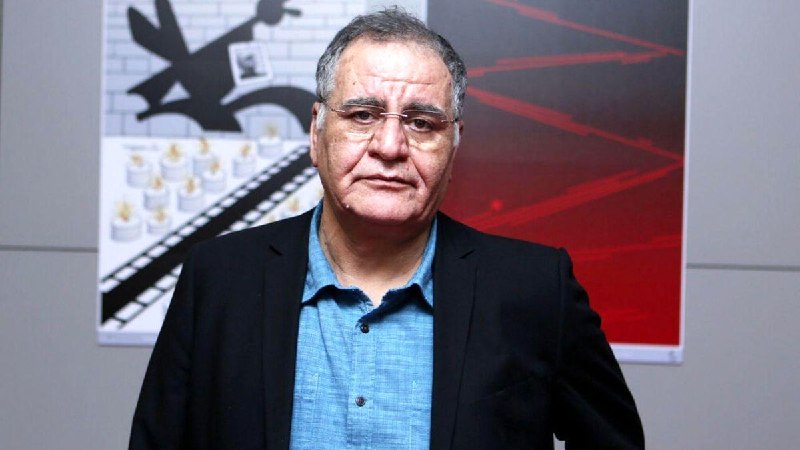
Rasoul Sadr Aamili, an Iranian cinema director, offered a pointed observation in an interview published by Mehr News on 9 May 2026: creative approaches to war require the passage of time, and people's unity is rooted in civilization. The remarks, made in a conversation with the state-affiliated news agency, pointed to what the director described as a hopeful condition — that after war, there remains something worth building from.
The framing is deliberately broad. It does not name a specific conflict, a specific film, or a specific crisis. That ambiguity is itself the point. What Sadr Aamili is describing is a structural condition of war cinema: the work of processing organized violence through narrative and image cannot happen in real time. It requires survivors, institutions, funding, and a political culture willing to let artists sit with what happened rather than instrumentalizing the pain immediately.
A Tradition Built on Decades
Iranian war cinema has had nearly four decades to develop this capacity. The Iran-Iraq war of 1980–1988 produced a substantial body of work — some commissioned as propaganda, some made in spite of official pressure, some emerging decades later as the generation that lived through the conflict came to terms with what it meant. Directors who returned to the subject in the 2000s and 2010s found that the political context had shifted enough to allow for more ambiguous treatments: protagonists who were not simply heroes or villains, infrastructure that served both war-making and civilian life, cities that carried the scars of bombardment alongside the rhythms of ordinary existence.
This is not unique to Iran. American cinema took roughly fifteen years before the more searching treatments of the Vietnam War emerged — not the immediate patriotic product, but the slower, more structurally critical work that audiences eventually recognized as more honest. British and French cinema processed the Second World War across an even longer arc, moving from immediate national mythology toward harder questions about collaboration, occupation, and complicity that required generational distance to pose without triggering political backlash.
The pattern is consistent: the first wave of war films is typically affirmative. The second wave, emerging a generation later, begins to complicate the story. The third wave, arriving when the last survivors are entering old age, can sit with ambiguity because it no longer needs to serve any living political agenda. What Sadr Aamili is describing is this third-wave condition — the point at which a civilization can hold its war experience without instrumentalizing it.
The Institutional Question
The temporal argument only explains part of what makes war cinema difficult. The other part is institutional. Films that take decades to process require film industries that survive decades. They require state support for arts that does not evaporate when the political winds shift, funding mechanisms that can outlive the government that created them, and critics and audiences willing to sit through work that does not immediately resolve the question of who was right and who was wrong.
In many countries where wars have been fought in recent decades, this institutional infrastructure simply does not exist. The film industry, where one exists at all, may be too fragile to commission expensive, ambiguous work about conflicts that remain politically live. Television news cycles reward immediate narrative, not the slow accumulation of historical understanding. The financial model for long-form documentary — one of the most common vehicles for processing conflict in the early years after a war ends — has collapsed in many markets as streaming platforms prioritize volume over depth.
This creates a structural imbalance. Nations with strong cultural institutions — state film subsidies, established cinematographies, audiences trained to sit through difficult work — get to process their conflicts more thoroughly. Nations without those institutions produce fewer durable records of what happened, and what records do emerge are more likely to serve immediate political purposes rather than longer-term public understanding.
Cinema as Civilizational Record
Sadr Aamili's framing of unity as rooted in civilization suggests something beyond the individual film or the individual director. It points to cinema as a cumulative practice — a way a society keeps track of itself, including the chapters it would prefer to forget.
This function has become harder to fulfill in an era of accelerating media fragmentation. When audiences self-select into information ecosystems that confirm what they already believe about a conflict, the work of cinema — which depends on making someone inhabit a perspective they did not choose — becomes politically inconvenient. Films that complicate the dominant narrative get accused of betrayal. Films that reinforce it get accused of propaganda. The space between those two poles, where honest war cinema typically lives, gets crowded out.
The counter-argument, familiar from debates about arts funding in democratic systems, is that this crowding-out is temporary. The films that survive politically charged moments tend to be the ones that refused to resolve the ambiguity too quickly. Audiences return to them precisely because they offer something more complicated than the available narratives. The institutional infrastructure that produced them — state film funds, critics who review work rather than just amplify press releases, audiences with patience for difficult material — is what allows that complexity to survive.
What the Iranian Director's Remark Leaves Unsaid
Sadr Aamili's comment does not specify which war he is referring to, which decades he is counting from, or which films he considers to have processed their subject well. That specificity would require a more extended critical argument than a brief Mehr News interview typically accommodates.
What the remark does establish is the frame: time is a necessary condition, civilization is the ground, and the hopeful outcome is what comes after. Whether that hopeful outcome materializes depends on whether the institutional conditions for long-term cultural work exist — whether governments continue to fund film industries through political cycles, whether critics maintain standards of evaluation rather than becoming amplifiers for official narratives, and whether audiences retain the patience that difficult war cinema requires.
In most of the world, those conditions are eroding. In Iran, they have been under pressure for years. What remains is the tradition — the accumulated record of films made, arguments had, and ambiguities survived — and the proposition that this tradition is worth maintaining. That proposition is not self-evidently true in an era of declining arts funding and fragmenting audiences. But it is, as Sadr Aamili suggests, the ground on which unity — the capacity to hold a shared history without immediately weaponizing it — is built.
Desk note: Mehr News published this brief interview without byline or dateline beyond the director's name and the outlet's identity. The story is treated here as a perspective from one Iranian cultural figure rather than as established fact; the structural arguments about war cinema draw on patterns visible across multiple national cinematographies and are presented as such.
Wire provenance
This editorial synthesis draws on the following public wire/social posts:
- https://t.me/mehrnews