Iran's Cinematic Long Game: How Tehran Frames War Through Art Rather Than Propaganda
A senior Iranian film director has publicly argued that effective war representation requires time and distance from political urgency—a framing that carries significance against the backdrop of renewed tensions with Israel and the United States.
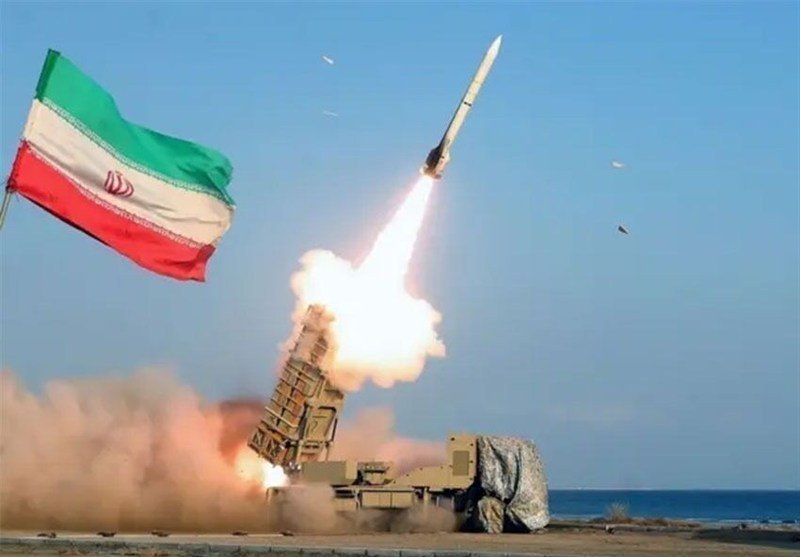
On 9 May 2026, a senior Iranian film director offered a public argument that sounds almost counter-intuitive in a period of heightened regional tension: the most powerful representations of war, he suggested, are not immediate ones. They require time. They require the accumulation of civilisational memory. The remarks, reported by Mehr News, arrived at a moment when Iran is navigating both direct confrontation with Israel — including a large-scale ballistic missile and drone attack in April — and the prospect of intensified American pressure on its nuclear programme. That context makes the director's insistence on artistic distance from political urgency a statement, not merely an aesthetic position.
Rasoul Sadr Aamili, whose career spans decades of Iranian cinema, spoke in terms that distinguished clearly between the immediate demands of geopolitical circumstance and the slower, deeper work of cultural production. "Creative approach to war requires the passage of time," he told the Mehr News correspondent. "People's unity is rooted in civilisation." The phrasing matters: not unity as a product of state mobilisation, but as something inherited and cultivated across generations. It is a formulation that positions art as the repository of something more durable than the daily calculations of foreign policy.
The Context: War Cinema as Institutional Tradition
Iran's relationship with war as a subject for cultural production is not new. The country fought a grinding eight-year conflict with Iraq from 1980 to 1988, a conflict that produced a substantial body of films ranging from earnest nationalist dramas to more ambiguously humanist works examining the experience of soldiers and civilians. The Iran-Iraq War has remained a persistent point of reference in Iranian cinema, treated with a seriousness that suggests it functions as a kind of foundational trauma — something the culture continues to work through rather than simply commemorate.
What Sadr Aamili's comments add is an explicit argument about temporality: that the artistic reckoning with war cannot and should not be rushed. This is, in part, a defence of institutional patience — an argument that cinema's value as a soft-power and civilisational instrument lies precisely in its capacity to resist the urgency of the news cycle. It is also, implicitly, a commentary on how Iran frames its own conflict heritage internationally. Films depicting the Iran-Iraq War have travelled to international festivals, found audiences beyond Iran's borders, and contributed to a narrative of national endurance that operates independently of official state messaging. That is a more effective form of cultural projection than direct political propaganda, and it requires time to develop.
The Counter-Argument: When Geopolitical Pressure Demands Immediate Response
The counter-reading is obvious. When Iranian missiles and drones cross into Israeli territory in April, when Israeli officials speak openly of retaliation, when American warships move into position in the Eastern Mediterranean — the cultural sphere is under pressure to respond. Governments and their supporters expect art to align with current foreign-policy imperatives, to provide visual and narrative reinforcement of national resolve. Sadr Aamili's position is, in effect, a refusal of that expectation. War, he suggests, must be metabolised rather than deployed.
This is not a universally popular position inside any country's cultural establishment, and there is no reason to assume it represents consensus within Iran's film industry. Iran's state censorship apparatus, its institutional relationship with the Islamic Revolutionary Guard Corps, and its general orientation toward maintaining ideological coherence all create pressures toward more immediately instrumental cultural output. The director's framing — emphasising civilisational depth over immediate political alignment — implicitly argues against those pressures, at least in the domain of war representation.
Structural Frame: Cultural Production as Asymmetric Soft Power
The dynamic Sadr Aamili describes — art holding memory while politics demands urgency — maps onto a broader pattern in how Iran conducts its cultural foreign policy. Iran cannot compete with American or European film industries on scale or budget. It can, however, produce cinema that carries a particular weight: an authenticity rooted in actual conflict experience, a moral complexity that comes from having lived through what it depicts. This is the structural logic of Iranian cinema's international presence. Works like those examining the Iran-Iraq War function not as propaganda in the crude sense but as a form of evidence — proof that Iranian society has its own relationship with violence, its own way of processing it, and its own claim to moral seriousness.
This differs from how other states approach war commemoration. China's treatment of the Korean War, for example, operates through a combination of state-directed spectacle and historical melodrama designed to serve current foreign-policy alignments. Russia's use of Victory Day imagery functions similarly — as immediate political mobilisation rather than reflective cultural work. Iran's approach has been more diffuse, allowing the Iran-Iraq War to remain a slow-burning cultural subject rather than an annual occasion for ideological reinforcement.
Stakes and Forward View
The question is whether Sadr Aamili's framework — time, civilisation, depth — can survive the immediate geopolitical environment Iran currently navigates. The April 2026 exchange with Israel marks a qualitative shift in how the two states engage with each other militarily. If that exchange expands, Iranian cultural institutions will face pressure to respond in kind. The director's argument is, in essence, a bet that the more durable form of influence — the kind that builds civilisational memory and projects it outward — is worth preserving even when political pressure pushes in the opposite direction.
There is something genuinely difficult about that position in a country where state and cultural institutions are not sharply separated and where ideological consistency is formally valued. But it is also a position that has produced some of the most internationally significant Iranian cinema of the past three decades — work that travelled precisely because it carried that weight of time and moral complexity. Whether the current geopolitical moment allows that tradition to continue, or whether the pressure toward immediate cultural mobilisation proves stronger, is the central question. Sadr Aamili's public defence of artistic distance is, at minimum, a reminder that the answer is not predetermined.
This article was filed from Tehran. Monexus covered the director's remarks primarily through Mehr News, the Iranian state news agency, which presented them as a general artistic position rather than a direct response to current events — a framing the article accepts but contextualises against the geopolitical environment of May 2026.
Wire provenance
This editorial synthesis draws on the following public wire/social posts:
- https://t.me/mehrnews