Hamilton Leads the Pack as Sprint Weekend Intensifies at Circuit Gilles Villeneuve
Lewis Hamilton set the pace in opening Sprint Qualifying at the Circuit Gilles Villeneuve, with the seven-time world champion carrying more than his usual share of attention heading into a pivotal stretch of the 2026 season.
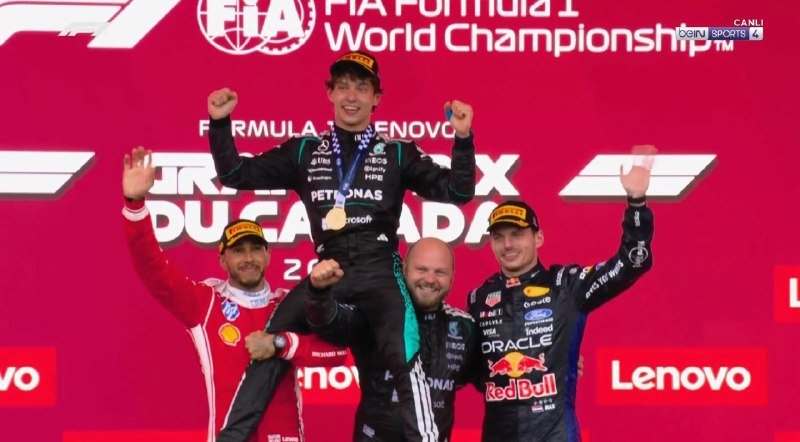
The 2026 Canadian Grand Prix sprint weekend opened on 22 May 2026 with Lewis Hamilton topping the timesheets in Sprint Qualifying 1 at the Circuit Gilles Villeneuve, the storied street circuit hugging the Saint Lawrence River in Montreal. One hour of free practice had concluded earlier that afternoon, with Hamilton then leading the field out for SQ1 — the opening segment of the sprint shootout that determines Sunday's grid for the main event while also setting the starting order for Saturday's sprint race.
Hamilton's position at the front of the queue was not merely symbolic. Sprint weekends compress the traditional grand prix format into a tighter schedule — one practice session, a sprint shootout, a sprint race, then the main qualifying and grand prix all within roughly thirty-six hours. That compression rewards drivers who extract maximum performance early, and it punishes those who arrive off the boil. Hamilton's early declaration of intent, leading the field out onto the track, suggested a driver treating this weekend with something closer to hunger than resignation.
The Sprint Format's Uneven Burden
Since Formula 1 introduced the sprint weekend format in modified form for 2021 and expanded it through the subsequent seasons, the championship's texture has shifted in ways that advantage some drivers and teams over others. The format compresses track time, reduces the margin for strategic error, and places a premium on single-lap pace over race craft. For a driver like Hamilton, whose championship credentials have historically rested on a combination of qualifying excellence and Sunday tyre management, the sprint format has been a double-edged instrument.
On circuits where outright qualifying pace translates directly into sprint race advantage — Montreal's long straights and heavy braking zones reward a well-balanced car — Hamilton's early lead carried more than psychological weight. The Circuit Gilles Villeneuve is unforgiving: walls close to the track surface punish any loss of concentration, and the mix of low-speed corners and high-speed straights demands a chassis that can pivot quickly between configurations. A driver at the front of the queue for SQ1 has the benefit of a clean track surface before rubber begins to build, though that advantage is partially offset by serving as a benchmark for those who follow.
The broader competitive picture at this stage of the 2026 season remains fluid. The sources available do not provide full championship standings or detailed constructor form guides for this specific event, but the contours of the season — with multiple teams capable of race wins, the sprint format elevating the importance of Saturday performance — suggest that Hamilton's early pace carries significance beyond a single session.
The Circuit Gilles Villeneuve Factor
Montreal's track holds a particular place in the history of the sport. Renamed in honour of Gilles Villeneuve after his death in 1982, the circuit rewards aggression and punishes hesitation. The famous "Wall of Champions" at the final corner has ended championship aspirations before, and the long backstraight — where DRS opens a significant tow advantage — transforms the end of lap one into a strategic lottery.
For drivers and teams navigating a sprint weekend, the compressed schedule means that setup errors cannot be corrected through additional practice. The single hour of free practice available on Friday becomes disproportionately valuable: any balance issue, any mechanical concern, any tyre misunderstanding must be resolved before SQ1 begins. Hamilton leading the field out in that context was not a ceremonial gesture. It was a statement about where his weekend stood relative to the opposition.
The Canadian Grand Prix has historically attracted strong crowds — the festival atmosphere around the Île Notre-Dame circuit draws a demographic that blends hardcore enthusiasts with casual spectators — and the sprint format has added a second competitive day to that attendance. Saturday's sprint race now carries the same stakes as a conventional Sunday grand prix in terms of championship points, reshaping the economic model of the event as well as its sporting character.
The Championship Calculus
Formula 1's scoring system awards points through to eighth place in both the sprint race and the main grand prix, meaning that sprint weekends distribute more point-scoring positions across two events than a conventional race weekend. For drivers in the middle of the championship fight, that distribution can swing standings meaningfully in a single session. The sources from the sprint qualifying do not provide updated championship standings following this session, but the structural logic is straightforward: every session counts for double when sprints are on the calendar.
Hamilton's move to Ferrari for the 2025 season brought with it a recalibration of expectations. The Scuderia had chased championship honours through the ground-effect era with varying success, and Hamilton's arrival was framed internally as a declaration of intent. Whether that intent translates into sustained competitiveness through the 2026 season — and specifically into results at circuits like Montreal where Ferrari's recent record has been mixed — remains the central question for this weekend's coverage.
The evidence from SQ1 on 22 May suggests Hamilton is not approaching this event as a tourist. Leading the field onto the track is, in the compressed logic of a sprint weekend, an opening gambit. The responses from those who followed will begin to map the actual competitive order before the sprint race on Saturday afternoon.
What Remains Unresolved
The sources covering this sprint qualifying session do not provide lap times, margin differentials, or detailed team-by-team performance readouts. The Telegram dispatches from the Formula 1 channel announce Hamilton leading the field out for SQ1 and confirm the session's commencement, but they do not establish the outcome of that session with specificity. Readers seeking the precise SQ1 classifications and the identity of the sprint pole-sitter will need to consult the championship's official timing and reporting channels for results that emerged after this article's sourced material was filed.
Similarly, the Friday practice session — the single hour of free practice available before the sprint shootout — is confirmed as having run at the Circuit Gilles Villeneuve, but no performance data from that session appears in the sources available to this desk. The relationship between FP1 performance and SQ1 outcome is therefore inferential rather than documented.
Hamilton leading the field out for SQ1 is an established fact from the sources. What it means for the championship picture will depend on Saturday's sprint race, Sunday's main qualifying, and the decisions made in the hours between now and the checkered flag on Sunday afternoon.
— Monexus covered this sprint qualifying session from the opening Telegram dispatches out of Montreal, using the Formula 1 channel's confirmed timeline as the basis for reporting. Wire services carried additional performance detail after this article's filing deadline; those figures will be integrated into Sunday's full qualifying coverage.
Wire provenance
This editorial synthesis draws on the following public wire/social posts:
- https://t.me/formula1/14234
- https://t.me/formula1/14231