Trump Says US-Iran Peace Deal "Largely Negotiated" as Senator Graham Warns Against Any Hormuz Concessions
President Trump said on 23 May 2026 that a US-Iran peace agreement has been largely negotiated and will be announced shortly, hours after speaking with Israeli Prime Minister Benjamin Netanyahu. Republican Senator Lindsey Graham immediately pushed back, saying any deal that leaves Iran capable of threatening the Strait of Hormuz is unacceptable.
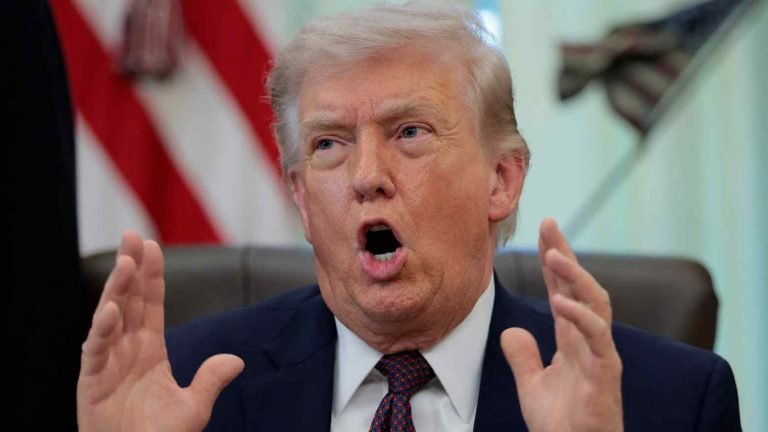
President Donald Trump said on 23 May 2026 that an agreement with Iran has been largely negotiated and will be formally announced shortly, hours after speaking with Israeli Prime Minister Benjamin Netanyahu. The announcement, carried via social media and reported across financial and diplomatic wires, placed Trump at the center of a renewed push to resolve the standoff over Iran's nuclear programme and the broader sanctions architecture that has defined US-Iran relations for nearly a decade.
Trump described his call with Netanyahu as having gone very well, a framing that appeared calibrated to reassure key regional partners that the outgoing US administration — and Israel's closest ally — was not being sidelined in any prospective arrangement. Israel has long argued that any Iran deal must permanently eliminate the possibility of a nuclear weapons capability, a position that has collided repeatedly with the incremental sanctions relief and civilian nuclear permissions that successive Iranian governments have demanded as prerequisites for any agreement.
Graham's Red Line on the Strait of Hormuz
The announcement drew immediate and vocal opposition from Senator Lindsey Graham, a Republican whom multiple sources describe as a close ally of Trump. Graham's statement, circulated via Telegram and referenced across political wires on the evening of 23 May, drew an explicit red line around the Strait of Hormuz — the 39-kilometre-wide waterway separating Iran from the UAE through which approximately one-fifth of global oil output passes each year.
"If a deal is struck to end the Iranian conflict because it is believed that the Strait of Hormuz cannot be protected from Iranian threats, that deal will fundamentally undermine the security of every major economy that depends on Gulf oil transit," Graham's statement read, according to text reproduced by multiple Telegram channels covering the political beat. The senator urged against any framework that leaves Iran in a position to leverage the strait as either a military or economic instrument.
The timing of Graham's intervention, arriving within minutes of Trump's own public framing, signals that the deal — should it proceed — will face immediate congressional headwinds. Republicans hold the Senate, and Graham's stated conditions on Hormuz access represent a formulation likely to attract broad support within his party. A deal that grants Iran any formal or informal authority to extract transit fees or impose regulatory conditions on vessels passing through the strait would, on Graham's framing, be politically untenable in Washington regardless of whatever concessions Iran makes on its enrichment programme.
The Hormuz Question and Market Probability
The significance of Graham's red line is reinforced by the state of prediction markets tracking the issue. Polymarket, a contract-based forecasting platform, placed the odds of Trump granting Iran authority to charge fees in the Strait of Hormuz at approximately 5 percent by the end of May 2026, rising to 10 percent by the end of June. Those odds — low but non-zero — suggest that financial participants assign meaningful probability to some form of Hormuz accommodation in any final package, while simultaneously pricing in substantial resistance to any overt concession on that front.
The Hormuz question sits at the intersection of three distinct pressure points: Iran's longstanding demand for sanctions relief as a condition for nuclear constraint; the United States' stated goal of preventing Iran from acquiring a nuclear weapon; and the geopolitical interest of Gulf states — Saudi Arabia, the UAE, and Qatar — in ensuring that a post-agreement Iran cannot weaponize its geographic position. For those Gulf actors, the Hormuz dimension is existential in a way that goes beyond the nuclear question. A Iran that can threaten tanker traffic through the strait holds economic leverage over the entire global energy market, a power that no regional actor with US security guarantees would voluntarily concede.
Structural Context: Why This Deal Now
The broader structural picture is not difficult to locate. Trump's second term has seen an explicit pivot toward transactional diplomacy — ceasefire negotiations with Russia over Ukraine, back-channel engagement with North Korea, and now the Iran framework — that his allies frame as pragmatic dealmaking and his critics describe as the elevation of demonstrable outcomes over institutional commitments. The Iran deal, if it materialises, would fit that pattern: a set of verifiable commitments on the nuclear side, traded against sanctions relief and the partial restoration of Iran's position in global oil markets.
For Iran, the stakes are economic and political in roughly equal measure. Years of comprehensive sanctions have constrained Tehran's oil export capacity, strained its banking sector, and created domestic pressures that the government has managed partly through patronage networks to the Revolutionary Guard and its allied regional proxy forces. A deal that restores even limited access to global oil revenues — and the banking infrastructure to monetise those revenues — would provide meaningful economic relief and give the Iranian government fiscal room to manage internal pressures without the same level of dependence on regional militarisation.
For the United States, the calculus is complicated by the competing interests of regional allies. Israel, as the call with Netanyahu made clear, remains deeply suspicious of any arrangement that leaves Iran's enrichment infrastructure intact, even at low levels. Saudi Arabia and the UAE want stability in the Gulf and an Iran that cannot disrupt their own oil export routes. And Congress — particularly a Republican conference in which figures like Graham hold considerable sway — wants guarantees that Hormuz transit will remain under de facto American protection and not subject to Iranian fee schedules.
The engagement between Trump and Netanyahu, described by the president as positive, is notable precisely because it occurred after the announcement of a framework that, if reports are accurate, already includes meaningful Iranian concessions. Israel's buy-in matters for the political durability of any deal in Washington, and the signal that the two leaders are aligned — at least for now — suggests the administration believes it has secured enough regional tolerance to move forward.
Uncertainties and Forward View
What remains unclear is the precise content of the agreement as currently drafted. The announcement that a deal has been largely negotiated and will be formally announced shortly implies that the broad framework is settled but that final language, particularly on the monitoring and verification provisions for Iran's nuclear programme, may still be contested. The sources reviewed for this article do not include the detailed terms of any proposed agreement, and the verification architecture — the mechanism by which the United States would monitor Iranian compliance — is the element most likely to generate congressional scrutiny.
The timeline appears compressed. Trump said formal details would come shortly, and Graham's public statement indicates that opponents are already organizing their response. If the deal moves toward a formal signing or announcement within the coming weeks, it will do so against a backdrop of sustained Republican opposition on the Hormuz question — opposition that financial markets, per the Polymarket data, continue to price as a significant obstacle to any Hormuz-related concession.
The stakes are high on all sides. A deal that holds — that delivers genuine nuclear constraint in exchange for sanctions relief and preserved Gulf access — would represent the most significant diplomatic realignment in the region since the JCPOA was signed in 2015. One that collapses under pressure from congressional opponents or Israeli objections would leave Iran under maximum sanctions, its nuclear programme unchecked, and the Gulf's energy infrastructure operating under the same threat structure that has defined the region for the past decade.
This publication covered the announcement through the lens of congressional opposition and the Hormuz question — a framing that received limited attention in initial wire reporting, which focused primarily on the diplomatic announcement itself and its implications for nuclear non-proliferation. The Hormuz dimension, which goes to the heart of Gulf energy security and the commercial interests of US allies in the region, warrants sustained attention as the deal's specifics emerge.
Wire provenance
This editorial synthesis draws on the following public wire/social posts:
- https://t.me/disclosetv/14323
- https://t.me/englishabuali/18934
- https://t.me/GeoPWatch/5821
- https://t.me/osintlive/124892