Trump's 50/50 Iran Gambit Is a Coercion Play in Diplomatic Clothing
The White House is treating a potential Iran accord as a binary outcome shaped by pressure and military posture — not genuine negotiation. That framing tells us more about the administration than it does about Tehran's intentions.
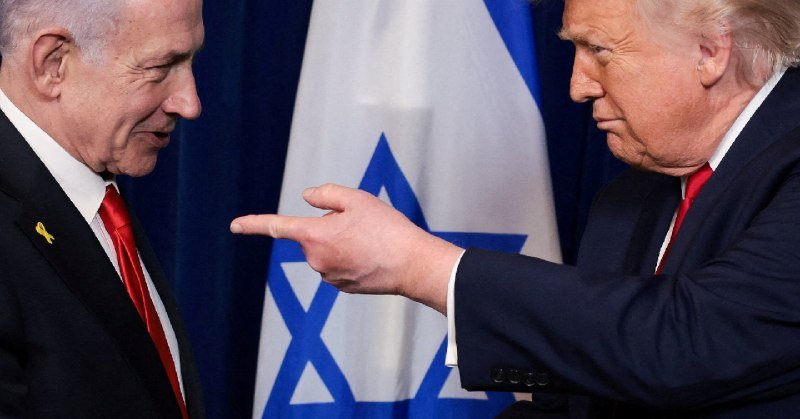
The White House has reframed a potential Iran nuclear accord as a simple wager — and that tells us everything about the terms on which this diplomacy is being conducted.
On 23 May 2026, Donald Trump described his approach to a deal as "a solid 50/50" between agreement and military resumption. Hours earlier, he had described a call with Israeli Prime Minister Benjamin Netanyahu as "very well" and predicted a peace deal announcement imminently. He cancelled weekend plans to remain in what he called the War Room. And he shared, on his own platform, an image of the American flag superimposed over Iranian territory — an unmissable signal of sovereign threat dressed in the vocabulary of diplomacy.
None of that is accidental. The Trump administration's Iran posture is not a negotiation conducted in good faith between two parties seeking a workable compromise. It is a pressure campaign with a countdown attached.
The Ultimatum Architecture
The pattern is legible: simultaneous public overture and private threat. The 50/50 framing is not an honest assessment of probability — it is an ultimatum couched as uncertainty. The message to Tehran is straightforward: accept our terms now, or face the resumption of military operations that Trump's team has kept on the table since the collapse of the Joint Comprehensive Plan of Action in 2018.
Iran's negotiating position, as stated by its lead diplomat on 23 May, is that Tehran "will not compromise." That is a negotiating posture in response to a coercive one. Neither side is entering this exchange with clean hands or open minds. The question is whether the combination of military posture, diplomatic theatre, and market-driven signal-management constitutes a genuine path to agreement — or a structure designed to produce a justification for the harder option if talks fail.
The NOTAM issued by Iran on 22 May, closing western Tehran airspace to all but limited daytime flights, suggests Tehran is taking the military contingency seriously. That is rational. A state facing the explicit possibility of American air operations would be reckless not to prepare.
The Netanyhu Factor
The conspicuously warm readout of Trump's call with Netanyahu adds a layer of complication that the White House has not acknowledged publicly. Israel's red lines on Iranian nuclear capability are not identical to America's. Netanyahu has consistently argued for a military rather than diplomatic solution to the Iran question — a position he has held since before the 2015 JCPOA, and one he never concealed during the negotiations that produced it.
If Trump's "very well" conversation with the Israeli prime minister involved any acceptance of timelines, red lines, or fallback conditions, that information has not been made available. What is available is the timing: the call came on the same day Iran announced it would not compromise, and the same day Trump elevated his military posture domestically.
The risk for the United States is that a deal reached under this kind of pressure — one that Tehran agrees to only under threat of resumed bombing — may not survive the first political tremor in either capital. A nuclear accord that is experienced in Tehran as surrender will be treated as such. Revocation will follow whenever political space allows.
The Market Signal Problem
Polymarket's role in this cycle is notable. The platform has become a real-time instrument for calibrating political risk — traders buy and sell contracts on whether events will occur, and those prices function as compressed probability assessments. When Trump says the Iran outcome is 50/50, he is broadcasting through a medium that has its own logic: the market does not care about diplomatic nuance, only about executable outcomes.
That creates an incentive structure that distorts reporting. Reporters and officials alike now track market prices as information signals. The price becomes the story. And the story becomes about the probability, not about the underlying substance of what is being negotiated.
The more interesting question — what a durable Iran accord would actually require, what concessions each side is prepared to make, what verification architecture would actually constrain Tehran's programme — gets lost in the noise of binary probability.
What a Real Deal Would Require
Any credible nuclear accord with Iran must address the three unresolved fault lines that killed the JCPOA. First, the scope and duration of sanctions relief — Iran wants them lifted quickly; the United States wants them retained as leverage until Iranian behaviour changes. Second, the enrichment cap — how much low-enriched uranium Iran can possess, at what level, under what monitoring. Third, the sunset provisions — at what point, if any, does the agreement begin to expire, and what happens to Iran's programme when it does.
None of these questions are answered by a photograph of the American flag over Tehran, or by a 50/50 probability assessment from a betting market. They require sustained back-channel negotiation, technical verification teams, and political cover in both capitals sufficient to sell any agreement to domestic audiences who have spent seven years being told that Iran cannot be trusted.
The White House appears to believe it can compress that process by raising the costs of failure. That is a reasonable theory of the case — coercion has worked as a forcing mechanism in prior negotiations. But it also has a failure mode that is worth naming: if the pressure is too visible, too theatrical, and too explicitly backed by military posture, it becomes politically impossible for Tehran to accept any deal that looks like capitulation. And the harder the pressure, the more any resulting agreement looks like surrender — to both Iranian hardliners and American ones.
The 50/50 framing may prove accurate. But accuracy on the odds is not the same as credibility on the substance. The world will live with whatever agreement — or conflict — emerges from this cycle. Both outcomes deserve scrutiny that goes beyond market signals and presidential readouts.
Wire provenance
This editorial synthesis draws on the following public wire/social posts:
- https://x.com/Polymarket/status/1921345678909870189
- https://x.com/Polymarket/status/1921312930401976341
- https://x.com/Polymarket/status/1921306014893813819
- https://x.com/Polymarket/status/1921303401450606704
- https://x.com/Polymarket/status/1921216085120237718