Alpine's Montreal Push: Colapinto and Gasly Target Q2 Breakthrough at Canadian Grand Prix
Alpine's Franco-Chilean rookie Franco Colapinto and veteran Pierre Gasly advanced to Q2 at the 2026 Canadian Grand Prix, a rare bright spot for the Enstone outfit amid a turbulent season. The timing matters.
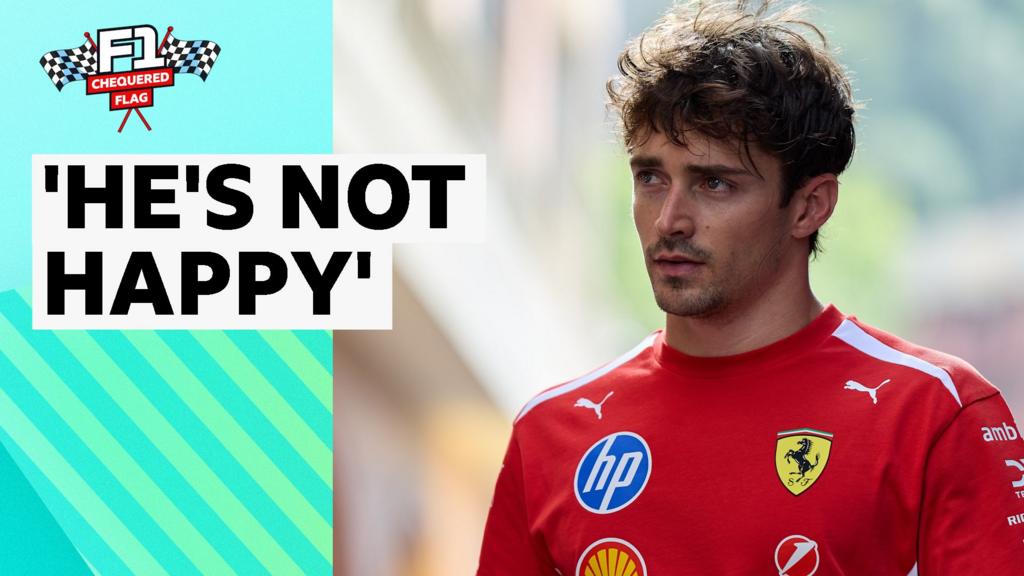
When the green flag dropped for Q2 at the Circuit Gilles Villeneuve on 23 May 2026, it was not a championship contender or a grand prix regular making the first move. It was the Alpine of Franco Colapinto, the Franco-Chilean rookie pressed into a seat mid-season after a turbulent driver carousel, followed seconds later by teammate Pierre Gasly. Together, they represented something the team has lacked for much of this campaign: forward momentum.
The Canadian Grand Prix qualifying session handed Alpine a rare procedural victory. Both cars cleared the Q1 cut—a baseline expectation for any competitive grid, but an outcome that has proved elusive for the Enstone squad across multiple race weekends this season. Colapinto, who replaced jack Doohan after a difficult opening sequence of rounds, navigated the tight, wall-lined Montreal circuit with enough composure to extend his qualifying run into the second segment. Gasly, the experienced anchor, followed suit. Whether either driver converts that Q2 appearance into points on Sunday remains uncertain. But the fact that both advanced is, in itself, a data point worth examining.
A Season of Contradictions
Alpine entered 2026 in transition, the Renault-powered outfit struggling to bridge the gap to the sport's established midfield leaders. The team has cycled through drivers, engineering philosophies, and public commitments to youth development, sometimes simultaneously. Colapinto's elevation from the academy ranks was framed internally as a long-term investment; externally, it read as a reset button pressed out of necessity. The Telegram dispatch confirming both Alpines through to Q2 at Montreal suggests that investment is, at minimum, beginning to generate modest returns.
Yet the qualifying structure at Montreal introduces a complication that pure Q2 advancement obscures. The 2026 calendar features a sprint weekend format at several venues, and Montreal is one of them. The sprint qualifying session—SQ2 specifically, where George Russell led the field onto the track on 22 May—operates on a separate timeline and produces a separate grid from the main qualifying that determines Sunday's race order. A driver can look sharp in sprint qualifying and still start deep in the pack on Sunday, or vice versa. Colapinto and Gasly's Q2 advancement on 23 May tells only half the story. The sprint grid, set a day earlier with Russell's Mercedes leading the way, tells the other half.
Reading the Sprint Qualifying Signal
Russell leading sprint qualifying at Montreal is not surprising on its face. The Mercedes driver has demonstrated consistent single-lap pace across multiple circuits this season and has the machinery to exploit the Circuit Gilles Villeneuve's long straights and heavy braking zones. What the sprint qualifying session reveals, however, is the competitive hierarchy heading into the main event. If Russell was quickest in the sprint format, it suggests Mercedes remains a factor for race victory, not merely a contender for minor points hauls.
For Alpine, the sprint session offered less encouraging signs. Neither Colapinto nor Gasly appears to have featured prominently in the sprint qualifying narrative, based on available reporting. The gap between sprint pace and race-day performance can narrow or widen depending on tire strategy, safety car timing, and Montreal's notorious unpredictability—the circuit's proximity to the St. Lawrence River introduces weather variables that catch even well-prepared teams off guard. But if the sprint qualifying order reflects true underlying pace, Alpine's Q2 advancement may represent a ceiling, not a stepping stone.
What the Enstone Team Actually Controls
The structural reality for Alpine is one of resource asymmetry. The team competes in a championship where aerodynamic development, power unit reliability, and simulator correlation determine grid positions more reliably than driver heroics. Colapinto is a credible prospect—he showed flashes of pace during his earlier Williams stint and has handled the mid-season Alpine transition without obvious panic. Gasly is a known quantity, a driver who has consistently extracted performance from machinery that occasionally deserved less. But neither driver can manufacture mechanical performance from components that underperform.
Montreal rewards precision. The circuit punishes oversteer, punishes overconfidence in the wall-lined final sector, and punishes any team that misreads tire degradation across a long run. It is a venue where strategy matters and where Sunday's race can produce results entirely divorced from Saturday qualifying. Alpine having both cars in Q2 is a necessary condition for a points finish. It is not a sufficient one.
The Forward View
The Canadian Grand Prix will not define Alpine's season. The French marque has races ahead where development trajectories will matter more than a single qualifying session in North America. But for Colapinto, specifically, the Montreal weekend carries symbolic weight. A rookie who entered the season without a race seat and has since been handed a full-time opportunity needs to demonstrate that the opportunity was not merely a charitable gesture. Q2 advancement is the minimum viable signal. What happens on Sunday—whether he converts it into points or watches the opportunity dissolve in tire management decisions—will tell observers more about his ceiling than any qualifying lap ever could.
Gasly, meanwhile, continues his quiet work of maximising what the package offers. The Frenchman has endured enough disappointing seasons at midfield teams to know that a strong weekend in Montreal does not rewrite history. But it does buy time. In Formula 1, buying time is often the only currency that matters.
Alpine's both Alpines progressed to Q2 at the Canadian Grand Prix on 23 May 2026. George Russell led sprint qualifying (SQ2) on 22 May 2026. Both sessions occurred at the Circuit Gilles Villeneuve, Montreal, Quebec.
Wire provenance
This editorial synthesis draws on the following public wire/social posts:
- https://t.me/formula1/18956
- https://t.me/formula1/18951