The Leverage Fetish: Why Trump's Iran Deal Could Be the Wrong Deal Done the Wrong Way
The White House is expected to announce a US-Iran draft peace deal by May 24, 2026. That it may come together quickly is being framed as a diplomatic triumph. The structural dynamics suggest something considerably more fragile.
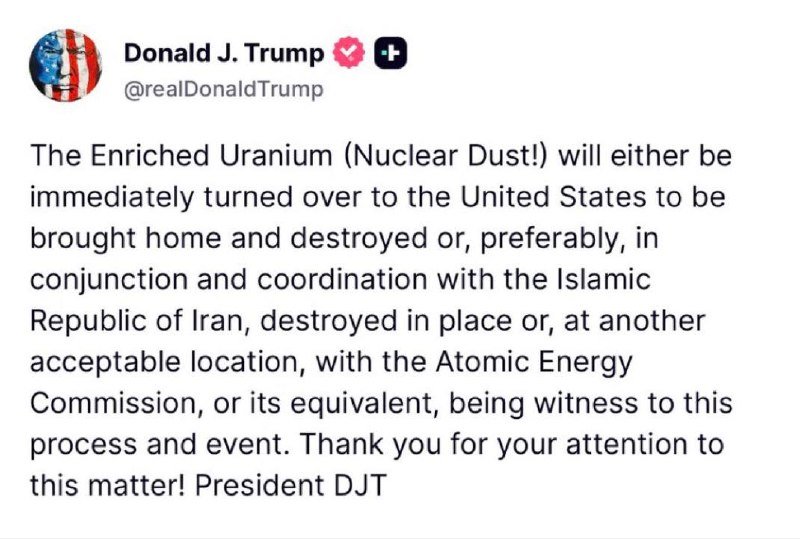
The administration that spent months telegraphing military strikes on Iran may be weeks away from announcing a draft peace deal. According to reporting carried by Polymarket's wire feed on May 23, 2026, US and Iranian officials are expected to unveil a framework agreement by the afternoon of May 24. Vice President JD Vance cut short his schedule and returned to Washington on May 23, and President Trump altered his own plans to remain at the White House through the weekend, citing ongoing military activity in Iran. The speed of the convergence is being sold as momentum. The structural dynamics suggest something considerably more fragile.
The core problem with deals done under the shadow of force is that the force is the point. When a negotiating party arrives at the table because it has been told — repeatedly, publicly, and credibly — that refusal carries physical consequences, the resulting document reflects that asymmetry. The signatory has agreed not because its interests have been satisfied but because its survival calculus has shifted. Iran's calculus has shifted, certainly. But the question any serious analyst must ask is: shifted toward what? A deal negotiated under explicit threat of air strikes carries within it the seeds of its own contestation. Every hardliner in Tehran who argues that concessions were extracted at gunpoint will have empirical grounds for that claim.
The Timing Problem
This is not a new phenomenon in American diplomacy. The North Korea engagement of 2018 produced a document whose signatories later described in near-identical terms: a photo opportunity masquerading as a framework. The Taliban deal of 2020 was billed as a peace accord; it was, in structural terms, a withdrawal agreement dressed in diplomatic language. Deals done under pressure of military escalation produce documents that are structurally conditioned by the pressure. The administration appears to have confused the appearance of urgency with the substance of agreement.
What the May 24 timeline suggests is not that Iran's negotiating position has converged with Washington's, but that both parties have calculated that the cost of continued confrontation — for Iran, the material destruction of nuclear infrastructure; for Washington, the political and financial exposure of a third major conflict — exceeds the cost of a provisional document. That is a rational bilateral calculation. It is not the same thing as a durable settlement.
Regional Static
The deal, if it materialises, will land into a regional environment that has not paused to accommodate it. Saudi Arabia, the UAE, and Israel all have direct security interests in the parameters of any Iranian nuclear arrangement. None of them were at the table. Saudi Arabia's own nuclear programme, which Western intelligence assessments have noted is advancing in parallel with the Iranian one, will not be addressed by a bilateral US-Iran document. Israel's red lines on uranium enrichment thresholds remain exactly where they were before May 23. The deal will not resolve those tensions — it will, at best, temporarily suspend them.
There is a reasonable argument that the alternative to a flawed deal is worse: continued military escalation, a new front in a Middle East that has not fully processed the Gaza conflict, and an Iranian programme that advances with no external oversight whatsoever. That argument has merit. But it should not be used to suppress the harder question: whether a deal built on coerced convergence can survive contact with the political and security realities of the Gulf.
China's Absence
One structural feature of this moment that has received insufficient attention in the wire coverage is the position of China. Beijing has been an implicit beneficiary of the US-Iran confrontation — a relationship it has cultivated carefully since the 2015 JCPOA's partial collapse provided space for Chinese energy diplomacy in the region. A US-Iran deal, whatever its terms, disrupts China's leverage with Tehran. It also potentially disrupts the broader multipolar positioning that has characterised Chinese Middle East policy since 2020. The question of whether Beijing was consulted, informally or otherwise, is one the available sources do not resolve. It is a significant gap.
What the Record Shows
The administration has presented the pace of these negotiations as evidence of diplomatic competence — the capability to move from threat of force to framework agreement in weeks. What the record as it stands does not yet show is whether the framework addresses verification mechanisms, sunset provisions, sanctions relief sequencing, or the status of Iran's regional proxy relationships. These are not procedural details. They are the substance of any agreement. Without clarity on these dimensions, the announcement of a draft deal on May 24 tells us that a document is being prepared. It tells us nothing about whether that document holds.
The scheduling changes — Vance's return, Trump's altered weekend — may reflect genuine diplomatic activity. They also reflect the exposure that attaches to a high-profile moment without corresponding depth in the underlying agreement. When a deal collapses under the weight of its own inadequacy, the political cost falls on whoever was holding the press conference when it was announced.
The sources do not yet specify what the draft agreement actually contains. Until they do, the announcement is a statement of intent dressed as an event. Whether that intent survives the structural forces arrayed against it — internal Iranian politics, regional security competition, verification disputes, and the simple problem that coercive diplomacy produces documents shaped by coercion — remains the only question that ultimately matters.
Wire provenance
This editorial synthesis draws on the following public wire/social posts:
- https://x.com/polymarket/status/1923478912345678901
- https://x.com/polymarket/status/1923456789012345678
- https://x.com/unusual_whales/status/1923401234567890123