The Iran Deal Is Back — And This Time Washington Means Business
An expected US-Iran draft peace deal marks the most consequential diplomatic gambit in years. Whether it holds will define the region's architecture for decades — and expose which partners have been left out of the room.
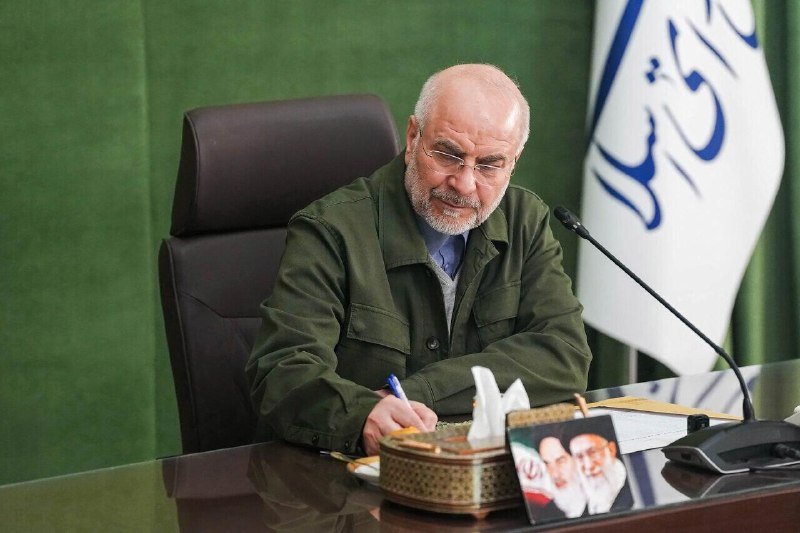
The signals from Washington have been unmistakable for weeks. Now they are official: a draft peace agreement between the United States and Iran is expected to be announced on the afternoon of May 25, 2026. Vice President JD Vance cut short his schedule and returned to the capital as the White House finalised its thinking on next steps. The announcement — if it lands as Polymarket's wire service reported it would — represents something Washington's foreign policy establishment had effectively written off four years ago.
This is not a footnote. It is the kind of diplomatic reversal that restructures the Middle East's operating assumptions in a single afternoon.
The deal's precise contents remain under wraps, which is standard for preliminary announcements of this magnitude. What is already visible, however, is the diplomatic architecture that made it possible — a process conducted largely outside public view, without the theatrical summitry that typically accompanies American peace initiatives. That secrecy itself is informative. It suggests both sides had something to protect: Tehran wanted to avoid domestic embarrassment before a framework existed, and Washington wanted to preserve negotiating room without premature congressional or allied scrutiny.
The deal's shape will determine whether it deserves the optimism its timing generates. A comprehensive nuclear arrangement that rolls back enrichment while easing sanctions is one thing. A narrow freezes-for-relief swap that punts the hard questions is another. The history of Iran nuclear diplomacy — the 2015 Joint Comprehensive Plan of Action and its 2018 unilateral abandonment by the Trump administration — offers plenty of reason to treat interim breakthroughs with suspicion. Tehran has heard American promises before. The structural incentive for both sides to spin a deal into something more durable than it is has not disappeared.
What does seem different this time is the regional context. The Gulf monarchies, most notably Saudi Arabia, have spent the past three years pursuing their own detente with Tehran through back-channels facilitated by Iraq and Oman. The assumption driving that process — that continued hostility served no one's strategic interest — has been absorbed, however reluctantly, into Washington's calculus. Whether Gulf capitals were consulted before this week's announcement is unclear from the available reporting. If they were not, the speed of the deal's emergence will have generated its own diplomatic aftershocks.
Israel's position remains the most consequential unknown. Israeli officials have not issued formal statements on the emerging agreement, but the gap between what Jerusalem considers acceptable and what a US-Iran compromise typically entails is large. Previous iterations of this negotiation collapsed in part because Israeli opposition proved impossible to manage without American concessions that Iran would not accept. Whether the current White House is willing to absorb that cost — or has found formula that genuinely satisfies Israeli security concerns — is not answered by the wire reports currently available.
There is also the question of what the announcement says about American foreign policy's current direction. The speed of the rapprochement — accelerated in the weeks since the previous reporting period — coincides with a broader pattern of diplomatic repositioning that has unsettled traditional allies across Europe and Asia. The administration that spent its first year signalling maximum pressure on Iran is now on the verge of an agreement that grants Tehran significant diplomatic and economic relief. Either the pressure campaign succeeded beyond its design, or the strategic premise behind it was quietly revised. The sources do not specify which, and both interpretations have adherents in the foreign policy community.
The stakes extend beyond the bilateral relationship. A functioning US-Iran understanding reshuffles the deck on several simultaneous crises: Yemen, where a Hudaydah-style de-escalation becomes more plausible; Syria, where Iranian proxy networks have been a defining constraint; and the broader nuclear non-proliferation architecture, where a successful Iranian model offers lessons — positive or negative depending on perspective — for other states considering enrichment programmes.
It also changes the economics of the dollar's role in the Gulf. Sanctions relief for Iran means a partial reopening of financial channels that have been closed for years. That matters less for Iran's gdp than for what it signals about the weaponisation of the American financial system — and about whether that weapon still functions as intended when deployed.
The deal will face immediate scrutiny from three directions. Domestic hardliners in Tehran will test any compromise on nuclear provisions. Congressional Republicans have already signalled opposition to any agreement that does not include permanent restrictions rather than sunset clauses. And Israel — whatever the private diplomatic conversation has produced — will face the choice of absorbing a framework it did not design or publicly breaking with Washington at a moment of maximum regional sensitivity.
None of this means the deal is wrong. It means it is consequential, which is precisely why the next 48 hours matter. A framework announcement is not a signed treaty. It is an opening position, wrapped in optimistic language, that will be tested against the realities of implementation within months. Whether those realities prove kinder than the history of US-Iranian diplomatic engagement depends entirely on whether both governments entered this process willing to absorb costs they have previously refused — and whether their domestic political environments allow them to follow through.
The wire service says the announcement comes tomorrow afternoon. What follows will take considerably longer to assess.
This publication covered the US-Iran deal framing as a prospective diplomatic development. Wire reporting from the period covered the announcement expectation but not the deal's specific terms, which were not yet public at time of filing.
Wire provenance
This editorial synthesis draws on the following public wire/social posts:
- https://x.com/polymarket/status/1924478964820668416
- https://x.com/polymarket/status/1924450823786443049