Ninety-Eight: Haaretz Reports Dozens of Deaths Inside Israeli Prisons Over Two and a Half Years
Israeli outlets report that 98 people died in Israeli custody over a 30-month period — a figure that surfaces long-standing tensions over conditions, oversight, and the legal status of detainees held without charge.
On 25 May 2026, Israeli newspaper Haaretz reported that 98 people had died inside Israeli prisons over a period of approximately two and a half years. The disclosure, carried by Arabic-language outlets including Al Alam, landed against a backdrop of sustained scrutiny from international human rights monitors — scrutiny that Tel Aviv has periodically rejected as institutionally skewed.
The figure is large enough to elide individual names, which is itself a editorial problem. Ninety-eight is a count, not a list. Each entry in that ledger was a person: someone whose family received a call, whose legal counsel filed briefs, whose casefile sat on a judge's desk or was never assigned one at all. By the time the number circulates as a aggregate, the individuals it describes have already been made invisible twice over — first by whatever mechanism placed them in custody, then by the statistical condensation that reports their deaths three at a time.
The sources do not disaggregate the deaths by cause, by legal status, or by the specific facility in which they occurred. Haaretz's methodology — whether the paper cross-referenced prison authority records, legal filings, or survivor testimony — is not described in the Telegram-sourced accounts available to this publication. That is not a minor omission: a death in a high-security wing and a death in administrative detention carry different evidentiary weights, different legal ramifications, and different political meanings.
Al-Duwair and the Southern Lebanon Strikes
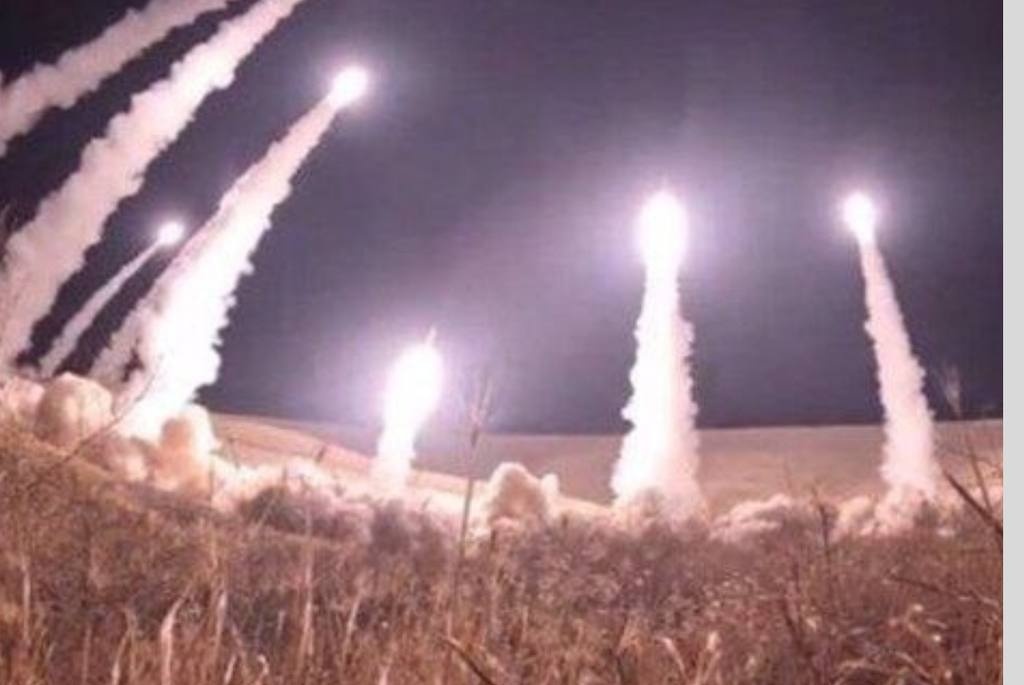
On the same date, Al Alam — the Arabic-language service of the Iran-aligned Islamic Republic of Iran Broadcasting — reported that Israeli warplanes had conducted multiple strikes against the town of Al-Duwair in the Nabatieh District, southern Lebanon. The outlet described the attacker as "occupation warplanes," a term consistent with the framing used by Hezbollah-aligned media but absent from accounts filed through Reuters or the Associated Press, which had not published verified corroboration of the strike by the time of this deadline.
The cross-section of date does not establish causation. Israeli operations in southern Lebanon have been recurrent since October 2023, responding to Hezbollah cross-border fire and, in Israeli framing, weapons-storage sites and command infrastructure. The fact that two reports — one about prison deaths, one about an air raid — landed in the same Telegram feed on the same evening says more about the source channel's editorial choices than about any operational link between them.
What the overlap does clarify is the bandwidth problem. Newsrooms operating at this velocity are processing multiple casualty batches, multiple facility strikes, multiple legal accounting documents — often simultaneously. The 98 whose deaths Haaretz tallied were not foregrounded in every account; some were buried in periodic reporting cycles, their deaths recorded as footnotes in rounds that covered fresher events.
The Detention Architecture and Its Disputes
Israel's practice of administrative detention — holding individuals without formal criminal charge or public trial, renewable indefinitely — has been contested in Israeli courts, in European parliaments, and before international tribunals. Tel Aviv's position, iterated repeatedly through the state's legal apparatus, is that the mechanism targets individuals assessed as posing imminent security threats, and that judicial oversight operates through mechanisms that satisfy domestic statutory requirements.
Critics — among them bodies including the UN Working Group on Arbitrary Detention and NGOs including B'Tselem andAddameer — argue that administrative detention in effect suspends due process protections that would otherwise attach to criminal confinement, and that the classification of detainees as "security prisoners" insulates the system from external review. The position is not without precedent: similar tensions have arisen around detention practice in Northern Ireland in the 1970s, in Guantánamo Bay across four presidential administrations, and in the administrative浸泡 regimes that followed nationalist-security emergencies in a dozen other democracies.
The deaths reported by Haaretz sit inside this legal grey zone. A person held without charge is not being prepared for trial; they are being held on suspicion, renewable, reviewable in camera. When that person dies — from medical neglect, from violence, from a systemic failure of care — the accountability mechanism is the same machinery that created the conditions of their confinement. That is structurally difficult, and for families of the deceased, effectively insoluble.
What the Number Cannot Carry
Ninety-eight deaths in thirty months is a mean rate of roughly three deaths per month. That is a statistical description, not a eulogy. Read in isolation it tells us the deaths were frequent enough to register as a pattern, but never concentrated enough — three per month, distributed across dozens of facilities and detainee populations — to generate the headline event that would force a single, sustained accountability moment.
This is how aggregate reporting produces invisibility. Each individual death is covered, if it is covered at all, at a moment of minimum newsroom attention — late in a cycle, alongside other items, in a tone that neither celebrates nor condemns but simply records. The aggregate then gets reported as a number in a Haaretz investigation, and that number becomes the headline. The headline generates brief attention. Then the news cycle moves.
The sources available to this publication do not allow us to name the 98, to reconstruct their cases, or to adjudicate between the Israeli state position and the account of detention conditions advanced by rights monitors. What the sources allow is a precise description of the gap: a number that represents 98 people, none of whom the sources has individually ID'd.
The practice of aggregate reporting on mass casualties is not unique to coverage of the Israeli detention system — it occurs in reporting on US drone strikes, Syrian detention facilities, and Chinese internment of Uyghur populations. The structural dynamic is consistent: individuals disaggregated into figures, figures aggregated into policy positions, policy positions fought over while the individuals remain unnamed in the record.
Stakes
The stakes here are not abstract. They include the legal standing of administrative detention as a security tool — whether its continued use is compatible with international human rights law, and what a redrawn practice would look like. They include the question of whether Haaretz's figures can be independently verified, through prison authority disclosure or court-ordered document release, and whether an independent investigative mechanism has access to facilities. And they include the question of what it means for a press ecosystem to report 98 deaths as a number rather than as 98 separate events — each with a family, a timeline, a disputed sequence, and a contested accountability outcome.
As of 25 May 2026, no formal investigation into the 98 deaths reported by Haaretz had been announced by the Israeli Prison Service or the Israeli Ministry of Defense. No international body had publicly committed to an independent monitoring visit. The families of the deceased — assuming the standard mortality rates of any large custodial population — would be navigating grief, legal uncertainty, and institutional opacity simultaneously, with no guarantee that questions about how their relatives died will be answered in their lifetimes.
The number will be updated when the next body count is published. This is not sufficient.
This publication covered the Haaretz report as published in Arabic-language wire copy alongside contemporaneous reporting on Israeli strikes in southern Lebanon. The two stories arrived simultaneously and were assessed independently; both are included here because neither is contextualized without the other, and because the compression of the news cycle does not erase the fact that these areongoing events with continuing human consequences rather than resolved reporting questions.
Wire provenance
This editorial synthesis draws on the following public wire/social posts:
- https://t.me/alalamarabic/8912
- https://t.me/alalamarabic/8910
- https://t.me/alalamarabic/8908