Ninety-Eight: Documenting the Dead in Israeli Custody
Haaretz reporting identifies 98 deaths inside Israeli detention facilities over a two-and-a-half-year period — a figure that, if confirmed, raises acute questions about custody conditions and oversight in facilities that have drawn sustained international scrutiny.
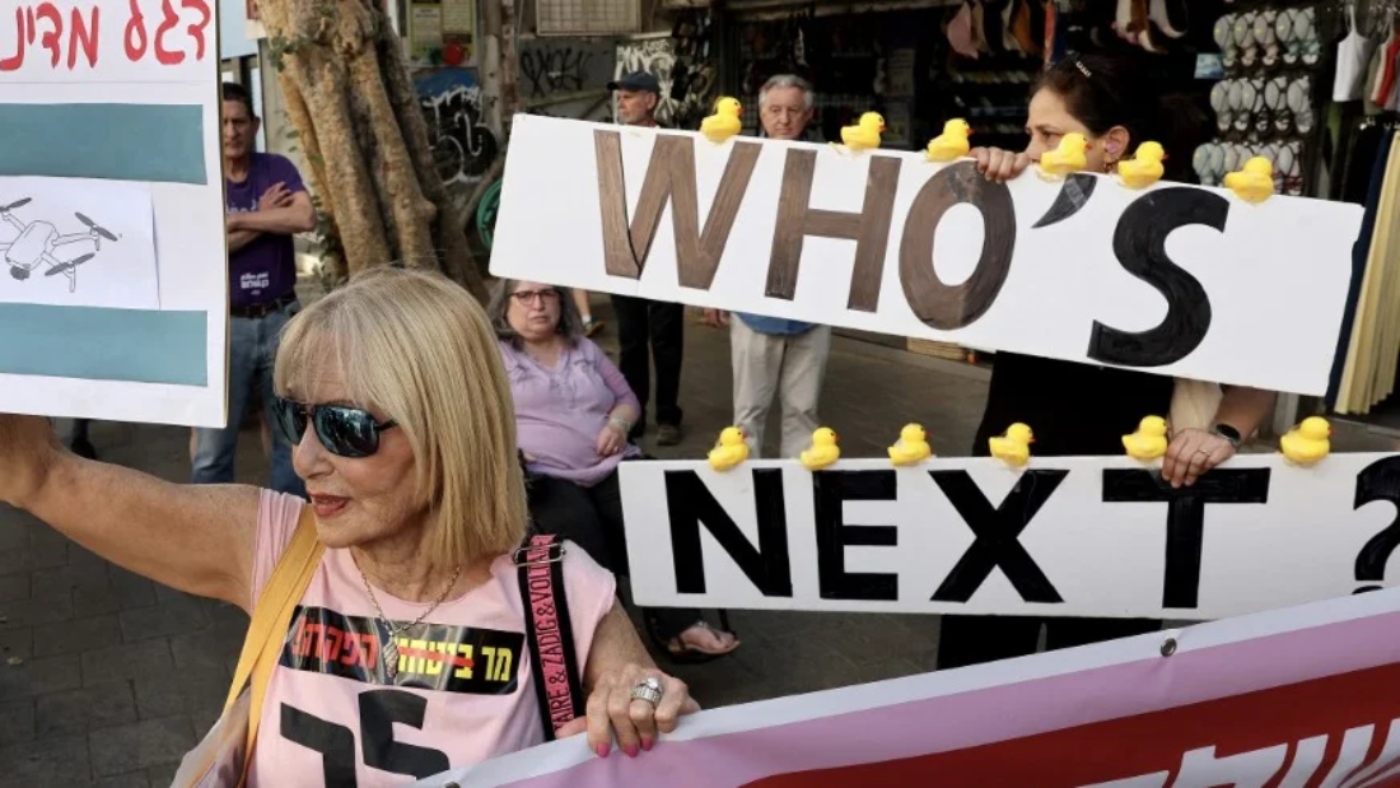
On 25 May 2026, Haaretz published findings that 98 individuals died inside Israeli prisons over a period of two and a half years. The report, based on documentation reviewed by the newspaper, did not immediately identify all the deceased by name. The figure landed in wire services and regional outlets as a single, stark statistic — 98 — against a backdrop of ongoing international attention to Israel's detention system in the West Bank and Gaza.
That number demands more than a headline. It asks what conditions inside those facilities produced it, who oversight mechanisms were supposed to be, and what happens to accountability when a state detains people in the thousands and some of them do not emerge alive.
The Israeli prison system has held a continuously elevated population since October 2023, when mass arrest operations followed the Hamas attacks and the subsequent military offensive in Gaza. The Israeli Prison Service, which administers facilities under the authority of the Israel Security Agency, has historically restricted independent access by human rights monitors to sections holding security detainees — a population that in recent months has included not only those accused of affiliation with armed groups but also Gazan civilians arrested during ground operations and transferred to facilities inside Israel, a practice that itself raises separate legal questions under the Fourth Geneva Convention.
The deaths reported by Haaretz span that period. The newspaper's legal team and reporting staff reviewed documents — some submitted in court proceedings, others obtained through freedom-of-information requests — to compile the figure. Details about causes of death, individual identities, and the circumstances surrounding each case were not fully publicised in the initial reporting, which makes a complete accounting difficult at this stage. What the report does is establish a lower bound: at least 98 people did not return from Israeli custody during this window.
The Israeli government has not issued a comprehensive public response to the specific Haaretz figure. Statements from the Israel Prison Service in prior months have referenced deaths in custody, at times attributing them to pre-existing medical conditions. The Israeli Supreme Court has handled petitions related to detention conditions, and the Military Advocate General has reviewed some complaints. But the gap between official acknowledgment and independent verification has historically been wide in Israeli detention cases — a pattern documented by organisations including B'Tselem, Physicians for Human Rights Israel, and the International Committee of the Red Cross, which has repeatedly sought — and been denied — consistent access to detention facilities in Israel and the West Bank.
The deaths occur inside a system where透明度 is structurally limited. Security detainees under Israeli military law can be held for extended periods without charge, subject to periodic renewals of their detention orders. Legal representatives for detainees have long described difficulty obtaining timely access to their clients, delays in medical evaluation, and conditions in facilities — including the Ketziot and Megiddo complexes in the Negev — that they describe as chronically overcrowded and inadequately ventilated, particularly during summer months.
The 98 figure does not, on its own, indicate whether deaths resulted from violence, neglect, denial of medical care, suicide, or other causes. Each will require separate examination. What it does is establish that the question of what happens inside these facilities cannot be waved away as an abstraction. The people who entered custody are real individuals — their families, in many cases, have received no satisfactory explanation for their loss. That lacuna is not unique to this period; human rights groups have documented it across previous decades. But the scale of detention since October 2023 has multiplied the surface area for harm.
Simultaneously on 25 May 2026, Israeli forces conducted an air raid on the town of Ghandouriyah in southern Lebanon. The strike, reported by regional wire services and monitored outlets, targeted an area that has seen repeated Israeli activity during months of cross-border hostilities linked to the wider Gaza offensive. Casualty figures from Ghandouriyah were not immediately confirmed, and the Israeli military statement referenced the targeting of what it described as militant infrastructure. Lebanese state media reported civilian presence in the area. The strike did not appear connected to the custody deaths but underscored the wider arc of a conflict that continues to generate new casualties and new detainees on multiple fronts simultaneously.
The overlap of these two reports — 98 dead in custody inside Israel, an airstrike inside Lebanon producing new casualties — captures something structural about how this conflict operates. Detention and airstrikes are not peripheral to the military campaign; they are components of it. And both have proved resistant to the kind of independent scrutiny that would allow the international community to form a reliable picture of what is actually happening to the people caught inside.
The stakes of the Haaretz reporting are direct. If the 98 deaths are verified independently — and the methodology described suggests a rigorous attempt to document them — they constitute a humanitarian datum that international bodies, including the International Criminal Court, will need to incorporate into ongoing investigations. The United Nations fact-finding missions already operating in the region will need to request access to facility records, death certificates, and autopsy reports. The families of the deceased, many of whom may not yet know the full circumstances of their relatives' deaths, have claims to information that the Israeli state owes them under both domestic and international law.
What remains uncertain is whether that access will be granted. Israel's cooperation with international human rights mechanisms has been inconsistent at best. The United Nations Human Rights Council's ongoing investigations have been characterised by the Israeli government as politically motivated and have been denied cooperation. Without access, verification remains partial. The 98 figure is a credible starting point, not a closed case.
This publication will continue to track documentation as it emerges. The dead in custody do not have an easy path to accountability. But the number — once it enters the public record — cannot be easily disappeared either.
Desk note: The wire on the Ghandouriyah strike circulated alongside the Haaretz custody data in the same feed on 25 May 2026. Monexus linked these two stories not because they share a direct causal thread but because both illustrate the same operational logic: a conflict that generates detainees and casualties simultaneously, and that resists external scrutiny on both tracks at once. Western wire services led with the military action; regional outlets foregrounded the custody data. Neither frame alone captures what is happening.
Wire provenance
This editorial synthesis draws on the following public wire/social posts:
- https://t.me/alalamarabic/987654
- https://t.me/alalamarabic/987653