The Vatican's AI Intervention: Why Pope Leo's Encyclical Landed Like a Warning Shot
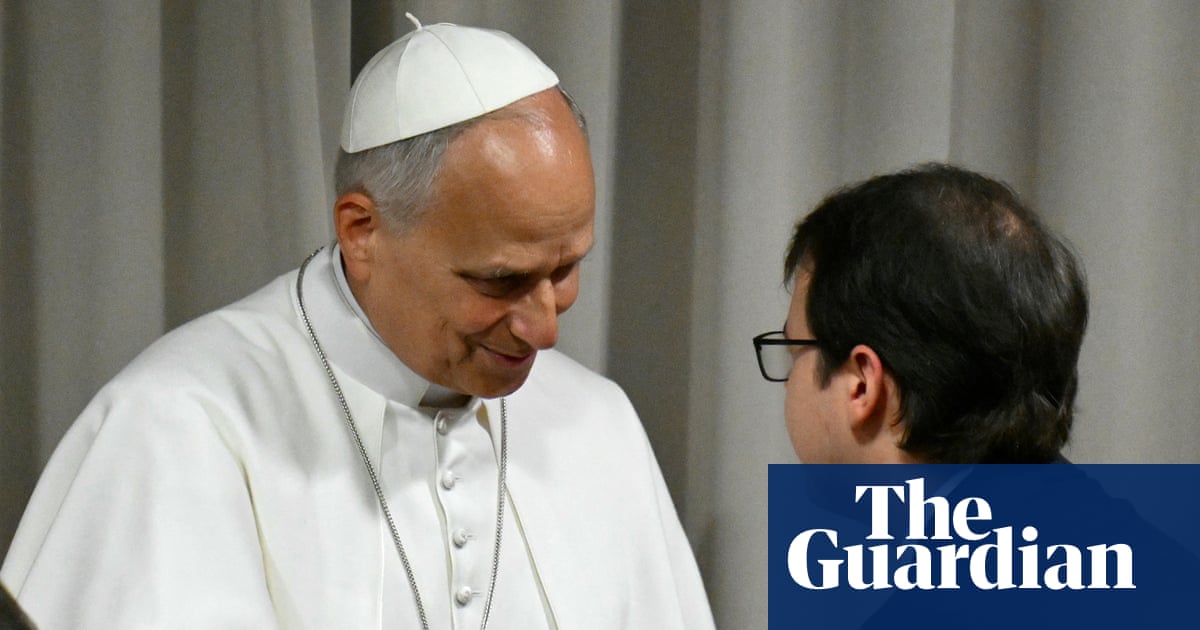
When Pope Leo XIV released his first encyclical on 30 May 2026, he chose as his subject the technology that global regulators, labor organizers, and civil liberties groups have spent years trying to tame: artificial intelligence. The timing was deliberate. The text was not. Dated 8 May 2026 and released publicly four days before the Pope's one-year anniversary in office, the encyclical titled Dignitas Infinita (Infinite Dignity) — a title shared with a 2024 Vatican declaration — signals that the Holy See intends to weigh in on the defining industrial and political question of the decade, not as an afterthought but as a principal voice.
The reaction in the United States was swift and largely sympathetic. Readers responding to The Guardian's coverage articulated a consistent cluster of fears: that AI systems are hollowing out employment markets, normalising mass surveillance, and accelerating a corporate capture of daily life that democratic institutions lack the vocabulary — or the will — to challenge. One respondent described the technology as a "threat to human flourishing itself." Another framed the debate not as a question of innovation versus regulation, but of who controls the infrastructure of cognition.
This publication finds that the convergence between a papal encyclical and mass public anxiety is not incidental. It reflects a structural moment: the window in which AI governance remains contested is narrowing, and institutions — secular and religious alike — are positioning themselves accordingly.
A Moral Framework Meets Public Dread
The encyclical's content, as summarised by Vatican communications, argues that AI systems operating without meaningful human oversight pose a direct challenge to the inviolable dignity of the person. This is not a novel argument in secular policy circles; it tracks closely with positions staked out by the EU's AI Act architects, by US Senate hearings featuring testimony from displaced workers, and by a growing body of academic literature on algorithmic harm. What distinguishes the Vatican's entry into the debate is the source's institutional reach and its moral vocabulary, which carries weight in communities that neither Brussels nor Washington can easily address.
The reader responses The Guardian collected suggest that American publics are not merely interested in AI regulation — they are experiencing its absence as a personal and economic emergency. Several correspondents cited specific anxieties: automated hiring systems that screen out older workers, AI-generated content flooding information ecosystems, and the rapid expansion of workplace monitoring tools marketed as productivity enhancers. These are not abstract concerns. They are lived consequences of deployment decisions made by a small number of technology firms operating largely outside meaningful democratic oversight.
The Vatican's framing matters because it adds a dimension that technical risk assessment and cost-benefit analysis cannot easily supply: a philosophical account of what is lost when human judgment is systematically delegated to machines. Whether one accepts the theological premises, the argument that AI threatens the foundational concept of human agency has a resonance that dry regulatory language struggles to achieve.
The Regulatory Gap That Keeps Widening
Underneath the Vatican's moral case lies a more mundane and perhaps more consequential reality: the global governance architecture for AI remains fragmented, under-resourced, and heavily lobbied. The EU's AI Act, the most comprehensive statutory framework enacted so far, entered force in August 2024 and has since beenavigating implementation against the pressure of a fast-moving industry. In the United States, executive orders have attempted to set guardrails, but Congress has yet to pass comprehensive legislation, leaving a patchwork of agency guidance and voluntary industry commitments.
Into this vacuum step the technologists themselves. The major AI developers — a short list dominated by American firms and, increasingly, Chinese competitors — have defined the deployment timeline. Regulatory agencies are in permanent catch-up mode. What the Vatican has done, in effect, is lend institutional legitimacy to what critics in academia, labor unions, and civil society have been arguing for years: that the pace and scale of AI adoption have outrun the mechanisms societies rely on to protect their members from harm.
The structural parallel is not exact, but it is instructive: just as the 2008 financial crisis exposed the inadequacy of regulatory frameworks designed for an earlier era of financial innovation, the first wave of large-scale AI deployment is exposing similar gaps. The difference is that the political economy of AI is even more concentrated, the network effects even more pronounced, and the lead time for meaningful intervention even shorter.
What the Vatican's Voice Changes — and What It Doesn't
It would be overstating the case to suggest that a papal encyclical will alter the trajectory of AI investment or compel governments to adopt specific statutory language. The Catholic Church's influence on technology policy in the United States has limits, particularly among the political factions most resistant to regulatory action. But the encyclical shifts the terrain of public debate in ways that matter over a longer horizon.
Moral authority, even in a secular age, remains a resource. When a major religious institution declares that a technology threatens human dignity, it reframes the question from one of efficiency and competitiveness — the terms in which AI companies prefer to operate — to one of values and trade-offs. That reframing is not neutral. It creates political space for regulators, legislators, and advocacy groups to argue that restraint is not merely prudent but ethically required.
The American reader responses to The Guardian's coverage suggest that this framing resonates. The anxieties expressed are not fringe positions; they track closely with polling data showing broad public concern about AI's societal impact across party lines. What has been missing is not public support for intervention but political oxygen — the space within which elected officials can act without being immediately characterised as hostile to innovation. The Vatican's encyclical adds oxygen.
The Stakes: Who Wins if Nothing Changes
If the governance vacuum persists, the consequences are not distributed evenly. Workers at the lower end of the wage scale, in sectors most susceptible to automation, bear the largest share of displacement risk. Communities with less access to legal resources face the greatest exposure to algorithmic discrimination in hiring, lending, and criminal justice. Countries in the Global South, whose regulatory capacity is thinner and whose leverage over major technology firms is limited, risk becoming testing grounds for deployment models that would not survive scrutiny in Brussels or Washington.
The technology firms that benefit from the status quo are not monolithic villains; many have publicly committed to responsible AI development and have invested in safety research. But the incentive structure within which they operate rewards scale and speed. Institutional voices — whether the Vatican, the European Parliament, or a coalition of labor unions — that push back against that incentive structure are performing a function that markets alone will not perform.
Pope Leo's encyclical will not stop the next wave of AI deployment. It will not compel compliance from resistant governments or recalcitrant firms. What it does is inject a question — the question of what kind of future is being built and for whom — into a public sphere that the technology industry has largely shaped on its own terms. That injection is modest in isolation. Over time, it compounds. The history of industrial regulation suggests that protections emerge not from the goodwill of those who profit from new technologies, but from sustained pressure applied by those who bear their costs. The Vatican's intervention is one more voice in that pressure.
For now, the American readers who responded to The Guardian's coverage are not waiting for institutional action. They are describing a present-tense crisis — in livelihoods, in privacy, in the texture of daily life — that encyclicals and executive orders have yet to address. The gap between the scale of the technology and the capacity of existing institutions to govern it remains vast. Closing it is the work of years, not months. But the reckoning the Vatican has named is underway.