When the Pope and the Public Agree on AI: A Reckoning Forms
Pope Leo XIV's first major encyclical names AI as a civilisational threat. American readers, it turns out, largely agree — but their concerns expose a deeper anxiety about who controls the machine.
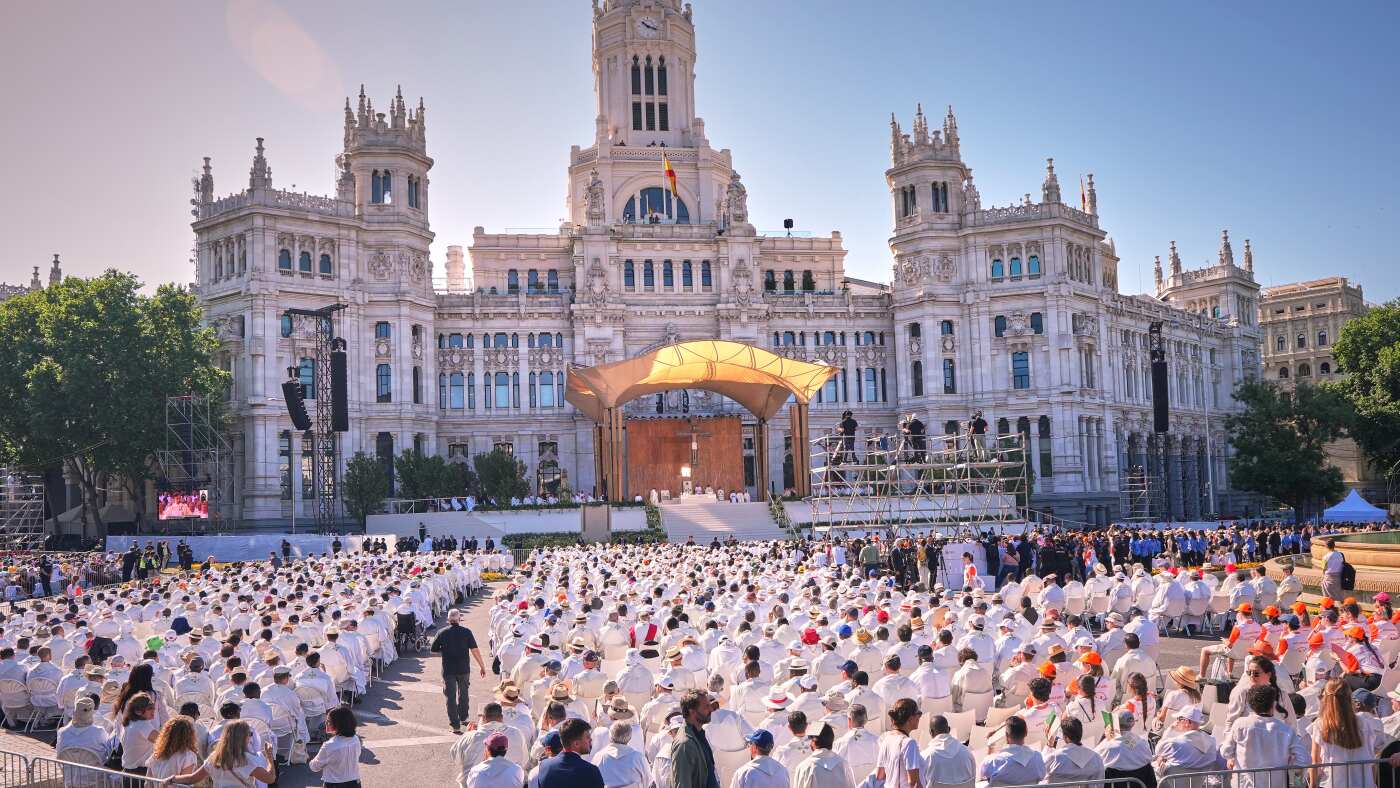
On 30 May 2026, The Guardian published the responses it had solicited from American readers to Pope Leo XIV's first major encyclical — a text that named artificial intelligence as a civilisational threat to human dignity, labour, and privacy. The reader reply was not a trickle. It was a chorus.
The concerns coalesced around three anxieties: that AI will hollow out employment; that it will normalise surveillance; and that, in the aggregate, the technology poses an existential risk to human life itself. These are not fringe worries. They are the mainstream anxieties of a population watching a technology advance faster than any governance framework can track.
The timing matters. A pontiff and a broad cross-section of ordinary Americans have arrived at the same diagnosis — that unregulated AI is a threat — without obvious coordination. That convergence itself is the story.
A Text That Names the Problem
Pope Leo XIV's encyclical does not speak in the cautious language of Vatican PR. It names AI as a force capable of undermining human agency, concentrating power in the hands of those who build and control the systems, and displacing workers at a scale that earlier automation waves never reached. The Guardian's reporting on 30 May 2026 captured readers describing exactly those fears, in their own words and with no editorial steering required.
The overlap between a papal text and lay American anxieties is not coincidental. Both are responding to the same structural phenomenon: a technology whose benefits accrue to a narrow class of owners while its costs — job displacement, data extraction, algorithmic opacity — are distributed across the wider population. When a 1,400-year-old institution and a sample of American newspaper readers converge on the same critique, it suggests the critique is doing real work. It is describing something that does not require a political ideology to recognise.
The Regulatory Gap
The convergence exposes the most significant feature of the current AI landscape: the gap between the pace of development and the pace of governance. The European Union moved first with its AI Act, establishing risk tiers and compliance obligations for developers. The United States has not matched that framework. Washington has preferred voluntary commitments and agency-level guidance — documents that ask industry to self-regulate in areas where the incentive to self-regulate is structurally absent.
American readers responding to The Guardian articulated this precisely. Several cited the absence of binding rules, not merely the presence of bad ones. The regulatory gap is not a product of legislative incompetence alone. It reflects a political economy in which the companies building AI systems hold significant influence over the officials who would regulate them. That is not a conspiracy theory. It is the observable result of lobbying expenditure, revolving-door employment, and the political weight of an industry that has positioned itself as essential to national economic competitiveness.
The pontifical framing adds a layer that domestic political discourse lacks: moral language. The Pope is not arguing that AI will harm American competitiveness or undermine a particular industry. He is arguing that AI, when deployed without regard for human dignity, is ethically wrong. That framing does not require anyone to share Catholic theology to find it compelling. It simply raises the stakes of the argument beyond trade policy into the territory of what kind of society Americans want to inhabit.
Whose Machine Is This, Anyway?
The most penetrating reader responses — as characterised by The Guardian's reporting — touched a nerve that standard technology journalism often avoids: the question of ownership. AI systems are not neutral tools. They are built by specific companies, trained on specific datasets, optimised for specific objectives. The question of who controls the training data, who owns the model weights, and whose interests the system serves is not a technical question. It is a political one.
When readers said AI threatens human life, some were reaching for something larger than job displacement. They were pointing at the prospect of a technology that answers to no democratic accountability — that makes decisions affecting employment, credit, medical care, and information access with no mechanism for ordinary citizens to appeal, correct, or redirect those decisions. That anxiety is legible regardless of one's view on any particular AI application. It is an anxiety about power without countervailing power.
The encyclical names this structurally. It does not argue that AI is inherently evil. It argues that AI deployed without regard for the common good is a instrument of a particular vision of human flourishing — one in which efficiency, optimisation, and return on investment are the organising principles — and that this vision is in competition with other visions that humans have, at various points in history, considered more important.
The Road Ahead
What happens when a pope and a public agree that something is wrong? The answer depends on whether that agreement can be converted into institutional pressure.
The US legislative calendar offers few immediate opportunities for binding AI regulation. The current Congress has shown willingness to move on targeted legislation — data privacy frameworks, deepfake rules, AI in hiring — but not a comprehensive governance structure. The executive branch has used voluntary frameworks as its primary instrument, betting that industry cooperation will be sufficient to avoid the worst outcomes.
The papal encyclical changes the rhetorical environment, if not the legislative one. When moral authority weighs in on a political question, it shifts the terms of debate. It becomes harder to frame AI regulation as a burden on innovation when the leader of 1.4 billion Catholics has described the absence of regulation as a civilisational risk. That framing will be weaponised — by advocates on both sides — in ways that will be difficult to predict.
The American readers who responded to The Guardian on 30 May 2026 are not a representative sample of the US population. They are self-selected, likely more educated and more politically engaged than the median voter. But they are not wrong. The concerns they articulated are present in the data on public attitudes toward AI: anxiety is high, trust in technology companies is low, and the sense that the rules are written by the parties most interested in avoiding them is pervasive.
The encyclical will not pass a bill. It will not compel a corporation to change its training practices. But it has done something that American political discourse has struggled to do: it has given the anxiety a name, a source, and a moral register that transcends partisan framing. Whether that is enough to move institutions that have shown no great appetite for constraint is the unanswered question. The concerns are on the record. The gap between those concerns and the response they have generated from policymakers remains, for now, large.
Pope Leo XIV's encyclical on AI was published in May 2026. The Guardian solicited and published American reader responses on 30 May 2026.